Introduction
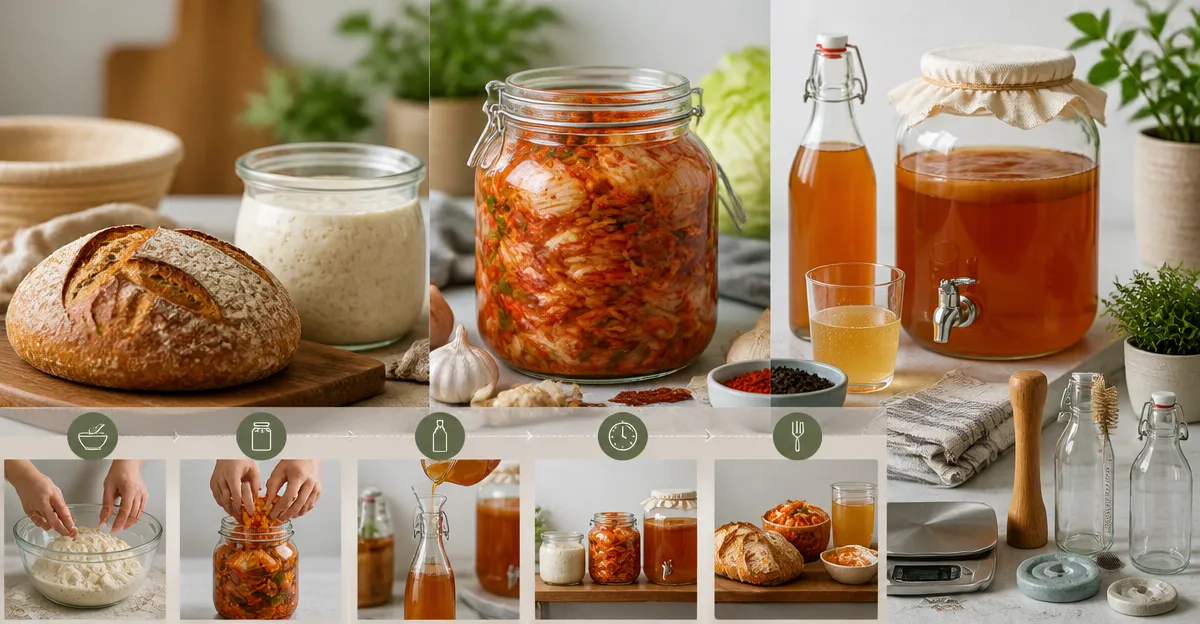
Busy individuals often assume that fermenting foods such as sourdough, kimchi and kombucha requires a full‑time commitment. This guide demonstrates how a well‑planned weekend schedule can produce high‑quality fermented foods without sacrificing other responsibilities. Readers will learn how to allocate short, focused time blocks, select reliable tools, and maintain optimal conditions for each fermentation stage. By the end of the weekend, one can enjoy a loaf of tangy sourdough, a batch of probiotic kimchi and a sparkling kombucha brew, all while preserving valuable personal time.
What You’ll Need
- IceFun Fermentation Kit – Four 32 oz mason jars with plastic lids, airlocks and glass weights (Price: $39.99, Rating: 4.6/5 from 142 reviews)
- Yiyiring Fermentation Lid Kit – Eight plastic lids, airlocks and glass weights for existing jars (Price: $38.59, Rating: 4.9/5 from 15 reviews)
- BALCI Fermentation Kit – Nine‑piece starter set with wooden tamper and recipe book (Price: $39.99, Rating: 4.6/5 from 44 reviews)
- Masontops Fermentation Kit – Complete 9‑piece kit with pickle pipe lids and acacia tamper (Price: $54.95, Rating: 4.8/5 from 4,758 reviews)
- Digital kitchen scale, non‑metal mixing bowl, stainless‑steel spoon, and a clean kitchen towel.
1. Choose the Right Containers and Prepare Your Workspace
The first step is to select containers that provide an airtight environment while allowing gases to escape safely. Mason jars with wide mouths are ideal because they enable easy packing, cleaning and visual monitoring of fermentation progress. The IceFun Fermentation Kit offers four 32 oz jars equipped with plastic lids that eliminate rust concerns and feature dual‑channel airlocks. The plastic lids also double as storage lids, reducing the number of components that must be swapped between fermenting and storing phases. For those who already own jars, the Yiyiring Fermentation Lid Kit supplies compatible lids, airlocks and glass weights, making it a cost‑effective upgrade.
Set up a clean, flat surface near a sink. Place a silicone mat or a large towel to catch any spills. Arrange the jars, lids and weights within easy reach. Having a dedicated workspace reduces the time spent searching for tools during the weekend.
2. Prepare the Starters and Brines for Each Ferment
Sourdough starter, kimchi brine and kombucha SCOBY each require specific preparation. Begin with the sourdough starter on Friday evening. Mix equal parts flour and water by weight using a digital scale; a typical 100 g starter requires 50 g flour and 50 g water. Cover loosely with a cloth and let it sit at room temperature for 8‑12 hours. While the starter matures, prepare the kimchi brine. Dissolve 2 tablespoons of sea salt in 2 cups of water; the salt concentration of 2 % creates an optimal environment for lactic‑acid bacteria. Slice cabbage, carrots and radishes, then massage with a portion of the brine until the vegetables release juices. Transfer the mixture to a jar from the BALCI Fermentation Kit. The kit includes a wooden tamper that helps press vegetables firmly, ensuring they remain submerged beneath the brine.
For kombucha, brew a strong black tea (5 teaspoons per quart), add 1 cup of white sugar, and allow it to cool to room temperature. Pour the sweet tea into a clean glass jar, add a pre‑existing SCOBY, and cover with a breathable cloth secured with a rubber band. The Masontops Fermentation Kit provides airtight lids with airlocks that can be used for kombucha once the initial fermentation phase has passed, preventing contamination while still allowing CO₂ to escape.
3. Allocate Focused Time Blocks Across the Weekend
Structure the weekend into three distinct phases: preparation (Saturday morning), active fermentation (Saturday afternoon to Sunday evening) and finalization (Sunday night). Allocate 30‑45 minutes for each preparation block. During the active phase, the only required actions are visual checks and occasional weight adjustments. The IceFun Fermentation Kit includes silicone rings that maintain a secure seal, minimizing the need for daily burping. The dual‑channel airlocks release gases automatically, allowing the fermenter to remain undisturbed for several days.
Saturday morning (08:00‑09:00): Mix sourdough starter, pack kimchi and set up kombucha tea. Saturday afternoon (14:00‑14:30): Place glass weights on kimchi, secure lids, and label each jar with the date tags provided in the IceFun kit. Sunday morning (09:00‑09:15): Perform a quick visual inspection of all jars; ensure vegetables stay submerged and no mold is present. Sunday night (20:00‑20:30): Taste kimchi, bake sourdough, and bottle kombucha for secondary fermentation.
4. Monitor, Adjust and Harvest Your Ferments
During the monitoring period, rely on visual cues rather than constant measurement. The clear markings on the IceFun jars allow quick assessment of liquid levels. If the kimchi brine recedes, use the included silicone stopper to add a small amount of salted water without opening the lid. For sourdough, perform the “float test” by dropping a small piece of dough into water; if it floats, the starter is ready for incorporation into the dough. Kombucha should develop a thin film on the surface; this indicates a healthy SCOBY. After the primary fermentation, transfer kombucha to bottles, add a splash of fruit juice for flavor, and seal with the Masontops airlock lids for a 2‑day secondary fermentation that produces natural carbonation.
When the sourdough has risen sufficiently, pre‑heat the oven, shape the loaf and bake for 35‑40 minutes. The BALCI kit’s wooden tamper can be repurposed to score the dough, creating an aesthetic crust. Once all three ferments are complete, store the sourdough in a bread box, keep kimchi in the refrigerator, and place kombucha bottles in a cool, dark area.
Tips & Pro Tips
- Label each jar with the date and intended ferment using the 20 tags supplied in the IceFun kit; this prevents confusion when multiple batches are in progress.
- Maintain a constant room temperature of 68‑72 °F for optimal lactic‑acid activity; use a small space heater on colder days.
- Do not use metal utensils when handling the glass weights, as metal can scratch the surface and compromise food safety.
- For kombucha, avoid direct sunlight; UV light can degrade the tea’s flavor and inhibit yeast activity.
- If mold appears on kimchi, discard the batch; mold indicates a breach in the anaerobic environment.
Troubleshooting
Problem: Kimchi is overly salty.
Solution: Rinse the vegetables under cold water, then repack with a reduced‑salt brine (1.5 % instead of 2 %). The glass weights from any of the kits will keep the vegetables submerged without adding additional salt.
Problem: Sourdough does not rise.
Solution: Verify that the starter is active; feed it with equal parts flour and water and allow it to double in size before mixing the dough. Ensure the dough is kept in a warm spot; a proofing box set to 78 °F works well.
Problem: Kombucha fermentation stalls.
Solution: Check that the SCOBY is healthy and that the tea was fully cooled before adding it. If the temperature is below 70 °F, move the jar to a warmer area or wrap it in a towel.
Conclusion
By following a concise weekend schedule, busy individuals can successfully produce sourdough, kimchi and kombucha without compromising other commitments. The key is to prepare all components on Saturday, rely on reliable airtight jars with automatic airlocks, and perform brief visual checks each day. The recommended fermentation kits provide durable lids, glass weights and user‑friendly accessories that streamline the process and reduce the need for constant attention. One weekend of disciplined planning yields three probiotic‑rich foods that support digestive health and add flavorful variety to everyday meals.
Products Mentioned in This Guide
Frequently Asked Questions
How can I fit sourdough, kimchi, and kombucha fermentation into a single weekend?
Plan short, focused time blocks for each stage—mix dough Friday night, start kimchi Saturday morning, and brew kombucha Saturday afternoon—so all finish by Sunday.
What equipment is essential for a weekend fermentation schedule?
A reliable fermentation kit with mason jars, airlocks, and weights (e.g., IceFun or Yiyiring kits) provides airtight conditions and easy monitoring.
Do I need a temperature‑controlled environment for weekend fermentations?
Maintain room temperature (68‑75°F) for sourdough and kimchi, and a slightly cooler spot (60‑70°F) for kombucha to ensure consistent results.
How long should each fermentation step take over the weekend?
Sourdough starter can be ready in 12‑18 hours, kimchi ferments 24‑36 hours, and kombucha needs 2‑3 days, all fitting within a Saturday‑Sunday window.
Can I reuse the same jars for multiple ferments during the weekend?
Yes, clean and sterilize jars between batches; the airlock lids allow quick turnover without compromising safety.