Introduction
Fermenting vegetables such as sauerkraut, kimchi and assorted home fermentations requires a reliable method of monitoring acidity. The pH of a ferment determines which microorganisms dominate, influences flavor development, and prevents the growth of undesirable pathogens. A precise pH measurement allows the home food‑producer to achieve a safe, predictable, and delicious final product.
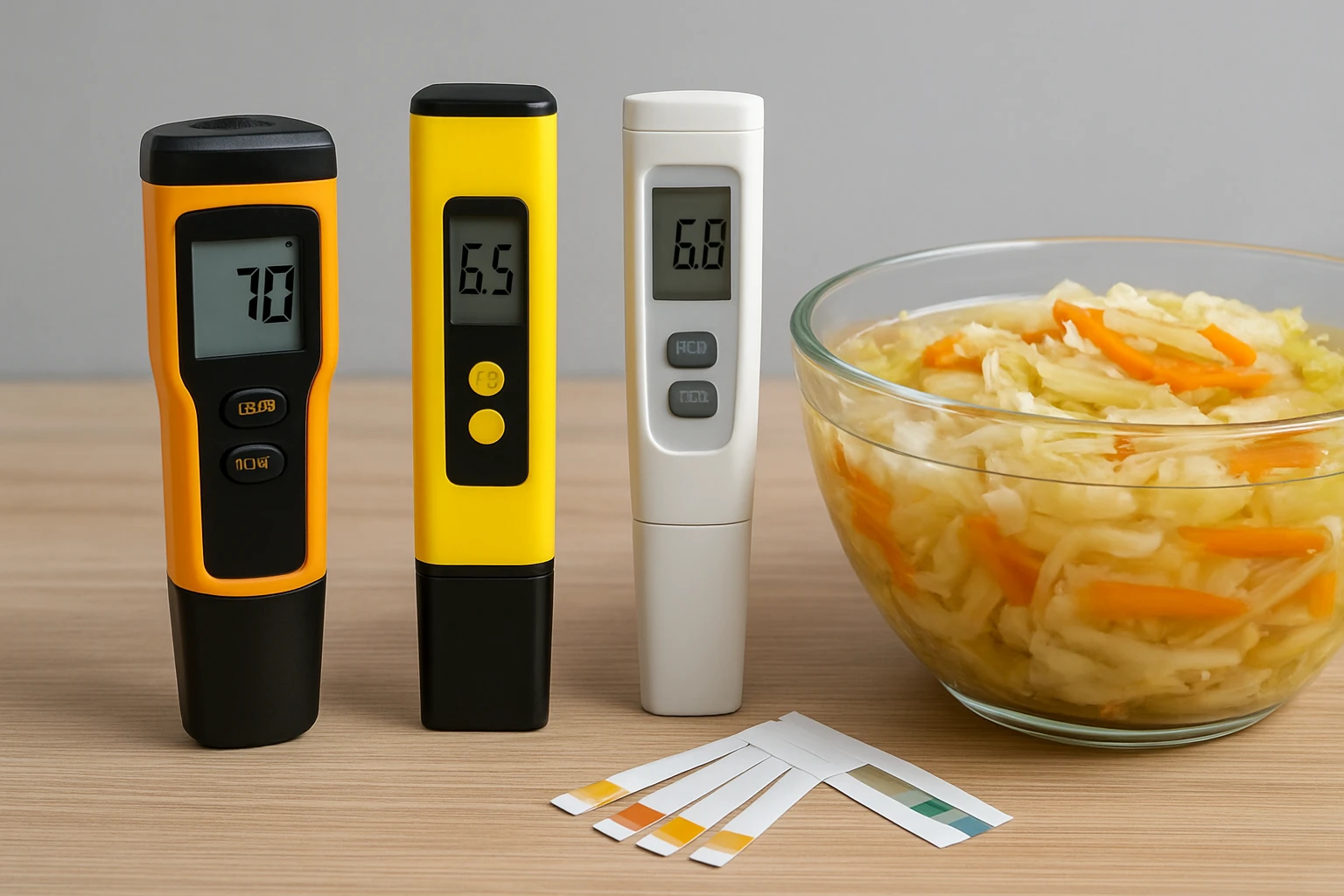
The market now offers a variety of digital and chemical solutions, each targeting a different user‑group. Some devices are waterproof and pocket‑friendly, while others provide a food‑grade probe that can penetrate soft or semi‑solid products. The following list presents the seven best pH meters and related tools for vegetable fermenting in 2026, based on price, accuracy, customer satisfaction and suitability for home‑grown fermentations.
1. Waterproof Pocket Meters – Ideal for On‑the‑Go Testing
When a fermenting kitchen is also a garden‑to‑table operation, a device that can survive splash‑water and occasional drop is essential. The Apera PH20 Waterproof pH Tester offers a 0‑14 pH measurement range with ±0.1 pH accuracy and a battery‑life of up to 2 000 hours. Its IP67 water‑resistance protects the sensor when testing water‑based brines or when the device is carried in a kitchen sink environment. The included 4 AA‑battery case, lanyard and pre‑filled 4.00 and 7.00 pH buffers simplify the calibration process for a user who wants to focus on the ferment rather than the instrumentation.
Customers highlight the rapid auto‑recognition of stable values: “I love this meter. It’s easy to calibrate. The readings are fast and accurate. It reaches a conclusion quickly and will hold the reading after being removed from the solution.” (9 533 reviews, 4.4/5). At a price of $50.24 the Apera PH20 represents a cost‑effective, durable solution for home fermenters who need a portable, water‑resistant device.
2. Food‑Grade Probe for Solid Foods – Penetrate the Produce
Many vegetable fermentations involve semi‑solid or dense substrates that a traditional glass‑capped probe cannot reach. The YINMIK Smart Food pH Meter features a 316 food‑grade stainless‑steel spear‑blade that can pierce soft vegetables, fruits and even the thick brine of kimchi. The device also includes a 24‑hour continuous monitoring capability via a Bluetooth‑connected mobile app, which records up to 1 000 data points for later analysis.
Consumer feedback underscores its usability: “Instructions are easy to follow. Unit works perfectly. Provides assurance when handling food or canning.” (48 reviews, 4.5/5). The product’s price of $43.99 makes it a compelling choice for producers who want a dedicated food‑probe and digital record‑keeping without a large investment. Its ±0.1 pH accuracy and auto‑temperature compensation (ATC) ensure reliable readings across the 32‑122 °F temperature range of most vegetable fermentations.
3. High‑Precision Professional Target – The Premium Choice
For the serious fermenter who seeks laboratory‑grade accuracy, the Apera PH60S Food pH Tester provides a 0‑16 pH range with ±0.01 pH resolution. Its Swiss‑spear sensor and replace‑able reference system enable stable performance in both water‑based brines and solid food matrices such as shredded cabbage or fermented radish. The device also offers a high/low value alarm with a red back‑light, allowing the user to set safety thresholds for pH‑critical fermentations.
Users appreciate its comprehensive kit: “Bough the pH tester for use in making probiotics fermented fruit juice. The included instructions were detailed & clear and calibrating the device before first use with the included calibration solutions was quick & easy.” (3 437 reviews, 4.4/5). Although priced at $172.90, the high‑resolution sensor, durable construction and extensive accessories justify the expense for those who demand the greatest precision and a long‑term, replace‑able probe.
4. Budget‑Friendly Digital Option – Good Accuracy at a Lower Cost
The GIDIGI Food pH Tester targets hobby‑level fermenters who want digital read‑out without a high‑price tag. It supplies ±0.01 pH precision, a 3‑point auto‑calibration (4.00, 7.00, 10.00 pH) and a PVDF‑spear probe that resists clogging from food‑borne solids. The open‑junction design reduces the need for frequent cleaning, a useful feature when measuring thick vegetable mash.
Consumers note the ease of use: “Very easy to calibrate and works perfectly for my fermentation.” (77 reviews, 4.7/5). The $39.39 price point, combined with a 100 % purchase‑confidence rating, makes the GIDIGI a strong candidate for newcomers who want a digital device that still delivers professional‑grade precision.
5. Color‑Chart Strips – The Classic Chemical Alternative
While digital devices provide numeric precision, color‑chart test strips remain a valuable backup for quick spot‑checking or for users who prefer a non‑electronic method. The Fermentaholics pH Test Strips supply 100 individual strips that cover the 0‑6 pH range, ideal for the acidic environment of vegetable fermentations. The product’s user‑friendly design allows a consumer to dip a strip for 1‑2 seconds, then compare it to a printed colour chart.
One buyer’s experience illustrates its practicality: “I have esophagus ulcers. I can’t have anything lower than 7 pH. The strips told me my apple‑juice had a pH of 4, preventing me from consuming it.” (2 076 reviews, 4.6/5). At only $9.99, the cost‑effective nature of the test strips makes them an excellent supplemental tool for home fermenters who want to verify digital readings or test multiple samples simultaneously.
6. Battery Management & Power‑Consumption – Keep Your Device Ready
All of the digital devices discussed rely on batteries, and a user‑friendly power‑consumption design can prevent interruption during a long ferment. The Apera PH20’s 2 000‑hour operation on 4 AAA batteries provides a long‑lasting solution, while the Apera PH60S offers a replace‑able sensor and a battery‑friendly auto‑hold feature. The GIDIGI’s battery consumption is comparable to the PH20, and its slim design fits well within a kitchen drawer.
Customer feedback on battery performance is consistently positive: “Up to 2000 hours' continuous operation, powered by AAA batteries.” (Apera PH20). The fact that none of the devices feature aggressive auto‑shutdown (as the YINMIK’s 24‑hour monitoring disables auto‑power‑off) ensures that a user can leave the device in‑place for continuous monitoring of a fermenting jar.
7. Customer Support & Accessories – A Complete Turn‑Key Experience
Beyond the core sensor, the support and accessories offered by a brand can be decisive. The Avera (Apera) products include a carrying case, spare batteries and a lanyard, while the YINMIK brand offers a full suite of calibration solutions, electrode‑cleaning chemicals and a responsive 24‑hour support team. The GIDIGI also supplies a full set of pre‑mixed calibration solutions, and its product page emphasizes a rapid service‑response commitment.
Customer testimonies reinforce the importance of support: “The YINMIK team is available 24/7 and resolve your issues within 18 hours.” (customer support statement). For home producers, such support can reduce the learning curve and protect the investment in a high‑quality sensor.
Comparison of Core Features
| Product | Price (USD) | Accuracy | Probe Type | Battery Life | Rating (5‑Star) |
|---|---|---|---|---|---|
| Apera PH20 Waterproof | $50.24 | ±0.1 pH | Water‑Resistant Probe | 2 000 h (AAA) | 4.4 (9 533) |
| YINMIK Smart Food | $43.99 | ±0.1 pH | 316 Stainless‑Steel Spear | 24‑h Continuous (no auto‑off) | 4.5 (48) |
| Apera PH60S Premium | $172.90 | ±0.01 pH | Swiss‑Spear Replace‑able | 2 000 h (AAA) | 4.4 (3 437) |
| GIDIGI Food | $39.39 | ±0.01 pH | PVDF‑Spear Probe | 2 000 h (AAA) | 4.7 (77) |
| Fermentaholics Strips | $9.99 | 0‑6 pH (color‑chart) | Paper Strip | N/A | 4.6 (2 076) |
Conclusion
Accurate pH monitoring is a cornerstone of safe and flavorful vegetable fermentations. The devices presented in this article cover a spectrum from fully‑water‑proof pocket sensors to food‑grade spear probes and low‑cost color‑chart strips. For the homeowner who desires a rugged, budget‑friendly option, the Apera PH20 is a strong candidate. If a food‑grade probe and digital logging are required, the YINMIK Smart Food pH Meter provides a unique combination of a stainless‑steel spear and smartphone integration. The Apera PH60S supplies the highest resolution for professionals, while the GIDIGI offers a cost‑effective digital alternative with a well‑designed probe. Finally, the Fermentaholics test strips serve as an excellent secondary check or a low‑cost entry point for new fermenters. By selecting the appropriate tool based on price, accuracy, and support, the home fermenter can ensure safe, predictable, and delicious results every time.
Frequently Asked Questions
Why is monitoring pH important when fermenting vegetables?
pH determines which microbes dominate, affecting flavor, safety, and prevents pathogen growth.
Can I use a waterproof pocket pH meter for testing sauerkraut in a jar?
Yes, waterproof meters like the Apera PH20 can safely measure the liquid brine without damage.
How often should I check the pH during a vegetable fermentation?
Check at the start, then every 1–2 days until the target pH (typically 3.5–4.0) is reached.
Do I need to calibrate my digital pH meter before each use?
Calibrate with at least two buffer solutions (e.g., pH 4.0 and 7.0) before each batch for accurate readings.
What type of probe is best for semi‑solid fermentations like kimchi?
A food‑grade, stainless‑steel probe that can penetrate soft solids provides the most reliable measurements.