How to Prevent Kombucha Bottle Explosions: Effective Packaging Solutions & Best Practices
Introduction
Fermenting kombucha at home offers rewarding flavors, but the process can produce excess carbon dioxide that leads to bottle explosions. This guide explains how to control pressure, select appropriate containers, and package bottles for safe storage. Readers will learn the science behind carbonation, the importance of airtight swing‑top bottles, and practical steps to avoid hazardous bursts. By following these instructions, one can enjoy consistent, fizz‑filled kombucha without the risk of shattered glass.
What You’ll Need
- Heavy‑duty swing‑top bottles (16 oz or 1 L) with airtight seals
- Food‑grade silicone funnels for easy filling
- Labeling pen and waterproof labels for tracking fermentation dates
- Dishwasher‑safe bottle brush for thorough cleaning
- Protective packaging material (bubble wrap, dividers) for transport
These items are available from reputable brands on Amazon. The first mention of each product below includes a direct affiliate link.
Step 1: Choose the Right Swing‑Top Bottle
Selecting a bottle that can withstand up to 4 bar of pressure is the foundation of safe kombucha brewing. The Otis Classic 16 oz Swing Top Bottles are crafted from thick, BPA‑free glass and feature stainless‑steel closures with high‑pressure gaskets. Priced at $22.99 and rated 4.6/5 from 11,682 reviews, they are designed to handle the carbonation produced during the second ferment.
For larger batches, the AOZITA 1L Swing Top Bottles provide a 33 oz capacity, heavy‑duty construction, and extra silicone seals. At $35.99 with a 4.7/5 rating from 2,373 reviews, they reduce the number of bottles needed and minimize handling errors.
Both options include replacement seals, ensuring long‑term reliability. Using a bottle that cannot tolerate pressure will result in leaks or catastrophic failure, so prioritize models with proven pressure ratings.
Step 2: Prepare Bottles for Fermentation
Before filling, clean each bottle with a bottle brush and run it through the dishwasher to remove residues that could harbor unwanted microbes. The thick glass of the AOZITA 16 oz Swing Top Bottles is dishwasher safe, simplifying this step. After cleaning, dry the bottles completely to prevent dilution of the kombucha culture.
Label each bottle with the included waterproof labels and a white pen. Accurate labeling prevents confusion during the second ferment, especially when multiple flavors are produced simultaneously. The provided accessories eliminate the need to purchase separate labeling tools.
Finally, inspect the silicone gaskets for any damage. A compromised gasket will allow gas to escape, reducing carbonation and increasing the likelihood of over‑pressurization later in the process.
Step 3: Fill Bottles Using Funnels
When transferring kombucha from the fermenting jar to the bottles, use a food‑grade silicone funnel to avoid spills and reduce exposure to air. The AOZITA 16 oz Swing Top Bottles kit includes two silicone funnels, each designed to fit the 16 oz neck perfectly. This eliminates the need for third‑party funnels, ensuring a tight seal immediately after filling.
Leave approximately ½ inch of headspace at the top of each bottle. This space accommodates the carbon dioxide generated during the second ferment while preventing excessive pressure buildup. Overfilling is a common cause of explosions because the expanding gas has nowhere to expand.
After filling, secure the swing‑top cap firmly. The stainless‑steel buckle combined with the silicone seal creates an airtight environment, essential for consistent carbonation.
Step 4: Control Fermentation Temperature
Temperature directly influences the rate of yeast activity and, consequently, the amount of carbon dioxide produced. Maintain a stable environment between 68°F and 78°F (20°C‑26°C) for optimal fermentation. If the ambient temperature exceeds this range, consider using a temperature‑controlled cabinet or a simple insulated cooler.
For those who prefer a cooler secondary ferment, place the bottles in a refrigerator after the desired carbonation level is reached. Cooling slows yeast activity, locking in the pressure without further gas production. This step is especially useful when using the larger AOZITA 1L Swing Top Bottles, as the greater volume can retain heat longer.
Monitor the bottles daily by gently pressing the cap; a firm but slightly yielding feel indicates healthy carbonation. If the cap feels excessively hard, the pressure may be approaching a dangerous level.
Step 5: Package Bottles Safely for Storage or Transport
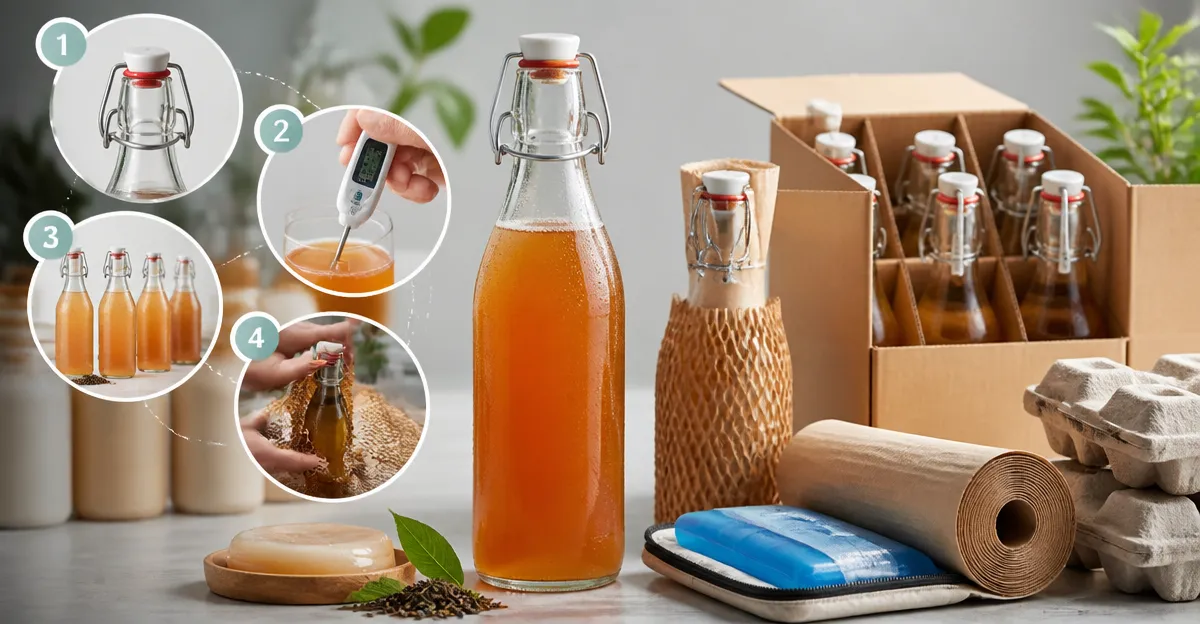
When storing bottles for extended periods or transporting them to an event, protect them with bubble wrap and dividers. The packaging design of both the AOZITA 16 oz Swing Top Bottles and the AOZITA 1L Swing Top Bottles includes a grid‑shaped partition that prevents bottles from contacting each other directly.
For added safety, place a small piece of cardboard between the bottle and its cap during transport. This reduces the risk of the cap loosening due to vibration. If you are shipping bottles, mark the box with “Fragile – Keep Upright” to inform handlers of the delicate contents.
Finally, store the packaged bottles in a cool, dark place away from direct sunlight. UV light can degrade the kombucha flavor and weaken the glass over time, especially for thinner 16 oz bottles.
Tips & Pro Tips
- Perform a "burp" test after 24‑48 hours of the second ferment by briefly opening the cap to release excess gas. This prevents pressure from exceeding safe limits.
- Use a digital pressure gauge (available separately) to measure internal pressure if you are experimenting with high‑sugar fruit additions.
- Keep a spare set of silicone seals from the AYL 16 oz Swing Top Bottles kit. Replacing worn seals maintains airtight integrity over multiple batches.
- When adding fruit or juice for flavor, limit the amount to no more than 10 % of the total volume to control additional sugar that fuels rapid carbonation.
- Consider using a magnetic stirrer during the primary ferment to evenly distribute yeast, reducing localized pressure spikes.
Troubleshooting
Problem: Bottle feels extremely hard after 12 hours of second ferment.
Solution: Perform an immediate burp, release 1‑2 seconds of gas, and reseal. Reduce the amount of added sugar in future batches.
Problem: Leakage around the cap during fermentation.
Solution: Inspect the silicone gasket for debris or damage. Replace with the spare gasket included in the AYL 16 oz Swing Top Bottles kit.
Problem: Glass cracks after refrigeration.
Solution: Ensure the bottle is at room temperature before placing it in a cold environment. Sudden temperature shifts can cause thermal shock, especially in thinner glass.
Conclusion
Preventing kombucha bottle explosions requires a combination of proper equipment, temperature management, and careful packaging. By selecting robust swing‑top bottles such as the Otis Classic 16 oz Swing Top Bottles or the larger AOZITA 1L Swing Top Bottles, maintaining consistent fermentation conditions, and following the step‑by‑step process outlined above, one can enjoy safely carbonated kombucha every time. Apply the tips and troubleshooting advice to refine your technique, and share the results with confidence.
Products Mentioned in This Guide
Frequently Asked Questions
What causes kombucha bottles to explode during fermentation?
Excess carbon dioxide builds up pressure inside sealed bottles, especially if the seal is airtight and the fermentation is still active.
Why are heavy‑duty swing‑top bottles recommended for kombucha?
Swing‑top bottles provide a reliable, airtight seal that can withstand higher pressure while allowing easy release of excess gas.
How can I control carbonation to prevent bottle bursts?
Monitor fermentation time, refrigerate after bottling, and “burp” bottles periodically to release built‑up CO₂.
What packaging materials should I use for transporting kombucha safely?
Wrap each bottle in bubble wrap and use dividers or cardboard inserts to prevent contact and absorb shocks during transport.
Do I need special cleaning tools for kombucha bottles?
A dishwasher‑safe bottle brush ensures thorough cleaning of residues, reducing the risk of over‑carbonation from leftover sugars.