Introduction
The reader will discover a complete workflow for shipping fermented pickles and kombucha across state or country borders. One will understand how to preserve the delicate balance of flavors, prevent breakage, and comply with postal regulations. The guide emphasizes practical steps, temperature‑control methods, and the use of specialized packaging tools. By following the instructions, one can ship probiotic beverages and brined vegetables with confidence and professionalism.
What You’ll Need
- Food‑grade, leak‑proof jars or bottles (glass or PET)
- Sealable, insulated bubble mailers such as GOGOGREAT Insulated Bubble Mailers or Aemygo Thermal Bubble Mailers
- Reusable ice packs or gel packs
- Heavy‑duty cardboard boxes (corrugated, double‑wall)
- Packaging tape, markers, and shipping labels
- Thermometer strips for temperature monitoring
Step‑by‑Step Instructions
Step 1: Prepare Your Fermented Products for Shipping
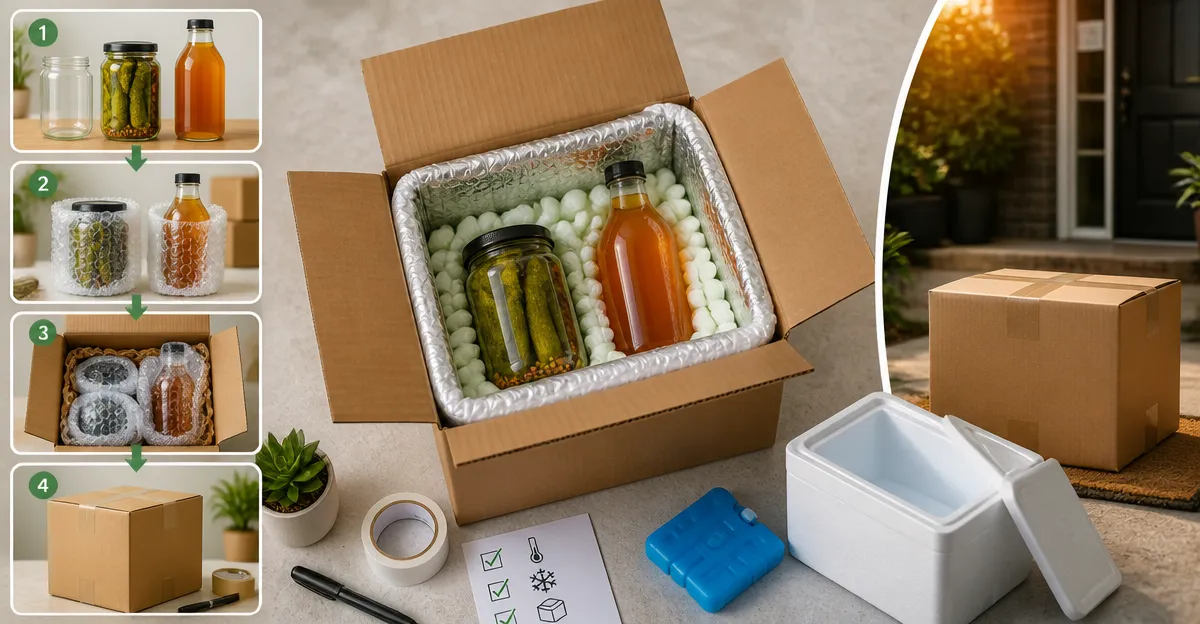
Begin by inspecting each jar or bottle for cracks, loose caps, or compromised seals. One should tighten caps securely and consider adding a secondary seal such as food‑grade cling film. This prevents leakage caused by pressure changes during transit. For kombucha, it is advisable to reduce carbonation by gently stirring the beverage and allowing excess gas to escape before sealing.
Place a small piece of absorbent paper towel inside the cap area to absorb any minor seepage. This simple barrier adds an extra layer of protection without altering the product’s flavor profile. Record the production date and batch number on a waterproof label for traceability.
Step 2: Choose the Right Primary Container
Select containers that are both sturdy and sized appropriately for the quantity being shipped. A 16‑ounce glass jar works well for pickles, while a 12‑ounce PET bottle is suitable for kombucha. The container must fit comfortably inside the chosen mailer with space for insulation.
If shipping multiple units, arrange them in a single‑layer configuration inside a cardboard insert to avoid movement. This reduces the risk of breakage caused by shifting during handling.
Step 3: Add Insulation and Cold Packs
Cold preservation is essential for maintaining the probiotic cultures and preventing spoilage. Place a frozen gel pack on each side of the jar, ensuring that the pack does not touch the glass directly; a thin layer of bubble wrap can act as a buffer. The gel packs should be pre‑frozen for at least four hours to achieve optimal thermal mass.
Wrap the entire assembly in a layer of lightweight bubble wrap. The air pockets in the wrap provide additional insulation and cushion against impacts. This combination of gel packs and bubble wrap slows temperature rise during the typical 48‑hour delivery window.
Step 4: Pack Inside an Insulated Bubble Mailer
Insert the wrapped product into an insulated mailer. The GOGOGREAT Insulated Bubble Mailers offer a reflective silver foil exterior that reduces heat transfer, while the thick bubble lining protects against drops. Each mailer measures 6×8 inches on the outside and provides a usable interior of 5×7 inches, which accommodates most small jars and bottles.
Key features of the GOGOGREAT mailer include a reinforced self‑seal adhesive that stays closed throughout transit, water‑resistant foil that guards against moisture, and a durable construction that resists tearing. At a price of $41.98 for a pack of 50, the unit cost is under $1, making it economical for bulk shipping. The product holds a 4.9‑star rating from 28 reviews, indicating high customer satisfaction.
If a larger mailer is required, the Aemygo Thermal Bubble Mailers provide a 9×11‑inch interior, suitable for bigger bottles or multiple containers. These mailers feature a tamper‑evident self‑adhesive strip, an aluminum foil layer for thermal protection, and a waterproof exterior. Priced at CAD28.21 for a pack of 20, they receive a 4.9‑star rating from 22 reviewers, confirming reliability.
After placing the product inside the mailer, seal the flap firmly using the reinforced adhesive. The seal should be smooth and free of air bubbles to maintain an airtight environment.
Step 5: Insert Mailer Into a Corrugated Box
Place the sealed mailer inside a double‑wall cardboard box that is at least two inches larger on each side. Fill any remaining voids with crumpled kraft paper or additional bubble wrap. This secondary packaging layer distributes forces evenly and prevents the mailer from being crushed.
Close the box with heavy‑duty packaging tape, applying strips along all seams. Mark the box with “Perishable – Keep Refrigerated” stickers and attach a temperature monitoring strip on the exterior. The strip will indicate if the package exceeded the safe temperature range during transit.
Step 6: Label, Document, and Choose a Carrier
Affix a clearly printed shipping label that includes the recipient’s address, a return address, and any required handling instructions. For fermented foods, many carriers require a “Food” designation and a declaration of the product’s nature. Review the carrier’s policies on shipping liquids and perishable items to avoid unexpected refusals.
Select a carrier that offers expedited service, such as two‑day or overnight shipping, to minimize time at ambient temperature. If shipping internationally, verify import regulations for fermented foods in the destination country, as some jurisdictions restrict probiotic beverages.
Tips & Pro Tips
- Schedule shipments early in the week to avoid weekend delays that could raise internal temperatures.
- Use a digital thermometer to verify that the product temperature is below 40 °F (4 °C) before sealing.
- Consider adding a second gel pack for longer routes or hot climates.
- Label the package with both “This Side Up” and “Fragile” to guide handlers.
- Maintain a shipping log that records pack date, temperature, and carrier tracking number for quality control.
Troubleshooting
Problem: Leakage observed after delivery.
Solution: Ensure caps are tightly sealed and add an inner film barrier. Use a larger mailer to avoid excessive pressure on the container.
Problem: Product arrived warm.
Solution: Increase the number of gel packs, select a larger insulated mailer, or upgrade to overnight shipping.
Conclusion
One now possesses a reliable, repeatable method for shipping fermented pickles and kombucha across long distances while preserving quality and complying with regulations. By selecting appropriate containers, employing insulated bubble mailers such as the GOGOGREAT or Aemygo options, and following temperature‑control best practices, one can minimize spoilage and protect the probiotic integrity of the products. Implementing the outlined steps will enhance customer satisfaction and reduce the risk of shipping incidents.
Products Mentioned in This Guide
GOGOGREAT Insulated Bubble Mailers
Price: $41.98 (Pack of 50) | Rating: 4.9/5 from 28 reviews
Features: Reflective foil surface slows temperature change, thick bubble lining protects against impacts, reinforced self‑seal adhesive, water‑resistant exterior, suitable for small jars and bottles.
Aemygo Thermal Bubble Mailers
Price: CAD28.21 (Pack of 20) | Rating: 4.9/5 from 22 reviews
Features: Tamper‑proof self‑adhesive tape, aluminum foil layer for thermal protection, waterproof exterior, larger 9×11 in size for bigger containers.
Frequently Asked Questions
What kind of jars or bottles should I use to ship fermented pickles and kombucha?
Use food‑grade, leak‑proof containers made of glass or PET that can withstand pressure changes.
How can I keep the shipment temperature‑controlled?
Pack reusable ice or gel packs with insulated bubble mailers and include a thermometer strip to track temperature.
Which packaging helps prevent breakage during long‑distance shipping?
Place jars in double‑wall cardboard boxes with padding, then seal them inside insulated bubble mailers for extra shock absorption.
What postal regulations apply to shipping fermented foods across state or country borders?
Check carrier guidelines for liquid and perishable items, ensure the product is sealed, labeled as food, and complies with any alcohol or fermentation restrictions.
How do I monitor the product’s condition after delivery?
Use the thermometer strip to verify the temperature stayed within safe limits and inspect the seal for any leaks before consumption.