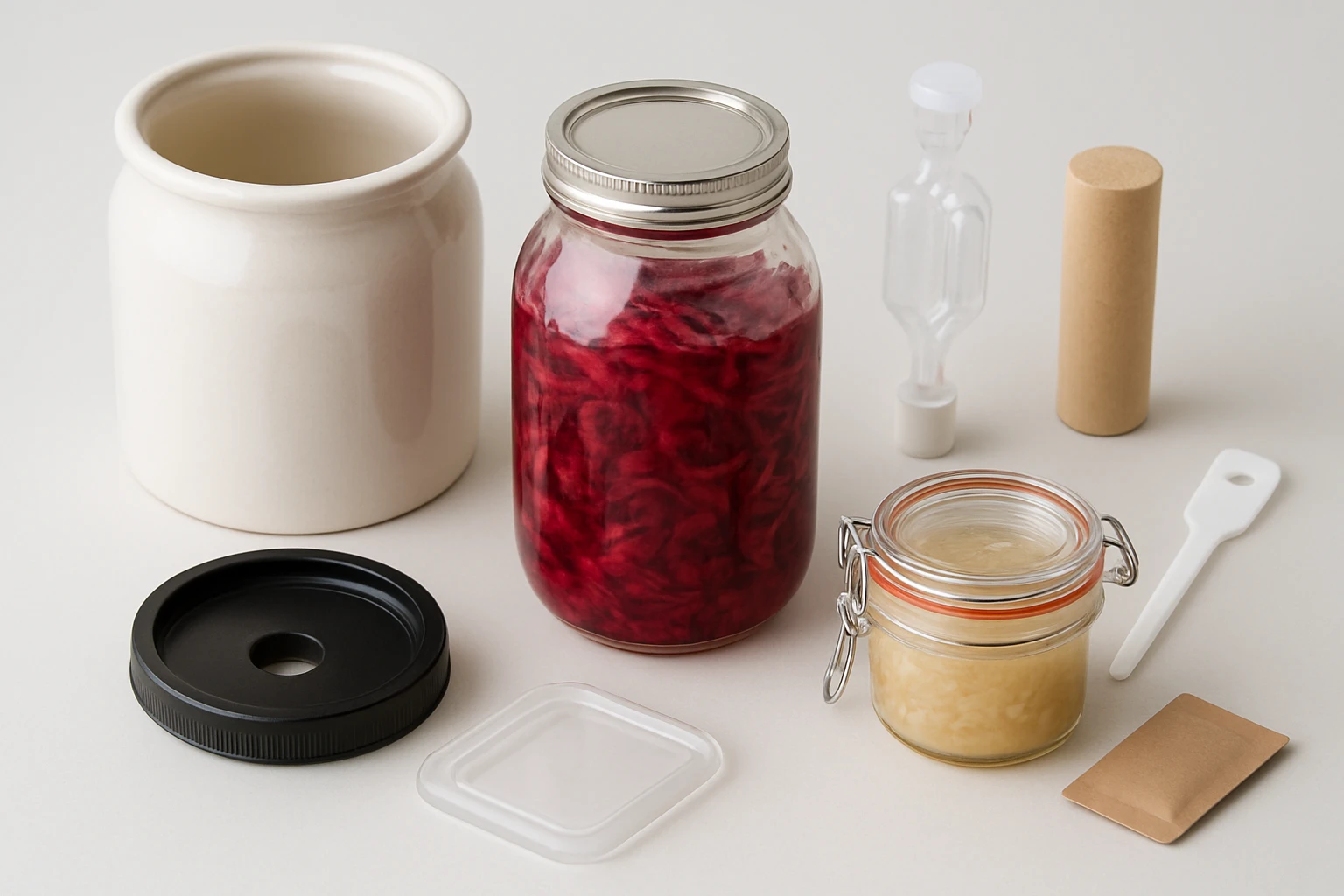
Introduction
Hands‑on science projects have long been a cornerstone of effective STEM education, and fermentation offers a vivid, tasty illustration of microbiology, chemistry, and food technology. When children observe vegetables turning into tangy sauerkraut or sweet kombucha, they witness living organisms at work, gaining insight into concepts such as pH balance, anaerobic environments, and beneficial bacteria.
Choosing the right kit is essential because it must balance safety, simplicity, and educational value while sparking curiosity. The products featured below have been selected for their high customer ratings, thoughtful design, and clear instructional support, making them ideal for classroom experiments or family kitchen labs.
Top 10 Fermentation Kits for Kids
-
1. Stainless‑Steel Safety for Young Scientists
The Trellis Fermentation Kit uses 316 medical‑grade stainless steel lids and waterless silicone airlocks, eliminating the need for plastic components that could leach chemicals. Priced at $40.70 and boasting a 4.5‑star rating from 396 reviewers, the kit provides three lids and three PickleHelix weights, ensuring a secure seal for wide‑mouth mason jars.
Students benefit from the durability of stainless steel, which resists corrosion and can be hand‑washed without fear of degradation. A reviewer noted, "The stainless steel lids go on and release like silk every time compared to those rusty rings." The waterless airlock design also teaches the principle of gas exchange without exposing the ferment to contaminants.
- Three 316 stainless‑steel lids with waterless airlocks
- Three PickleHelix weight coils for consistent pressure
- Free downloadable fermentation guide
-
2. Large‑Capacity Jars for Batch Experiments
The Qianfenie Fermentation Jars come in a two‑pack of 1‑gallon glass carboys, each equipped with three airlocks and heavy‑duty silicone gaskets. At $29.97 and a 4.8‑star rating from 988 reviews, these jars allow children to observe visible changes in a larger volume, ideal for group projects.
Each jar includes a scale mark on the glass, enabling learners to track liquid levels and understand the impact of evaporation. One user praised the set: "Sturdy glass and makes great Mead and Wine!" The wide‑mouth design simplifies ingredient addition and cleaning, reinforcing good laboratory hygiene practices.
- Two 1‑gallon glass carboys with wide mouths
- Three airlocks per jar and spare silicone gaskets
- Included chalkboard labels for tracking batches
-
3. Complete Starter Kit for Classroom Use
The Masontops Fermentation Kit transforms four standard mason jars into a full fermentation system, complete with lids, weights, a wooden tamper, and a recipe booklet. Priced at $54.95 with a 4.8‑star rating from 4,689 reviewers, it offers a comprehensive learning package.
Its airlock lids vent gas while keeping oxygen out, demonstrating the concept of anaerobic fermentation. A parent reviewer wrote, "The kit doesn’t presume a particular food… it’s a great gift for anyone who’s not afraid to eat something that doesn’t smell the same way it did when they dropped it into a jar." The wooden tamper introduces a tactile element, allowing students to explore the effect of packing density on fermentation speed.
- Four Pickle Pipe airlock lids and four Pickle Pebble weights
- Acacia wood vegetable tamper for packing
- Printed recipe book with seven starter recipes
-
4. Waterless Airlock Technology Demonstration
Both the Trellis Fermentation Kit and the Masontops Fermentation Kit feature waterless airlock lids, which eliminate the traditional water seal that can become a breeding ground for unwanted microbes. This design allows children to observe the release of carbon dioxide bubbles without the mess of a water reservoir.
By comparing the two kits, educators can illustrate how engineering improvements enhance food safety. The Trellis kit highlights a patented one‑way valve, while Masontops emphasizes a silicone‑sealed airlock that “vents gas without letting oxygen in.”
-
5. Stainless‑Steel vs. Glass: Material Science Lesson
Comparing the stainless‑steel lids of the Trellis kit with the thick glass construction of the Qianfenie jars provides a practical lesson in material properties. Stainless steel offers superior durability and resistance to corrosion, whereas glass allows visual monitoring of the fermenting contents.
Students can discuss why food‑grade 316 stainless steel is preferred for professional fermenters and why clear glass is valuable for observation, reinforcing concepts of transparency and durability in material selection.
-
6. Scaling Recipes for Different Jar Sizes
The Qianfenie 1‑gallon jars enable learners to scale a basic sauerkraut recipe from a half‑liter batch to a full gallon, teaching proportional reasoning. The included scale markings aid in precise measurement of brine, reinforcing math skills.
Conversely, the Masontops kit’s smaller mason jars are perfect for quick experiments that fit within a single class period, illustrating how volume influences fermentation time.
-
7. Bonus Educational Resources
Each kit supplies supplemental materials that extend learning beyond the kitchen. Trellis provides a downloadable fermentation guide, Masontops includes a recipe booklet with seven recipes, and Qianfenie offers chalkboard labels for batch tracking.
These resources enable teachers to integrate reading comprehension, following procedural instructions, and data logging into the STEM curriculum.
-
8. Cost‑Effective Options for Schools
Budget considerations are critical for classroom adoption. The Qianfenie set, at $29.97, offers the lowest entry price while still delivering two 1‑gallon jars and full accessories. For schools seeking a more durable, long‑term solution, the Trellis kit’s stainless‑steel components justify its $40.70 price point.
When comparing total cost per fermenting unit, the Qianfenie jars provide the best value for large‑scale projects, whereas the Masontops kit, though $54.95, includes four lids and a wooden tamper, adding educational depth.
-
9. Real‑World Applications and Career Connections
Fermentation is a cornerstone of food science, biotechnology, and even pharmaceutical production. By using these kits, students can glimpse the processes employed by craft breweries, artisanal cheese makers, and biotech labs, sparking interest in future careers.
Teachers can invite local chefs or brewers to discuss how they use similar equipment, linking classroom theory to professional practice.
-
10. Safety and Clean‑Up Simplicity
All three kits prioritize safety. The Trellis stainless‑steel lids are dishwasher‑safe, the Qianfenie glass jars are BPA‑free and can be sterilized in boiling water, and the Masontops components are designed for easy hand washing. Clear instructions reduce the risk of contamination, an essential lesson in laboratory safety.
A reviewer for Trellis noted, "Cleanup is a breeze," while a Qianfenie user highlighted the “spare silicone seals” that prevent leaks, reinforcing the importance of proper equipment maintenance.
Comparison Table
| Kit | Price | Capacity | Key Features | Rating |
|---|---|---|---|---|
| Trellis Fermentation Kit | $40.70 | Fits standard wide‑mouth mason jars | 316 stainless‑steel lids, waterless airlocks, PickleHelix weights | 4.5/5 (396) |
| Qianfenie Fermentation Jars | $29.97 | 2 × 1‑gallon glass carboys | Threaded airtight lids, 3 airlocks per jar, scale markings | 4.8/5 (988) |
| Masontops Fermentation Kit | $54.95 | 4 × standard mason jars (varies) | Airlock lids, Pickle Pebble weights, acacia wood tamper, recipe book | 4.8/5 (4,689) |
Conclusion
Integrating fermentation into a STEM curriculum offers a multisensory gateway to microbiology, chemistry, and engineering principles. The three kits reviewed provide a spectrum of options—from the stainless‑steel safety of Trellis, to the large‑volume versatility of Qianfenie, to the all‑in‑one educational package of Masontops.
Educators should consider class size, budget, and desired learning outcomes when selecting a kit. By leveraging these tools, teachers can empower students to experiment, observe, and understand the invisible world of beneficial microbes, fostering curiosity that extends far beyond the kitchen.
Frequently Asked Questions
What age range is suitable for the best fermentation kits for kids?
Most kits are designed for children ages 8‑14, though younger kids can participate with adult supervision.
Are the fermentation kits safe for classroom use?
Yes, they use food‑grade stainless steel lids and silicone airlocks, eliminating harmful plastics and ensuring hygienic, airtight conditions.
How do fermentation kits teach core STEM concepts?
They demonstrate microbiology, pH balance, anaerobic environments, and basic chemistry through observable food transformations.
Do the kits include all necessary ingredients and instructions?
Each kit comes with pre‑measured starter cultures, containers, and step‑by‑step guides that align with curriculum standards.
Can the kits be used for both sauerkraut and kombucha projects?
Most kits are versatile, allowing experiments with vegetables for sauerkraut and tea for kombucha, providing a range of tasty outcomes.