
CO2 Management in Fermentation Jars: Complete Guide to Monitoring, Venting & Safety
Introduction
Fermentation creates delicious foods and beverages, but it also produces carbon dioxide (CO2) as a natural by‑product. Proper CO2 management prevents pressure buildup, reduces the risk of container rupture, and ensures consistent flavor development. This guide explains the science of CO2 in fermentation, outlines reliable monitoring techniques, describes venting strategies, and recommends two high‑quality products that simplify safe fermentation for intermediate home chefs.
Readers will learn how to measure CO2 levels, select appropriate jars or crocks, apply safe venting methods, and maintain hygiene throughout the process. The information is grounded in scientific principles yet presented in an accessible manner.
Background and Context
During anaerobic fermentation, microorganisms such as lactic‑acid bacteria and yeast metabolise sugars into acids, alcohols, and CO2. In sealed containers, CO2 dissolves into the liquid and accumulates in the headspace, increasing internal pressure. If pressure exceeds the container’s design limits, lids may pop, seals can fail, or glass may crack.
Understanding the relationship between temperature, sugar concentration, and microbial activity is essential. Higher temperatures accelerate metabolism, producing CO2 more rapidly. Likewise, a higher sugar load yields greater gas production. Monitoring these variables helps the fermenter anticipate pressure changes and intervene before safety issues arise.
Two broad categories of containers dominate the home market: glass jars with airtight clamps and ceramic fermentation crocks with water‑seal lids. Each design manages CO2 differently, and both benefit from supplemental venting tools such as airlocks or pressure‑release valves.
Key Concepts in CO2 Management
1. Pressure Build‑Up and Its Indicators
Pressure can be detected by listening for a subtle “hiss” from an airlock, observing bulging lids, or using a pressure gauge. A rapid increase often signals excessive sugar or temperature, prompting a corrective action such as lowering the ambient temperature or diluting the must.
2. Venting Mechanisms
Ventilation allows CO2 to escape while preventing oxygen ingress. Common mechanisms include:
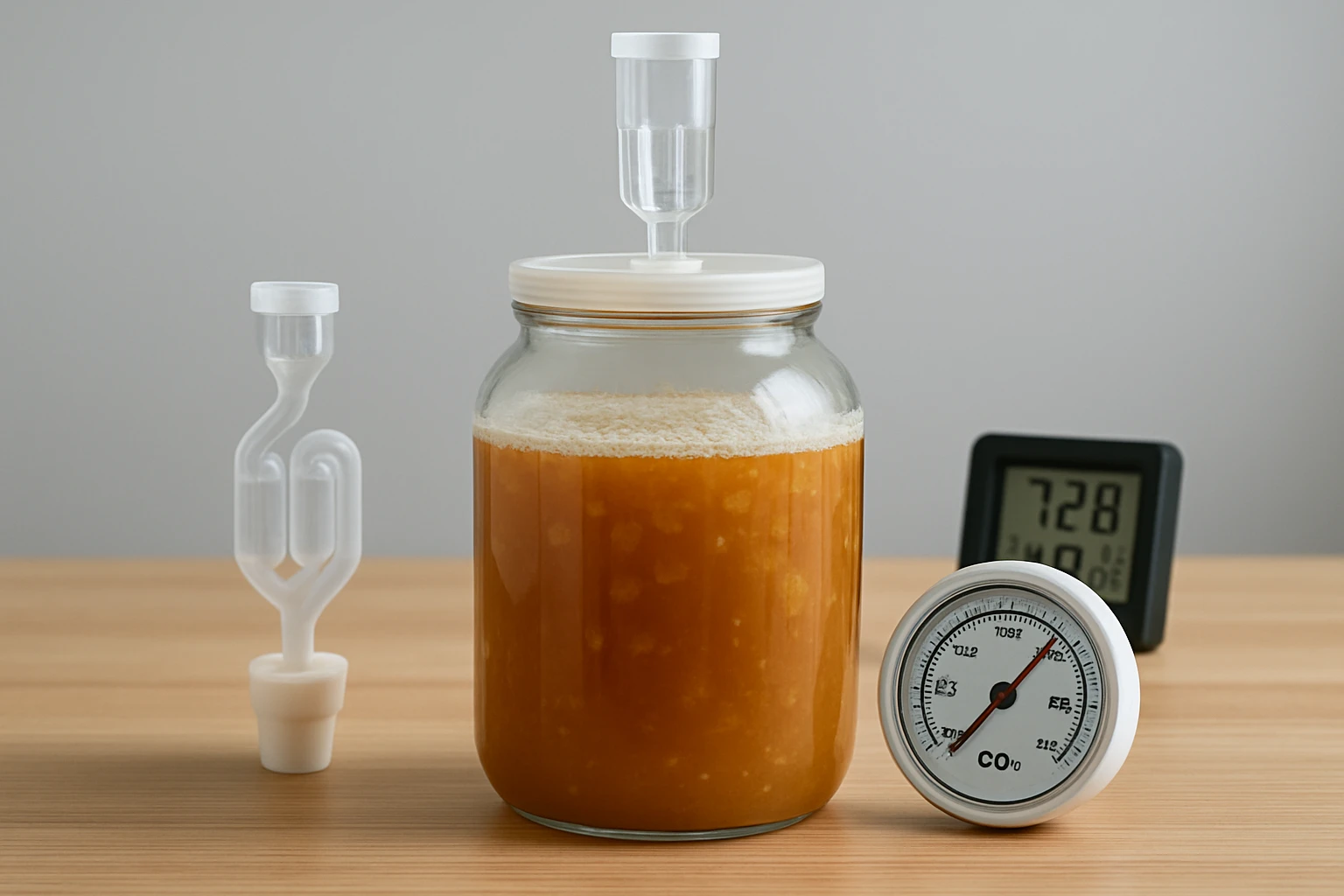
- Water‑filled airlocks that release gas through a water barrier.
- One‑way silicone valves that open under pressure.
- Loose‑fit lids that can be cracked open briefly.
Choosing the right mechanism depends on the container type and the fermenter’s tolerance for oxygen exposure.
3. Safety Devices
Safety devices such as pressure‑release clips or burst‑proof lids mitigate the risk of accidental explosion. Modern glass jars often incorporate stainless‑steel clamps that maintain an airtight seal yet can be released quickly if pressure spikes.
Product Recommendations
While many jars and crocks exist, two products stand out for CO2 management because of their design, durability, and user‑friendly accessories.
WECK 742 Glass Canning Jars
The WECK 742 Glass Canning Jars provide a classic tulip shape, a stainless‑steel clamp, and a separate rubber seal that creates a reliable airtight environment. Each 1/2‑liter jar is made from thick, heat‑resistant German glass, making it safe for microwave and dishwasher use. The design allows the lid, gasket, and clamp to be removed for easy cleaning, reducing the risk of residue that could interfere with CO2 release.
Key specifications include:
- Capacity: 1/2 L per jar (2‑jar set).
- Material: BPA‑free glass with stainless‑steel clamps.
- Rating: 4.6/5 from 849 reviews.
- Price: CAD 30.15.
Because the clamps can be loosened without removing the lid entirely, users can create a temporary vent for high‑CO2 fermentations such as kimchi or sauerkraut. The transparent glass also enables visual monitoring of bubbling activity.
Kenley 1‑Gallon Fermentation Crock
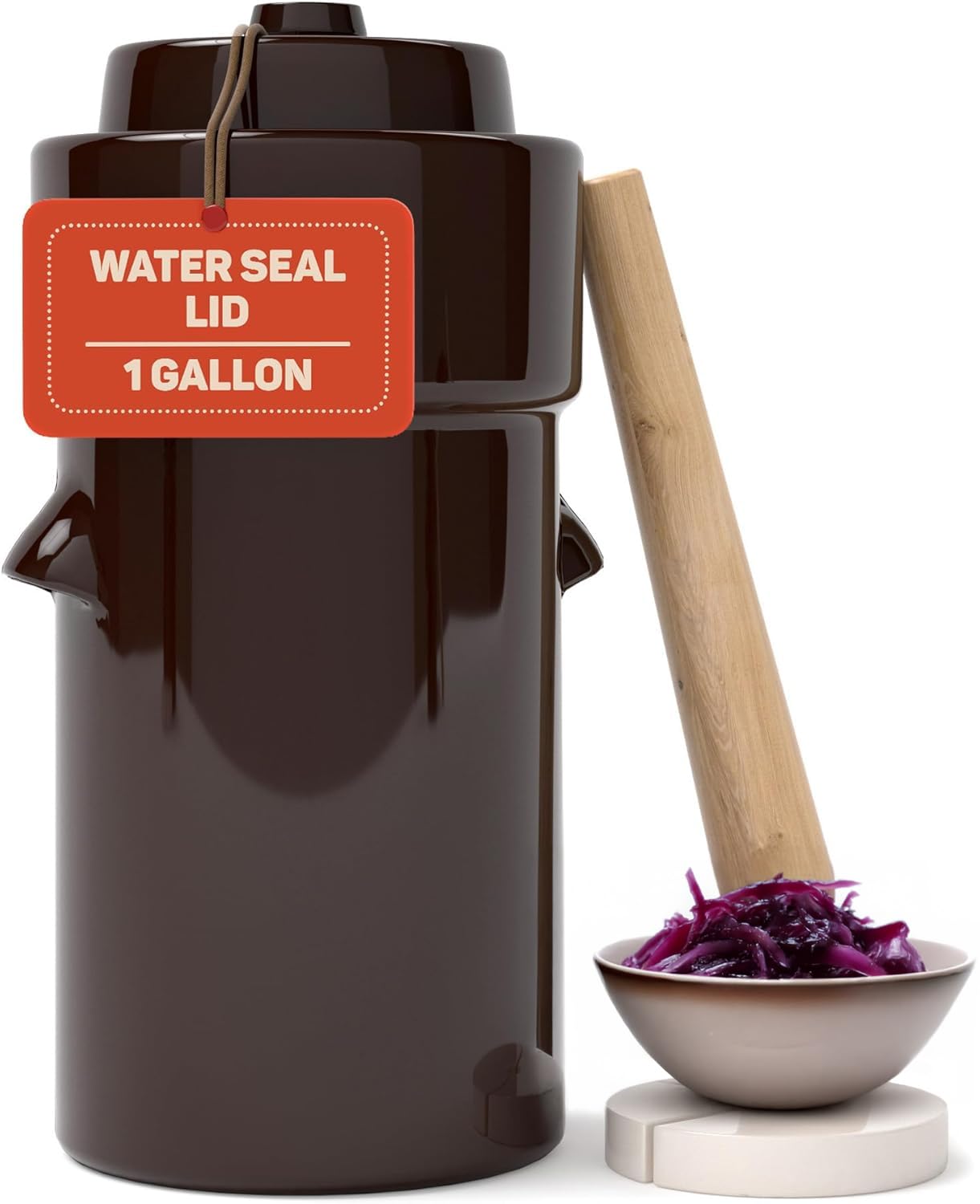
The Kenley 1‑Gallon Fermentation Crock combines a stoneware body with a water‑seal lid that automatically releases excess gas while keeping oxygen out. The crock includes unglazed weighting stones and a wooden pounder, ensuring vegetables remain fully submerged—a critical factor for consistent CO2 production and mold prevention.
Important details:
- Capacity: 1 gallon (approximately 4 L).
- Material: High‑grade ceramic with food‑safe coating.
- Rating: 4.5/5 from 918 reviews.
- Price: $59.89 USD.
The water‑seal lid acts as a passive vent: CO2 pushes water out of a small vent channel, while the water barrier prevents back‑flow of air. This design eliminates the need for separate airlocks and is ideal for beginners who prefer a “set‑and‑forget” system.
Comparison and Selection Guide
| Feature | WECK 742 Glass Jars | Kenley Fermentation Crock |
|---|---|---|
| Material | BPA‑free glass, stainless‑steel clamps | Stoneware ceramic, food‑safe coating |
| Capacity | 0.5 L per jar (2 jars) | 4 L total |
| Venting Method | Manual vent via clamp adjustment or airlock | Integrated water‑seal lid |
| Ease of Cleaning | Dishwasher safe; separate lid simplifies washing | Double‑glazed; hand wash recommended |
| Price (USD/CAD) | CAD 30.15 | $59.89 |
| User Rating | 4.6/5 (849 reviews) | 4.5/5 (918 reviews) |
Choose WECK jars if you prefer visual monitoring, modular venting, and the ability to ferment small batches of diverse foods. Opt for the Kenley crock when you need a larger volume, a hands‑free water seal, and built‑in weights for consistent submersion.
Best Practices & Tips for CO2 Management
- Calibrate Temperature. Keep fermentation environments between 18‑22 °C (64‑72 °F) for most lacto‑ferments. Use a digital probe to avoid temperature spikes that accelerate CO2 production.
- Measure Sugar Levels. For fruit‑based fermentations, use a refractometer to target 10‑15 % sugar, reducing excessive gas generation.
- Use a Reliable Airlock. If you employ glass jars, attach a silicone airlock to the lid’s vent hole. Check daily for bubbling frequency; a steady stream indicates healthy activity.
- Periodically Release Pressure. With WECK jars, loosen the clamp by a quarter turn once daily during the first 48 hours. This controlled vent prevents sudden lid ejection.
- Maintain Submersion. In the Kenley crock, place the provided weighting stones on top of the vegetables. Submerged produce ensures CO2 stays dissolved rather than forming large bubbles that could push the lid.
- Sanitize All Components. Before each use, wash lids, clamps, and crock interiors with hot, soapy water and rinse thoroughly. Sanitizing reduces unwanted microbial competition that could produce irregular CO2 spikes.
- Record Observations. Keep a fermentation log noting temperature, visible bubbling, and any vent adjustments. Data helps refine future batches and troubleshoot pressure anomalies.
Frequently Asked Questions
1. How quickly does CO2 build up in a sealed jar?
CO2 production varies with temperature and sugar concentration, but most lacto‑ferments generate 0.5‑1 psi within the first 24 hours. Monitoring is essential during this initial phase.
2. Can I use a regular screw‑top lid for venting?
Standard screw‑top lids are not designed for one‑way gas release and may pop off under pressure. It is safer to use an airlock or a purpose‑built venting lid such as those on WECK jars.
3. Is the water‑seal lid on the Kenley crock completely airtight?
The water seal allows CO2 to escape while preventing air entry, creating a semi‑airtight environment that balances gas release with oxygen exclusion.
4. What signs indicate that my ferment is over‑pressurized?
Bulging lids, hissing sounds louder than normal, or a sudden “pop” when opening indicate excessive pressure. Loosen the vent or release gas immediately.
5. Do I need a pressure gauge for home fermentation?
A gauge is optional for most small‑batch fermentations. However, for high‑sugar or large‑volume batches, a gauge provides quantitative data and enhances safety.
6. Can I reuse the rubber seals on WECK jars indefinitely?
Rubber seals last several years with proper cleaning. Inspect for cracks or deformation before each use; replace if any damage is observed.
7. How often should I clean the water‑seal lid?
Rinse the lid after each batch and scrub any mineral buildup weekly. Cleanliness ensures the water barrier functions correctly.
Conclusion
Effective CO2 management safeguards both the fermenter and the final product. By understanding pressure dynamics, selecting appropriate containers, and applying systematic venting techniques, home enthusiasts can produce consistent, safe, and flavorful ferments. The WECK 742 Glass Canning Jars and the Kenley 1‑Gallon Fermentation Crock exemplify reliable, user‑friendly solutions that integrate seamlessly into the best‑practice workflow outlined above.
Products Featured in This Guide
WECK 742 Glass Canning Jars
Price: CAD 30.15 | Rating: 4.6/5 (849 reviews)
Featured because the airtight clamps and separate rubber seal enable controlled venting, making them ideal for small‑batch, high‑CO2 fermentations.
Kenley 1‑Gallon Fermentation Crock
Price: $59.89 USD | Rating: 4.5/5 (918 reviews)
Featured for its integrated water‑seal lid and built‑in weighting stones, which together provide passive CO2 release and consistent submersion for larger batches.