
Complete Guide to Legal Labeling Requirements for Selling Fermented Foods Locally: Compliance Checklist for Small Producers
Introduction
Small producers of fermented foods often encounter uncertainty when navigating labeling regulations. This guide explains the legal requirements that apply to fermented products sold at farmers markets, local stores, and online platforms. Readers will learn the essential elements of a compliant label, how to document production processes, and which labeling tools simplify the task.
The guide also recommends affordable, high‑quality labeling supplies that meet durability and readability standards. By following the checklist, producers can avoid costly recalls, build consumer trust, and focus on product quality.
Background and Context
Fermented foods such as kimchi, sauerkraut, kombucha, and pickles are subject to both federal and state food labeling statutes. The United States Food and Drug Administration (FDA) enforces the Food Labeling Guide, while many states impose additional requirements for cottage‑industry operations. Understanding the hierarchy of regulations is essential because non‑compliance can result in fines, product seizures, or loss of market access.
Key concepts include the distinction between a "statement of identity" and a "net quantity of contents," the necessity of a "manufacturer or distributor" statement, and the requirement to list allergens in accordance with the Food Allergen Labeling and Consumer Protection Act (FALCPA). Fermented products may also require a "pH" or "acidified food" declaration if the final pH is below 4.6.
Producers must maintain a record of each batch, including ingredients, fermentation time, and temperature. These records support the label claims and provide evidence during inspections.
Core Label Elements Required by Law
Every compliant label must contain the following elements in a clear, legible format:
- Statement of Identity: A precise description such as "Fermented Cabbage Kimchi" or "Lactose‑Free Kombucha".
- Net Quantity of Contents: Expressed in weight (grams or ounces) for solid products and volume (milliliters or fluid ounces) for liquids.
- Ingredient List: Ingredients listed in descending order of predominance by weight, with sub‑ingredients disclosed.
- Allergen Declaration: Highlight any of the eight major allergens present, using bold or capitalized text.
- Manufacturer or Distributor Information: Name, address, and phone number of the responsible party.
- Nutrition Facts Panel: Required for most packaged foods, though exemptions exist for small‑batch producers under 12 ounces or 12 linear inches of label space.
- Special Claims: If the product is marketed as "raw," "organic," or "probiotic," the claim must be substantiated with supporting documentation.
Failure to include any of these components can render the label non‑compliant. Producers should verify that each element is present before the product reaches the consumer.
Recommended Labeling Supplies
Durable, legible labels are essential for meeting regulatory standards. The following products have been selected because they provide water‑ and oil‑resistant surfaces, easy removal without residue, and sufficient space for required information.
The first mention of each product includes a direct affiliate link.
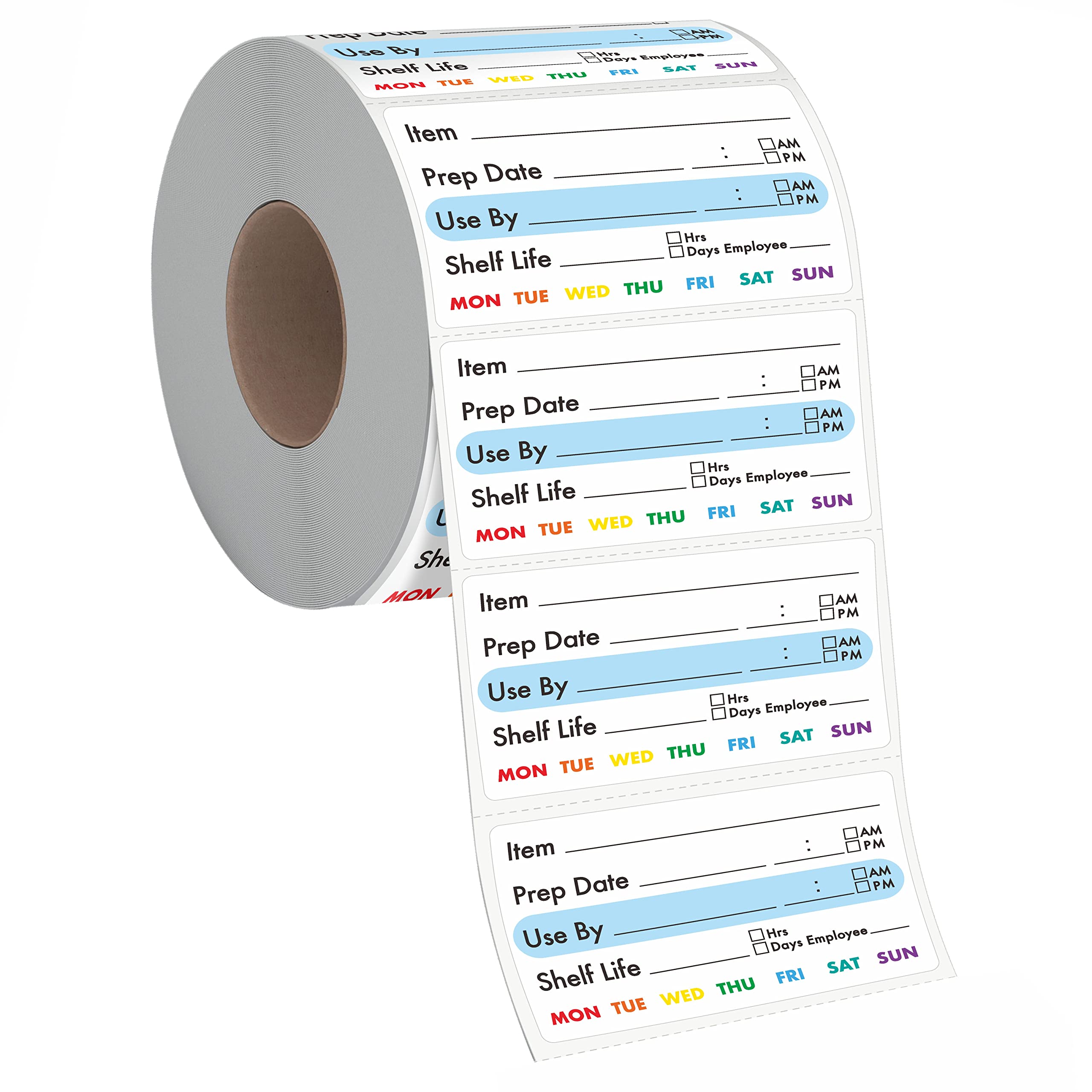
- Hebayy Removable Food Labels (300 Pack) – These self‑adhesive paper labels are water, oil, and tear resistant, making them suitable for freezer, pantry, and refrigerator storage. Each label includes designated areas for "Prep Date," "Use By," "Shelf Life," and "Week Day," which align with the labeling checklist. The pack contains 300 labels, providing ample supply for small‑batch operations. The product holds a 4.6‑star rating from 365 reviews and is priced at $8.99.
- Onupgo Reusable Chalkboard Labels (180 Pack) – These waterproof vinyl labels can be written on with a liquid chalk marker and erased for reuse. They are ideal for temporary labeling during fermentation trials, allowing producers to adjust dates and ingredient notes without waste. The set includes a white liquid chalk marker and carries a 4.7‑star rating from 7,311 reviews, priced at $9.99.
- Hebayy Freezer & Pantry Labels (500 Pack) – This larger pack offers 500 glossy, water‑ and oil‑resistant labels measuring 2" x 1". The high‑contrast font aids quick identification, and the perforated roll simplifies dispensing. With a 4.6‑star rating from 365 reviews and a price of $7.99, this option provides the most economical solution for producers requiring extensive labeling across multiple product lines.
All three products meet the durability requirements for refrigerated and frozen storage, ensuring that mandatory information remains readable throughout the product’s shelf life.
Comparison and Selection Guide
| Feature | Hebayy Removable Food Labels (300) | Onupgo Reusable Chalkboard Labels (180) | Hebayy Freezer & Pantry Labels (500) |
|---|---|---|---|
| Material | Formulated paper, water/oil resistant | Vinyl, waterproof | Glossy paper, water/oil resistant |
| Label Size | Varied areas for date, shelf life, etc. | 2" x 2.95" (cuttable) | 2" x 1" |
| Reusability | Single‑use, removable without residue | Reusable with liquid chalk marker | Single‑use, removable without residue |
| Quantity | 300 labels | 180 labels + marker | 500 labels |
| Price | $8.99 | $9.99 | $7.99 |
| Average Rating | 4.6/5 (365 reviews) | 4.7/5 (7,311 reviews) | 4.6/5 (365 reviews) |
Producers who require permanent, high‑visibility labels for final packaging should select either the Hebayy Removable Food Labels or the Hebayy Freezer & Pantry Labels. The former provides pre‑printed sections that align with the compliance checklist, while the latter offers a larger quantity at a lower unit cost. For experimental batches or rotating inventory, the Onupgo Reusable Chalkboard Labels allow quick updates without waste.
Best Practices and Tips for Label Compliance
Beyond selecting the right label material, producers should adopt systematic procedures to ensure ongoing compliance.
- Develop a label template that incorporates all mandatory fields. Use software that can export a PDF at 300 dpi to guarantee legibility.
- Print labels on the recommended material and allow the ink to dry completely before application. This prevents smudging on refrigerated surfaces.
- Apply labels to clean, dry containers. Wipe the surface with a food‑safe sanitizer and let it air dry to improve adhesion.
- Verify that the label remains readable after exposure to moisture, condensation, or freezer burn. Conduct a spot test by placing a labeled jar in the freezer for 48 hours.
- Maintain a batch record that cross‑references the label’s production date, fermentation start date, and pH measurement. This documentation supports any health‑claim or recall.
- When using reusable chalkboard labels, clean the surface with a damp cloth and allow it to dry before writing new information. This practice prevents ghosting that could obscure critical data.
- Regularly review state‑specific cottage‑industry regulations, as some jurisdictions require a separate permit or limit the total annual sales volume.
Implementing these practices reduces the risk of non‑compliance and enhances the professional appearance of the product line.
Frequently Asked Questions
1. Do I need a Nutrition Facts Panel for fermented vegetables?
If the label space is less than 12 linear inches or the product is sold in containers of 12 ounces or less, the FDA permits an exemption. However, many retailers still request a panel, so producers often include a simplified version.
2. Can I use a permanent marker on the Hebayy Removable Food Labels?
Yes. The product description recommends using a ball‑point or permanent marker. The ink adheres well to the formulated paper and remains legible after refrigeration.
3. Are reusable chalkboard labels acceptable for final consumer packaging?
Reusable labels are generally acceptable for internal tracking or temporary identification during fermentation. For final retail packaging, a permanent label that meets durability standards is recommended.
4. How often must I test the pH of my fermented products?
Producers should measure the pH at the end of fermentation and again after any post‑processing steps such as pasteurization. Recording these values on the label or accompanying documentation demonstrates compliance with acidified food regulations.
5. What is the penalty for missing an allergen declaration?
Failure to disclose a major allergen can result in product seizure, mandatory recall, and civil penalties up to $10,000 per violation. Maintaining accurate ingredient lists on each label is essential.
6. Do I need to include a best‑by date on fermented drinks?
Yes. Fermented beverages must display a "best‑by" or "use‑by" date that reflects the product’s shelf stability under normal storage conditions.
7. Is it permissible to label a product as "probiotic" without scientific evidence?
No. Any health‑related claim, including "probiotic," must be supported by scientific studies and may require a pre‑market notification to the FDA.
Conclusion
Compliance with labeling regulations is a cornerstone of successful small‑scale fermented food production. By understanding the mandatory label elements, selecting durable labeling supplies, and following systematic best practices, producers can protect their brand, satisfy regulators, and build consumer confidence. The checklist and product recommendations presented in this guide provide a practical roadmap for achieving and maintaining compliance.
Products Featured in This Guide
Hebayy Removable Food Labels (300 Pack)
Price: $8.99 | Rating: 4.6/5 (365 reviews)
Featured because the pre‑printed sections for date, shelf life, and week day align directly with the mandatory label fields for fermented foods.
Onupgo Reusable Chalkboard Labels (180 Pack)
Price: $9.99 | Rating: 4.7/5 (7,311 reviews)
Featured because the waterproof vinyl surface and reusable nature allow producers to experiment with fermentation dates and ingredient notes without generating waste.
Hebayy Freezer & Pantry Labels (500 Pack)
Price: $7.99 | Rating: 4.6/5 (365 reviews)
Featured because the larger quantity and high‑contrast font provide an economical solution for extensive labeling across multiple product lines.