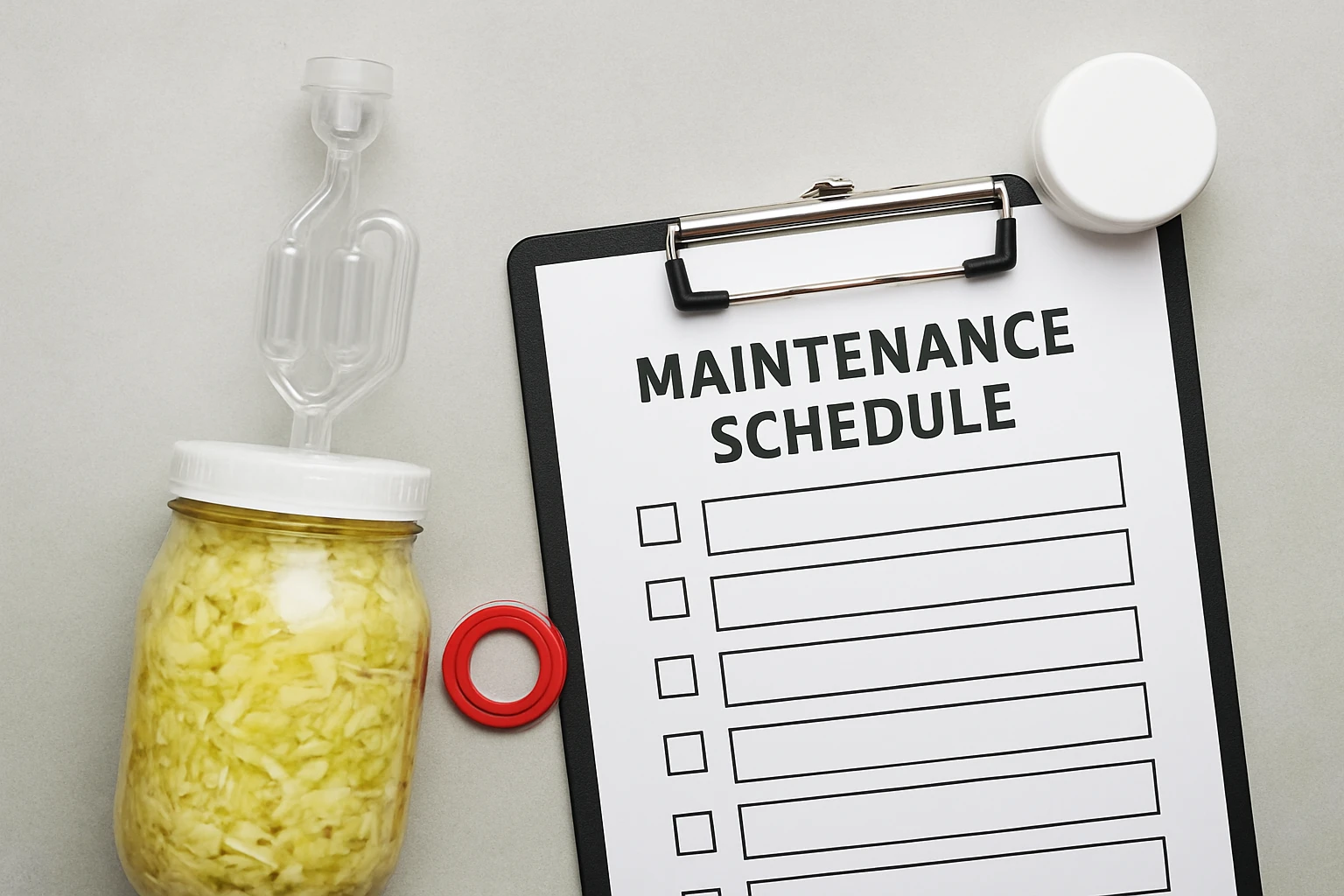

Fermentation Kit Maintenance Schedule: Complete Step‑by‑Step Guide & Monthly Checklist
Introduction
This guide explains how to keep fermentation kits in peak condition throughout the year. Readers will learn a systematic maintenance schedule, a monthly checklist, and practical tips for consistent results. The article also highlights a recommended product that simplifies the process. By following the steps, one can ensure safe, flavorful, and probiotic‑rich fermentations every time.
Background and Context
Fermentation relies on controlled microbial activity, which can be affected by temperature, pressure, and equipment cleanliness. Proper maintenance prevents contamination, glass breakage, and loss of probiotic benefits. Understanding the role of airlock devices, such as self‑burping lids, is essential for reliable outcomes. This section provides the scientific foundation needed before diving into the schedule.
Understanding Fermentation Kit Components
Typical kits include a wide‑mouth mason jar, a lid, and an airlock mechanism that releases carbon dioxide while keeping oxygen out. The airlock must remain functional, leak‑free, and hygienic to avoid spoilage. Silicone components are preferred because they are food‑safe, BPA‑free, and dishwasher‑compatible. Regular inspection of seals, valves, and jar integrity is a cornerstone of kit longevity.
Recommended Product: Masontops Pickle Pipes
For an effortless airlock solution, one can use Masontops Pickle Pipes. Priced at $23.99, this kit has earned a 4.7/5.0 rating from 4,599 reviewers, indicating high customer satisfaction. Its key features include a one‑way waterless valve that self‑burps, a low‑profile silicone lid for compact storage, and dishwasher safety. The product eliminates the need for manual burping, reduces pressure‑related breakage, and supports probiotic production across a wide range of vegetables.
Monthly Maintenance Schedule
The schedule divides tasks into weekly, bi‑weekly, and monthly actions to avoid overwhelming the user. Each interval focuses on a specific aspect of kit care, from visual inspection to deep cleaning. By adhering to this cadence, one maintains a sterile environment that promotes beneficial microbes while discouraging pathogens.
Weekly Tasks (Days 1‑7)
- Inspect the silicone airlock for cracks or discoloration; replace if any damage is observed.
- Check the jar’s rim for chips that could compromise the seal.
- Verify that the one‑way valve is venting freely by gently pressing the pipe.
- Record temperature and pH readings in a fermentation log.
Bi‑Weekly Tasks (Days 8‑14)
- Remove the lid and airlock, then rinse both components with warm water.
- Place the silicone parts in the dishwasher on the top rack, or hand‑wash with mild soap if preferred.
- Wipe the jar interior with a clean cloth to remove any residue.
- Rotate the jar position in the storage area to ensure even temperature exposure.
Monthly Tasks (Day 30)
- Perform a deep sanitization: soak the jar and airlock in a solution of 1 tablespoon unscented bleach per gallon of water for ten minutes, then rinse thoroughly.
- Inspect the silicone for permanent deformation; replace the Masontops Pickle Pipes if the valve no longer reseats securely.
- Check the jar’s glass for micro‑fractures using a flashlight; discard any compromised jars.
- Update the fermentation log with observations on flavor development and any anomalies.
Comparison and Selection Guide
When choosing an airlock system, consider three primary criteria: sealing reliability, ease of cleaning, and compatibility with jar sizes. Traditional water‑filled airlocks provide visible bubbling but require frequent topping up and can leak if not positioned correctly. Self‑burping silicone lids, such as the Masontops Pickle Pipes, eliminate water management and are dishwasher safe, which reduces labor.
For users with limited storage space, the low‑profile design of the Pickle Pipes occupies less shelf height than bulkier water‑lock systems. In contrast, metal clamps may be preferable for very large fermenters where a silicone seal could stretch over time. Ultimately, the decision hinges on the scale of fermentation and personal cleaning preferences.
Best Practices & Tips
Beyond routine maintenance, several habits enhance fermentation success. First, always use non‑chlorinated water for brines, as chlorine can inhibit beneficial bacteria. Second, maintain a consistent temperature range of 65‑72°F (18‑22°C) to support lactic‑acid production. Third, label each jar with the start date and expected finish date to track progress.
Additional tips include: rotating jars halfway through the fermentation period to equalize pressure, using a clean, non‑metallic spoon to stir brine without introducing rust, and keeping a spare set of silicone lids on hand for quick replacements. These practices minimize disruptions and ensure a steady supply of probiotic foods.
Frequently Asked Questions
- How often should I replace the silicone airlock? Replace it when you notice permanent cracks, loss of elasticity, or valve malfunction—typically every 12‑18 months with regular use.
- Can I use the Pickle Pipes with jars other than wide‑mouth mason jars? Yes, the flexible silicone adapts to most wide‑mouth containers, though a snug fit is essential for proper sealing.
- Is it safe to reuse the same jar for multiple fermentations? Absolutely, provided you sanitize the jar thoroughly between batches using the monthly deep‑clean protocol.
- Do I need to burp the jar if I use a self‑burping lid? No, the one‑way valve automatically releases carbon dioxide, eliminating manual burping.
- What signs indicate spoilage despite using an airlock? Off‑odors, visible mold, or a sudden loss of carbonation suggest contamination; discard the batch and inspect equipment.
- Can I ferment sweet vegetables like carrots with this kit? Yes, the airlock works for any vegetable, and carrots produce a mildly sweet, tangy brine when fermented correctly.
- How do I troubleshoot a stuck valve? Soak the silicone in warm, soapy water for five minutes, then gently flex the pipe to restore movement.
Conclusion
Maintaining a fermentation kit requires disciplined inspection, cleaning, and record‑keeping. By following the weekly, bi‑weekly, and monthly tasks outlined above, one can safeguard equipment and achieve consistent, probiotic‑rich results. The Masontops Pickle Pipes exemplify a reliable, low‑maintenance airlock that aligns with the schedule’s demands. Implement these practices, and the home fermenter will become a dependable source of nutritious, homemade foods.
Products Featured in This Guide
Masontops Pickle Pipes
Price: $23.99
Rating: 4.7/5.0 (4,599 reviews)
Featured because it provides a waterless, self‑burping airlock that simplifies maintenance, reduces pressure‑related breakage, and fits the recommended schedule perfectly.