Introduction
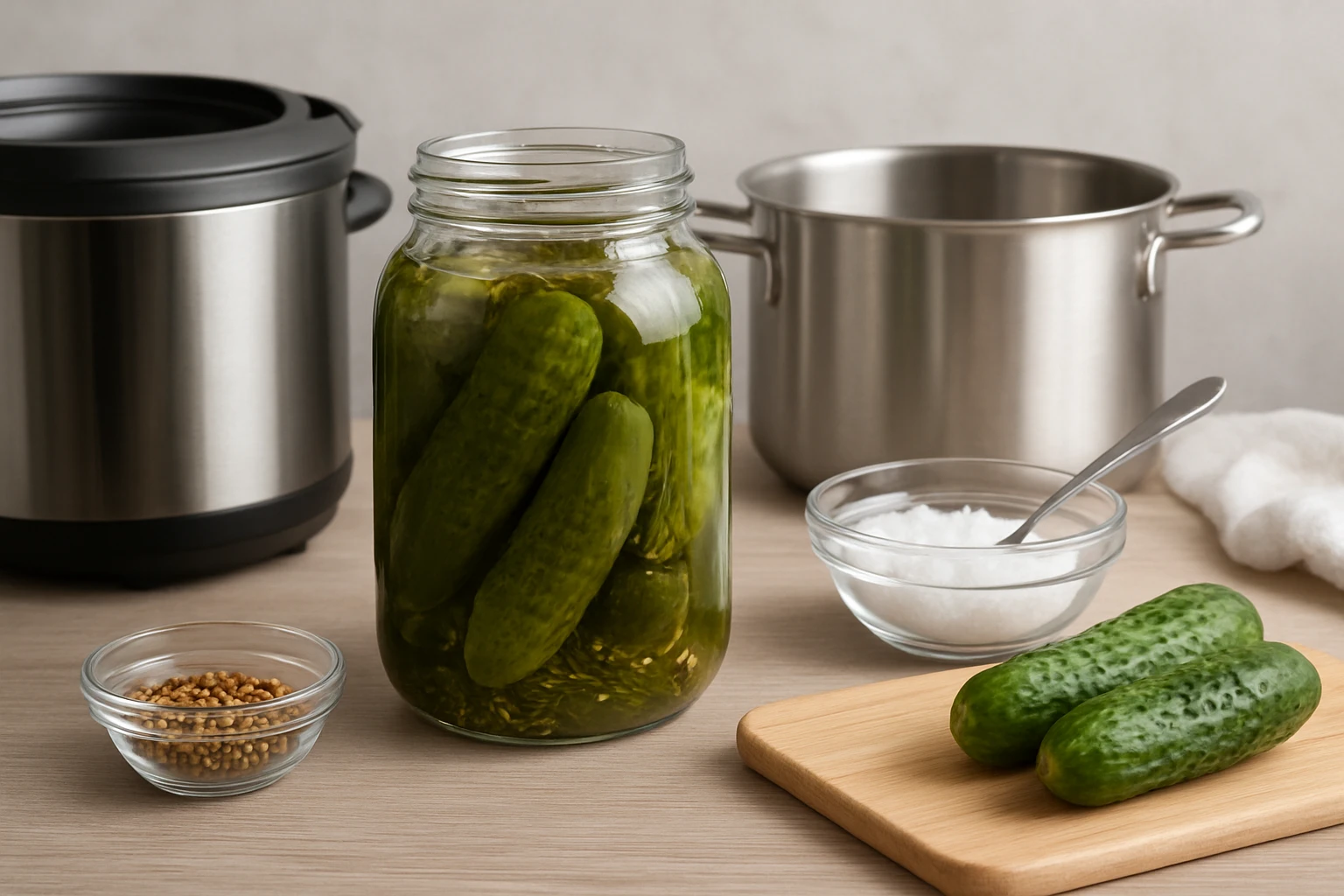
This guide explains how to identify and correct the sources of off‑flavors that develop during pickle fermentation. Readers will learn to evaluate equipment integrity, adjust brine chemistry, and prevent microbial contamination. By following the systematic approach, one can achieve consistently crisp and clean tasting pickles, whether preparing a small batch for personal use or a larger quantity for commercial distribution.
The information presented combines scientific principles with practical kitchen techniques. It emphasizes the importance of proper sanitation, accurate measurement, and appropriate tooling. The reader will also discover which specialized products can streamline the process while maintaining food‑grade safety.
While the guide recommends several tools, the methods remain effective without any purchase. The recommendations are included solely because they provide measurable advantages over generic alternatives.
Let us begin by outlining the essential materials and then proceed through each corrective step.
What You'll Need
- Food‑grade glass fermentation jars (e.g., Folinstall Fermentation Jars)
- Fermentation weights (choose between MFacoy Fermentation Weights or Eleganttime Fermentation Weights)
- Wooden sauerkraut pounder for initial vegetable preparation (SOLIGT Sauerkraut Pounder)
- Non‑iodized salt, filtered water, and fresh vegetables
- Digital scale, measuring cups, and pH test strips (optional but recommended)
- Clean kitchen towels, rubber gloves, and a sanitized workspace
Step 1: Inspect and Sanitize Fermentation Vessels
Begin by examining each glass jar for cracks, chips, or residual residues. Even microscopic imperfections can harbor unwanted microbes that produce off‑flavors such as metallic or yeasty notes. The Folinstall Fermentation Jars feature thick food‑grade glass, a wide 4.3‑inch mouth for easy inspection, and built‑in scale markings that eliminate the need for separate measuring tools. Priced at $29.99 with a 4.7‑star rating from 638 reviews, these jars provide a reliable barrier against contamination.
Sanitize the jars by submerging them in a solution of one tablespoon of unscented bleach per gallon of water for five minutes. Rinse thoroughly with filtered water and allow them to air‑dry on a clean rack. This step removes lingering spores that could otherwise generate off‑flavors during fermentation.
After drying, verify that the airtight screw‑on lids seal correctly. The Folinstall lids incorporate a silicone gasket and two silicone grommets, delivering a 100 % leak‑free environment. A proper seal prevents oxygen ingress, which is a common cause of sour or rancid notes.
Document any jars that fail the seal test and set them aside for replacement.
Step 2: Prepare Vegetables and Ensure Uniform Submersion
Use the SOLIGT Sauerkraut Pounder to crush or shred cabbage and other vegetables. This solid beech‑wood tool, priced at $13.99 and rated 4.8 stars by 3,395 reviewers, allows one to break down cell walls efficiently, releasing natural juices that form the brine. Proper crushing reduces the likelihood of uneven fermentation, which can produce bitter or mushy flavors.
After pounding, pack the vegetables tightly into the prepared jar, leaving approximately one inch of headspace. Tightly packed vegetables stay submerged more easily, limiting exposure to air.
To maintain submersion, add fermentation weights. Both the MFacoy Fermentation Weights and the Eleganttime Fermentation Weights are suitable. The MFacoy set costs $11.99, offers lead‑free glass, and includes four 7‑ounce weights that fit jars with a 2.76‑inch diameter opening. The Eleganttime set is $12.98, features a non‑slip ribbed handle for easy removal, and also weighs 7 oz each. Both options receive ratings above 4.5 stars, confirming reliable performance.
Place the weights directly on top of the vegetables, ensuring that they rest on the brine rather than the vegetable mass. This arrangement guarantees that the entire batch remains under the liquid barrier throughout fermentation.
Step 3: Formulate a Balanced Brine
A common source of off‑flavors is an improperly salted brine. Use a ratio of 2 % to 2.5 % non‑iodized salt by weight of the vegetables. For example, 1 kg of cabbage requires 20‑25 g of salt. The salt concentration controls the growth of lactic acid bacteria while inhibiting undesirable yeasts and molds.
Measure the salt with a digital scale for precision. Dissolve the salt in filtered water that matches the volume indicated by the jar’s scale markings (milliliters or fluid ounces). The Folinstall jars display these markings, allowing one to add the exact amount of brine without additional tools.
Optional: Add a small amount of whey from a previous successful batch or a starter culture to accelerate the development of desirable bacteria. This practice can reduce the time needed for flavor development, decreasing the window for off‑flavor formation.
After pouring the brine, gently tap the jar to release trapped air bubbles. Air pockets can create localized anaerobic pockets that foster spoilage organisms, leading to metallic or sour off‑notes.
Step 4: Seal, Monitor, and Adjust Fermentation Conditions
Close the jar with the airtight lid and secure the airlock. The Folinstall lids come with three airlocks, providing redundancy in case one fails. The airlock permits carbon dioxide to escape while preventing oxygen entry, a critical factor in maintaining a clean flavor profile.
Store the sealed jar at a consistent temperature between 65 °F and 72 °F (18 °C‑22 °C). Temperatures above 75 °F accelerate bacterial activity, potentially producing excessive acidity and harsh off‑flavors. Conversely, temperatures below 60 °F slow fermentation, allowing opportunistic molds to develop.
Check the fermentation daily for signs of cloudiness, surface mold, or foul odors. A clear, slightly effervescent brine indicates healthy lactic acid activity. If a film forms on the surface, remove it promptly with a sanitized spoon.
After 5‑7 days, taste a small sample. If the pickles are still crunchy but lack the desired tang, extend fermentation for another 2‑3 days. Adjust the final flavor by adding a pinch of sugar or a splash of vinegar, but only after confirming that off‑flavors are not present.
Tips & Pro Tips
- Use filtered water to avoid chlorine, which can inhibit bacterial growth and produce chemical off‑flavors.
- Maintain a headspace of at least one inch to accommodate gas expansion without forcing the lid open.
- Rotate the jar gently once during the first 48 hours to ensure even distribution of salt and brine.
- For large batches, consider adding a second airlock to each jar to improve gas release.
- Record the date, temperature, and salt concentration for each batch; this data helps identify patterns that lead to off‑flavors.
Troubleshooting
| Problem | Possible Cause | Solution |
|---|---|---|
| Metallic or bitter taste | Excessive salt, cracked jar, or metal lid | Reduce salt to 2 %, replace any cracked jar, and ensure the lid is food‑grade plastic with silicone gasket. |
| Yeasty or alcoholic aroma | Oxygen ingress or over‑fermentation | Verify airtight seal, ensure airlock is functioning, and lower storage temperature. |
| Soft or mushy texture | Insufficient submersion or low acidity | Add additional fermentation weights, increase brine volume, and confirm proper salt concentration. |
| Visible mold | Contamination from dirty equipment or surface film | Discard moldy batch, sanitize all tools, and use a clean cloth to cover jars during the first 24 hours. |
Conclusion
By inspecting equipment, ensuring uniform submersion, formulating a balanced brine, and maintaining optimal fermentation conditions, one can effectively eliminate off‑flavors in pickles. The recommended tools—Folinstall Fermentation Jars, MFacoy or Eleganttime Fermentation Weights, and the SOLIGT Sauerkraut Pounder—provide reliable performance and simplify each stage of the process. Consistent monitoring and record‑keeping further enhance the ability to produce crisp, clean‑tasting pickles batch after batch.
Apply the steps outlined in this guide, and the reader will achieve professional‑grade results without unnecessary waste or disappointment.
Products Mentioned in This Guide
Frequently Asked Questions
What are the most common causes of off‑flavors in fermented pickles?
Off‑flavors usually stem from contaminated equipment, improper brine salinity or pH, and unwanted microbial growth.
How can I ensure my fermentation jars are food‑grade and safe?
Use glass jars labeled food‑grade, rinse them with hot water, and sanitize with a mild bleach solution or boiling water before use.
What brine ratio and pH level help prevent off‑flavors?
A 5‑7% salt solution (by weight) and a brine pH of 3.5‑4.0 create an environment that favors lactic acid bacteria and inhibits spoilage microbes.
Which sanitation steps are essential to avoid contamination?
Clean all tools, lids, and surfaces with hot, soapy water, rinse well, then apply a food‑grade sanitizer or boil for at least 5 minutes.
Do I need specialized equipment to fix off‑flavors, or can I use basic kitchen tools?
While specialized tools can speed the process, the same results can be achieved with standard glass jars, a reliable scale, and proper sanitation practices.