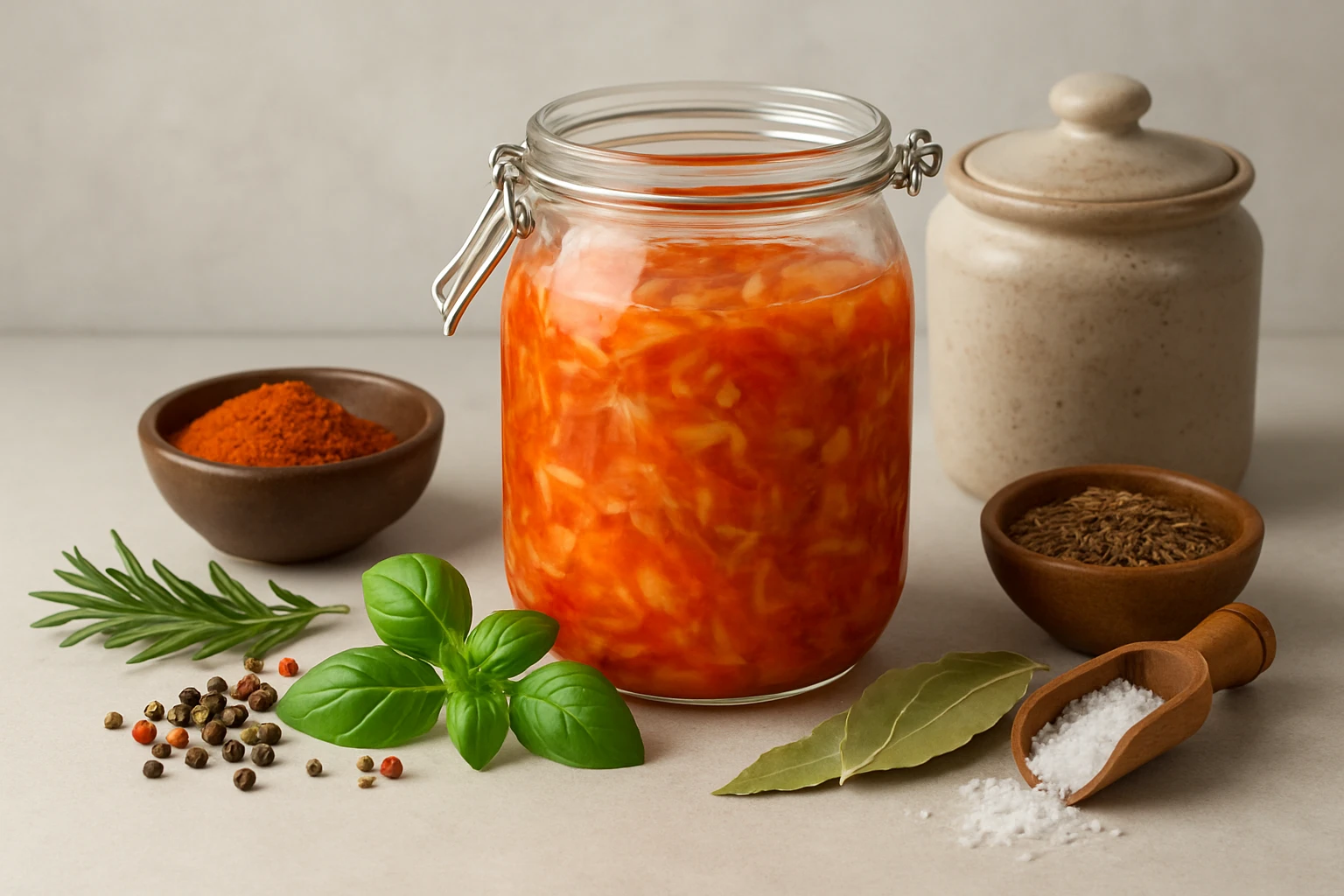
The Ultimate Guide to Fermentation Flavor Pairing: Herbs, Spices & How Your Fermenting Vessel Shapes Taste
Introduction
This guide explores the science and art of flavor development in fermented foods. Readers will learn how aromatic herbs and spices interact with microbial activity, how different vessel materials influence the biochemical environment, and which tools streamline the process. By the end of the article, one will be equipped to design balanced flavor profiles, select the optimal fermenting vessel, and apply best‑practice techniques for consistent results.
Background & Context
Fermentation relies on microorganisms—primarily lactic‑acid bacteria and yeasts—to transform sugars into acids, gases, and flavor compounds. The resulting metabolites create the tangy, umami‑rich character of kimchi, sauerkraut, pickles, and many other staples. Herbs and spices contribute volatile oils, phenolics, and antioxidants that modify aroma, texture, and health benefits. Meanwhile, the vessel’s material (glass, stainless steel, plastic) dictates oxygen permeability, thermal stability, and ease of cleaning, all of which affect microbial succession.
Understanding these variables allows home fermenters to move beyond trial‑and‑error and toward intentional flavor engineering.
Key Concepts in Flavor Pairing
Three core principles guide successful pairing:
- Complementary Aromatics: Pair herbs that share dominant volatile compounds (e.g., dill and fennel both contain anethole) to reinforce a unified scent profile.
- Contrast for Complexity: Introduce a spice with a contrasting note (e.g., cumin’s earthiness against the bright acidity of ginger) to add depth.
- Microbial Synergy: Certain spices, such as garlic and mustard seed, possess antimicrobial properties that can temper overly aggressive bacterial growth, resulting in a milder, more nuanced tang.
When these principles are applied inside a well‑chosen vessel, the final product exhibits a balanced, layered palate.
Choosing the Right Fermenting Vessel
The vessel determines the oxygen exchange rate, temperature stability, and ease of monitoring. Below are the most common options and their impact on flavor development.
Glass Jars
Glass is inert, providing a neutral environment that does not leach metals. It allows clear visual inspection of fermentation progress, which is essential for adjusting spice ratios mid‑process. However, glass can be heavy, especially at larger volumes.
Stainless‑Steel Lids with Airlocks
Stainless steel lids paired with silicone grommets and airlocks create a sealed system that limits oxygen while allowing carbon dioxide to escape. This reduces the risk of mold and preserves volatile herb aromas.
For example, the Jillmo Fermentation Lids (4 Pack) include stainless‑steel lids, BPA‑free airlocks, and silicone grommets. The kit fits wide‑mouth mason jars from 8 oz to 64 oz, making it suitable for small herb‑infused pickles and larger kimchi batches. With a 4.6‑star rating from 4,713 reviewers, the system is praised for its durability and leak‑proof performance.
Full‑Size Fermentation Kits
For batch sizes exceeding a gallon, a dedicated glass jar with built‑in airlock offers convenience. The Sovietiep 1.5 Gallon Fermentation Jars (2 Pack) provide a 4.3‑inch wide mouth, scale markings, and three airlocks. Their 4.8‑star rating from 213 reviews highlights reliability for large‑scale sauerkraut or kombucha projects where consistent temperature and minimal oxygen ingress are critical.
Vacuum‑Seal Containers
Vacuum containers create an anaerobic environment without the need for external airlocks. The E‑Jen Kimchi Vacuum Container features an adjustable pressing plate that applies gentle pressure, keeping vegetables submerged and preserving volatile herb oils. Reviewers (4.7 stars, 4,063 reviews) commend its ease of use and space‑saving design.
Integrating Herbs & Spices with Specific Vessels
Below are three common fermentations, each paired with a recommended vessel and a curated spice blend.
- Korean‑Style Kimchi (Medium Batch – 2 L)
Use the Jillmo Fermentation Lids (4 Pack) on a 1‑gallon wide‑mouth mason jar. Combine napa cabbage with Korean red pepper flakes, garlic, ginger, and a touch of fermented shrimp paste. The sealed airlock preserves the bright heat of the pepper while allowing carbon dioxide to escape, preventing over‑acidification. - Traditional German Sauerkraut (Large Batch – 12 L)
Employ the Sovietiep 1.5 Gallon Fermentation Jars (2 Pack). Add caraway seeds, juniper berries, and a handful of dill. The large volume and built‑in scale lines enable precise salt ratios, while the airtight lid maintains a stable anaerobic environment that accentuates the earthy caraway notes. - Quick Pickled Vegetables (Small Batch – 500 ml)
Select the Klemon Fermentation Lids Kit (6 Pack). Pair thinly sliced carrots with coriander seeds, mustard seed, and a pinch of smoked paprika. The kit’s silicone rings ensure a tight seal, and the BPA‑free water airlocks release gas without exposing delicate spice aromatics to oxygen.
Comparison & Selection Guide
| Feature | Jillmo Fermentation Lids (4 Pack) | Klemon Fermentation Lids Kit (6 Pack) | E‑Jen Kimchi Vacuum Container | Sovietiep 1.5 Gallon Jars (2 Pack) |
|---|---|---|---|---|
| Capacity per unit | 8 oz‑64 oz wide‑mouth jars | 4 oz‑64 oz wide‑mouth jars | 1.7 L (≈57 oz) | 1.5 gal (≈192 oz) each |
| Seal type | Stainless‑steel lid with silicone grommet & BPA‑free airlock | Stainless‑steel lid with silicone ring & BPA‑free water airlock | Inner vacuum lid with pressing plate | Glass lid with built‑in airlock |
| Price (USD) | $14.99 | $18.96 | $17.99 | $37.99 |
| Average rating | 4.6 / 5 (4,713 reviews) | 4.5 / 5 (1,356 reviews) | 4.7 / 5 (4,063 reviews) | 4.8 / 5 (213 reviews) |
| Best for | Small to medium jars, beginner-friendly | Six‑jar setups, spice‑intensive recipes | Space‑saving, vacuum‑sealed fermentations | Large‑batch, commercial‑scale fermentations |
Best Practices & Tips
- Always use food‑grade silicone grommets or rings to ensure a tight seal and prevent off‑flavors.
- Pre‑salt herbs and spices lightly before adding them to the jar; this draws moisture and protects delicate aromatics.
- Maintain a consistent temperature (60‑70 °F) to allow lactic‑acid bacteria to dominate without producing unwanted yeasty notes.
- For large jars, monitor the headspace; excess gas can build pressure, so check airlocks daily during the first 48 hours.
- When using vacuum containers, press the vegetables gently to eliminate trapped air pockets, which can cause localized spoilage.
- Document spice ratios and vessel type for each batch; over time this data becomes a valuable reference for refining flavor.
Frequently Asked Questions
- Can I mix stainless‑steel lids with plastic jars? Yes, as long as the lid’s gasket matches the jar’s opening diameter. The Jillmo Fermentation Lids are designed for standard 86 mm wide‑mouth jars, which include most plastic fermenters.
- Do spices affect the acidity level? Certain spices (e.g., garlic, mustard seed) possess mild antimicrobial properties that can slow acid production, resulting in a slightly higher final pH. Adjust salt accordingly.
- How often should I clean airlocks? Rinse the BPA‑free airlocks with warm water after each batch. For thorough sanitation, soak in a mild bleach solution (1 tbsp per quart) and rinse well. Do not boil plastic airlocks.
- Is it safe to reuse silicone grommets? Yes, silicone is durable and food‑grade. Inspect for tears before each use; the Jillmo and Klemon kits include spare grommets for replacement.
- What is the advantage of vacuum containers over airlocks? Vacuum containers maintain a constant anaerobic pressure without the need for a vent, preserving volatile herb oils that might otherwise escape through an airlock.
- Can I ferment alcoholic beverages in these jars? Fermenting kombucha or ginger beer is possible with airlock lids, but the pressure generated can exceed the seal rating of some plastic jars. Use glass jars with sturdy lids for safety.
Conclusion
The interplay between herbs, spices, and the fermenting vessel determines the final flavor profile of any fermented food. By selecting the appropriate vessel—whether a sealed stainless‑steel lid, a vacuum‑press container, or a large glass jar—and applying the pairing principles outlined above, one can consistently produce vibrant, balanced ferments. The recommended products provide reliable, user‑friendly solutions that support both novice and experienced fermenters in achieving their desired taste outcomes.
Products Featured in This Guide
Jillmo Fermentation Lids (4 Pack)
Price: $14.99 | Rating: 4.6/5 (4,713 reviews)
Featured for its stainless‑steel lids, BPA‑free airlocks, and flexible silicone grommets that create a reliable seal for small to medium jars, ideal for herb‑infused pickles and kimchi.
Klemon Fermentation Lids Kit (6 Pack)
Price: $18.96 | Rating: 4.5/5 (1,356 reviews)
Featured for its comprehensive six‑lid set, silicone rings, and water‑filled airlocks that support larger spice‑heavy batches while preventing oxygen intrusion.
E‑Jen Kimchi Vacuum Container
Price: $17.99 | Rating: 4.7/5 (4,063 reviews)
Featured for its inner vacuum lid that keeps vegetables fully submerged, preserving delicate herb aromas and offering a compact storage solution.
Sovietiep 1.5 Gallon Fermentation Jars (2 Pack)
Price: $37.99 | Rating: 4.8/5 (213 reviews)
Featured for its large capacity, built‑in airlocks, and scale markings, making it ideal for bulk sauerkraut, kombucha, and spice‑rich fermentations.