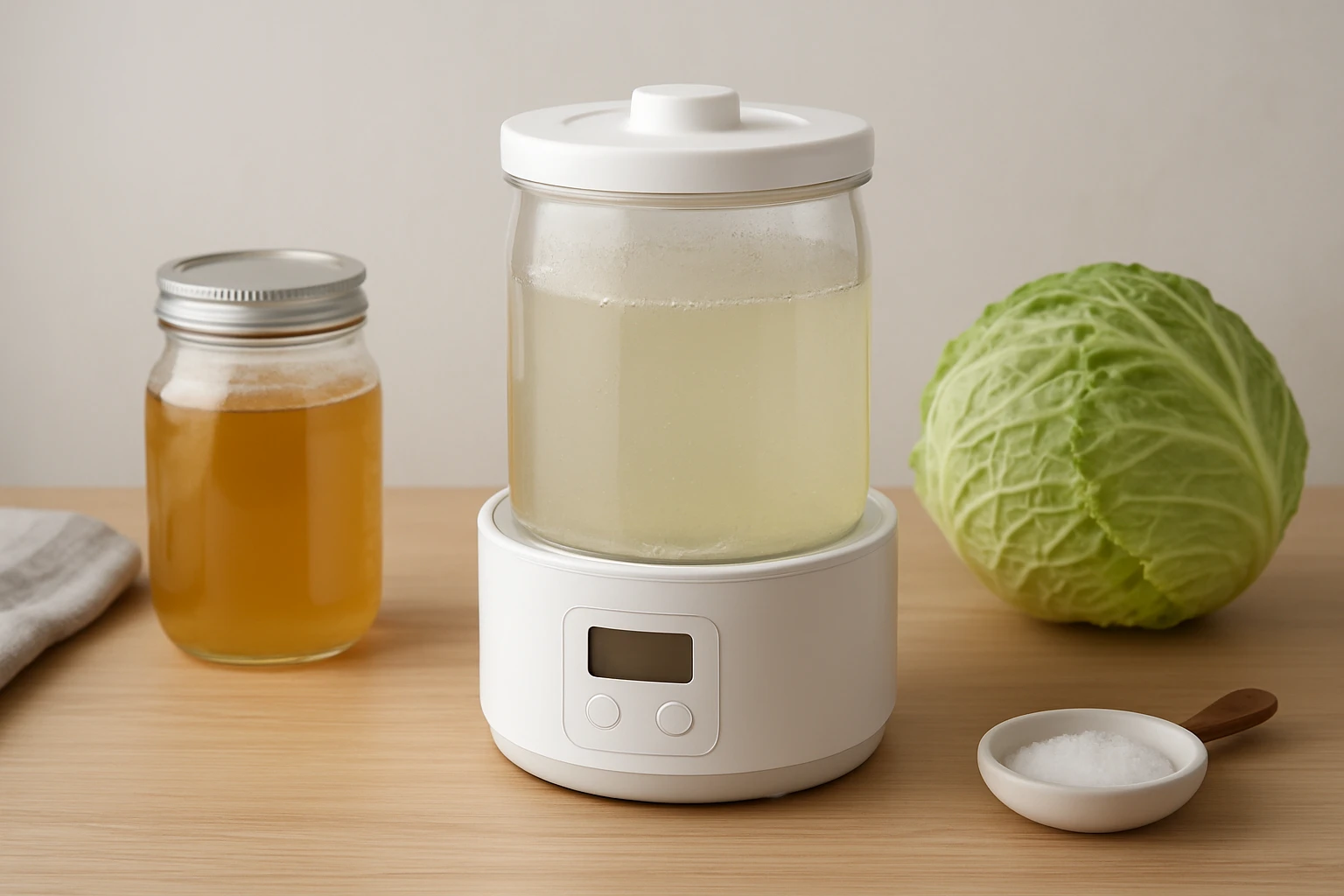
How to Build a Countertop Mini-Fermenter from a Yogurt Maker: A DIY Step‑by‑Step Guide for Home Fermentation
Introduction
The modern home cook often seeks ways to preserve nutrients while expanding culinary creativity. This guide explains how to convert an ordinary yogurt maker into a versatile countertop mini‑fermenter. One will learn the essential equipment, the precise assembly process, and the scientific reasoning behind each step. The result is a space‑saving fermenter capable of producing sauerkraut, kefir, kombucha starter cultures, and artisanal pickles without the need for bulky appliances.
By following the instructions, one can achieve consistent probiotic results, reduce plastic waste, and save money compared with purchasing commercial fermenting devices. The guide also highlights three Amazon products that simplify the conversion while maintaining a professional standard of safety and durability.
What You'll Need
- One Euro Cuisine Greek Yogurt Maker (or the Country Trading Co. Stainless Yogurt Maker for a non‑electric alternative)
- One Trellis + Co. Fermentation Kit for stainless‑steel lids and weights
- Food‑grade thermometer (optional but recommended)
- Heat‑proof silicone mat or small cutting board
- Clean kitchen towels
- Glass or stainless‑steel mixing bowl
Step‑by‑Step Instructions
Step 1: Select a Base Yogurt Maker
The first decision concerns the base container that will hold the fermenting medium. The Euro Cuisine Greek Yogurt Maker offers a patented ultra‑fine mesh strainer, BPA‑free plastic, and a compact footprint that fits easily on a countertop. It is rated 4.6 stars by over 5,800 reviewers and costs $25.00, making it an economical choice for hobbyists.
Alternatively, the Country Trading Co. Stainless Yogurt Maker provides a non‑electric, stainless‑steel thermal chamber that can hold a quart‑size glass jar. Although priced at $49.95, it eliminates the need for electricity during fermentation and removes plastic from the process entirely. The choice depends on whether the user values electric convenience or a completely metal system.
Both devices serve as a temperature‑stable chamber that can be placed in a refrigerator or a warm spot on the countertop. The yogurt maker’s lid creates a sealed environment, which is essential for anaerobic fermentation.
Step 2: Prepare the Fermentation Vessel
Begin by cleaning the yogurt maker thoroughly with hot water and mild detergent. Rinse well and allow it to air dry. The ultra‑fine mesh of the Euro Cuisine model ensures that only whey or brine drains while retaining the solid culture. This feature reduces the risk of cross‑contamination and simplifies cleanup.
Next, place the stainless‑steel fermentation lids from the Trellis + Co. Fermentation Kit onto the open top of the yogurt maker. The kit includes three 316 stainless‑steel lids equipped with waterless silicone airlock valves. These airlocks permit carbon dioxide to escape while preventing oxygen ingress, a condition that favors beneficial lactic acid bacteria and discourages mold growth.
Secure a Pickle Helix weight from the same kit inside the vessel. The weight gently presses vegetables or fruit down into the brine, ensuring full contact with the fermenting liquid. The helix design allows the user to retrieve a bite without disturbing the overall fermentation process.
Step 3: Assemble the Temperature Control System
If the chosen yogurt maker is electric (Euro Cuisine), set the temperature to the recommended range for the intended culture, typically between 68°F and 78°F (20°C‑26°C). The device maintains a stable temperature by residing in the refrigerator or a cool pantry, eliminating the need for a separate heating element.
For the non‑electric stainless model, create a warm incubator by wrapping the yogurt maker in a thick kitchen towel and placing it in a turned‑off oven with the door slightly ajar. This method provides gentle, passive heat that can be monitored with a food‑grade thermometer. The thermometer ensures that the temperature does not exceed 85°F (29°C), which could encourage undesirable microorganisms.
Maintain a log of temperature readings at two‑hour intervals. Consistent temperature is the most critical variable for successful fermentation, as fluctuations can alter flavor development and texture.
Step 4: Add the Culture and Substrate
Prepare the substrate according to the desired product. For sauerkraut, shred cabbage, massage with 2 % salt, and pack tightly into the yogurt maker. For kefir, pour milk into the container and add a kefir grain starter. The ultra‑fine mesh of the Euro Cuisine model allows liquid to drain while retaining solid pieces, which is advantageous for thick Greek‑style yogurts and vegetable ferments alike.
Place the lid with the waterless airlock on top of the vessel. The airlock’s one‑way valve releases carbon dioxide, preventing pressure buildup that could cause the lid to pop off. This design is superior to traditional water‑filled airlocks, which require frequent topping up and can introduce contaminants.
Insert the Pickle Helix weight to keep the substrate submerged. The weight’s stainless‑steel construction resists corrosion from acidic brines, extending its useful life compared with plastic or glass alternatives.
Step 5: Ferment and Monitor
Allow the mixture to ferment for the time specified by the recipe—typically 24‑48 hours for kefir, 5‑7 days for sauerkraut, and up to 12 hours for Greek‑style yogurt when using the Euro Cuisine strainer. Observe the airlock; a steady stream of bubbles indicates active fermentation.
Check the texture and taste daily after the minimum period. If the product is too liquid, extend the fermentation by another 12‑24 hours. If the flavor becomes overly sour, transfer the ferment to the refrigerator to slow bacterial activity.
When the desired consistency is achieved, remove the weight, open the lid, and transfer the fermented food to clean glass jars for storage. The yogurt maker’s strainer can be used again to produce Greek‑style yogurt by draining regular yogurt for an additional 4‑6 hours.
Tips & Pro Tips
- Always use food‑grade salt to avoid metallic off‑flavors.
- Sanitize all equipment with a mild bleach solution (1 % sodium hypochlorite) and rinse thoroughly before use.
- For large batches, duplicate the setup using multiple yogurt makers; the Euro Cuisine model can handle up to 2 quarts per cycle.
- Record the ambient temperature and humidity; high humidity can accelerate fermentation.
- If using the stainless‑steel non‑electric model, avoid sudden temperature shocks that could crack the glass jar.
Troubleshooting
| Problem | Possible Cause | Solution |
|---|---|---|
| Excessive bubbling and pressure | Airlock clogged or too tight | Release the airlock gently every few hours to vent excess gas. |
| Off‑flavor or mold growth | Insufficient submersion of vegetables | Use the Pickle Helix weight to keep produce fully covered by brine. |
| Yogurt remains runny | Insufficient straining time | Extend drainage in the Euro Cuisine strainer for an additional 4‑6 hours. |
Conclusion
This guide has demonstrated how to repurpose a standard yogurt maker into a functional countertop mini‑fermenter. One now possesses the knowledge to select appropriate equipment, assemble a sealed fermentation environment, control temperature, and produce a variety of probiotic foods. By integrating the recommended products, the process becomes more reliable, hygienic, and efficient. The reader is encouraged to experiment with different cultures, flavors, and batch sizes to fully explore the benefits of home fermentation.
Products Mentioned in This Guide
Frequently Asked Questions
What equipment is needed to turn a yogurt maker into a countertop mini‑fermenter?
You need a yogurt maker, a food‑grade container, a lid or airlock, and optional accessories like a silicone gasket and a temperature probe.
How does a yogurt maker’s temperature control improve fermentation?
It maintains a consistent low temperature (around 105‑110°F) ideal for probiotic cultures, ensuring even and reliable fermentation.
Can the DIY mini‑fermenter handle sauerkraut, kefir, and kombucha?
Yes, the same temperature range supports sauerkraut, kefir, kombucha starter cultures, and pickles with minimal adjustments.
Is the conversion process safe for food preparation?
When assembled with food‑grade parts and a proper seal, the device is safe and prevents contamination during fermentation.
Where can I buy the recommended parts for the conversion?
The guide links to Amazon products such as the Euro Cuisine Greek Yogurt Maker and compatible silicone gaskets for easy purchasing.