Introduction
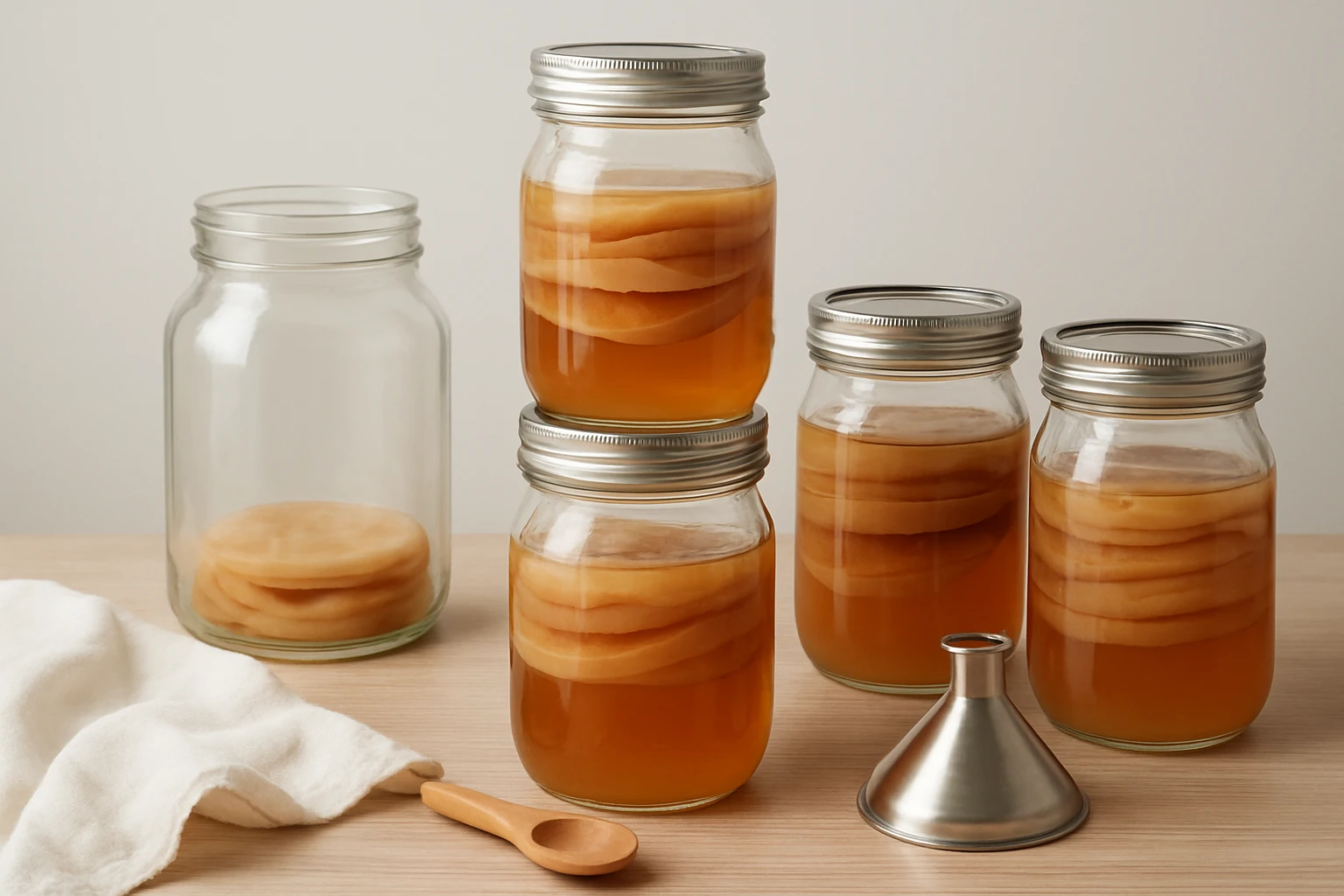
One of the most rewarding aspects of home kombucha brewing is the ability to preserve a healthy SCOBY for future batches. A SCOBY hotel functions as a living repository, allowing the brewer to maintain a stable culture, experiment with flavors, and share starters with friends. This guide will teach the reader how to construct a reliable SCOBY hotel, preserve the culture, and care for it over the long term. By following each step, the reader will gain confidence in managing the microbial community that gives kombucha its characteristic tang and effervescence.
The instructions are designed for an intermediate audience who already understands basic kombucha brewing. Nevertheless, the guide remains accessible without requiring specialized equipment beyond the recommended tools. Each recommendation is justified with product features, price, and user ratings, enabling the reader to make informed purchasing decisions.
What You’ll Need
- MIWUYI Kombucha Starter Kit – 1‑gallon glass fermenter with spigot, stainless‑steel filter, and measuring accessories ($33.98, 4.6/5 rating).
- AYL Flip Top Glass Bottles – 1‑liter swing‑top bottles for secondary fermentation and storage (6‑pack, $33.99, 4.7/5 rating).
- Kalave Stainless Steel Funnel – 5‑inch food‑grade funnel with 200‑mesh strainer and cleaning brush ($9.99, 4.6/5 rating).
- Cultures for Health Kombucha Brewing Jar – 5‑liter continuous‑brew jar with spigot ($34.99, 4.3/5 rating).
- kitchentoolz Half Gallon Mason Jar – 64‑oz wide‑mouth glass jar with airtight lid ($19.99, 4.6/5 rating).
Step 1: Choose a Suitable Container
The foundation of any SCOBY hotel is a container that provides ample headspace, airtight sealing, and easy access for feeding. Glass is the preferred material because it does not react with the acidic kombucha environment and allows visual monitoring of the culture. For a single‑family operation, the MIWUYI Kombucha Starter Kit offers a 1‑gallon jar equipped with a stainless‑steel spigot and removable filter. The spigot enables effortless removal of excess liquid without disturbing the SCOBY, while the filter prevents yeast buildup.
For larger households or continuous‑brew enthusiasts, the Cultures for Health Kombucha Brewing Jar provides a 5‑liter (1.3‑gallon) capacity and a breathable mesh top that balances oxygen exchange with protection against contaminants. Its wide mouth simplifies SCOBY placement and cleaning.
If space is limited, the kitchentoolz Half Gallon Mason Jar serves as a compact alternative, offering 64 oz of volume, a secure foam‑lined lid, and a wide opening that eases SCOBY handling.
Each of these containers meets the essential criteria of durability, non‑reactivity, and ease of access, making them superior to improvised plastic buckets that may leach chemicals.
Step 2: Prepare the Liquid Base
A healthy SCOBY hotel requires a nutrient‑rich tea solution that mimics the composition of a regular brew. Combine 8 cups of water, 1 teaspoon of loose black tea (or 2 tea bags), and 1 tablespoon of organic cane sugar. Bring the mixture to a gentle boil, then allow it to cool to room temperature (approximately 75 °F or 24 °C). Cooling is critical because excessive heat can damage the SCOBY.
When transferring the cooled tea into the chosen container, the Kalave Stainless Steel Funnel proves invaluable. Its 200‑mesh strainer removes any tea leaf fragments, preventing clogging of the spigot and ensuring a clear liquid environment. The funnel’s ergonomic handle protects the user’s hands from hot liquid, and the included cleaning brush simplifies post‑use maintenance.
After the tea is in the jar, add a small amount of starter kombucha (approximately 10 % of the total volume) to lower the pH and create an acidic environment that discourages unwanted microbes. If a starter is unavailable, a previously fermented batch can be used.
Finally, place the SCOBY gently on the surface of the liquid, ensuring that the culture is fully submerged but not crushed.
Step 3: Transfer and Seal the SCOBY
With the SCOBY positioned, cover the container using a breathable cloth (such as muslin) secured with a rubber band. The cloth allows carbon dioxide to escape while preventing dust and insects from entering. The MIWUYI Kombucha Starter Kit includes a cloth top that fits the jar perfectly, eliminating the need for a separate purchase.
Secure the lid or swing‑top cap if using a bottle. For secondary storage, the AYL Flip Top Glass Bottles are ideal. Their leak‑proof, airtight caps maintain the anaerobic conditions required for the SCOBY to thrive during long‑term storage. The bottles also provide a convenient way to segment the hotel into smaller portions, allowing the brewer to allocate SCOBYs for different flavor experiments.
Place the container in a dark, temperature‑stable area (65‑80 °F or 18‑27 °C). Avoid direct sunlight, which can accelerate unwanted bacterial growth.
Allow the SCOBY to rest for 7‑14 days. During this period, the culture will produce a thin film of new SCOBY on the surface, indicating active fermentation.
Step 4: Store the SCOBY Properly
Once the initial fermentation is complete, the SCOBY hotel is ready for long‑term storage. The key is to maintain a consistent supply of sweet tea to keep the culture fed. Prepare a fresh batch of tea using the same ratio as in Step 2, and replace approximately 25 % of the liquid in the jar every week. This “feeding” schedule prevents the SCOBY from becoming dormant.
If using the Cultures for Health Kombucha Brewing Jar, the built‑in spigot simplifies liquid removal and replacement without exposing the culture to contaminants. Simply draw off the desired volume, refill with fresh tea, and reseal.
For smaller hotels, the kitchentoolz Half Gallon Mason Jar can be stored on a refrigerator shelf if the ambient temperature exceeds 80 °F. The airtight lid slows down fermentation, extending the interval between feedings to two weeks.
Regardless of the container, always keep the SCOBY covered with a breathable cloth or a loosely fitted lid to allow gas exchange while protecting against contaminants.
Step 5: Maintain and Refresh the Hotel
Over time, the SCOBY may develop layers of older culture that become less active. Periodically (every 2‑3 months) remove the outermost layer and replace it with a fresh piece of SCOBY from a recent brew. This practice revitalizes the hotel and ensures robust fermentation for future batches.
Inspect the liquid for off‑odors, mold, or discoloration. A healthy hotel should emit a mild vinegar scent; any fuzzy green or black growth indicates contamination and requires immediate disposal of the affected SCOBY.
When planning to brew a new batch, simply draw the desired amount of starter liquid from the hotel, add it to the fresh tea, and introduce a fresh SCOBY if desired. The hotel then continues its cycle, requiring only regular feeding.
Document each feeding and observation in a brewing journal. The MIWUYI Kombucha Starter Kit features a custom notes section on the jar’s side, allowing the brewer to track pH levels, temperature, and flavor experiments directly on the container.
Tips & Pro Tips
- Use filtered or distilled water to avoid chlorine, which can inhibit yeast activity.
- Maintain a pH of 3.5‑4.5 during feeding; test strips included in the MIWUYI kit provide quick verification.
- When using the AYL Flip Top Glass Bottles for secondary storage, label each bottle with the date of bottling to monitor aging.
- Store the hotel away from strong odors (e.g., onions, garlic) as kombucha can absorb volatile compounds.
- Rotate the position of the SCOBY within the jar every few weeks to ensure even exposure to nutrients.
Troubleshooting
| Problem | Possible Cause | Solution |
|---|---|---|
| Slow fermentation | Insufficient sugar or low temperature | Increase sugar to 1 tablespoon per gallon and move the jar to a warmer spot (70‑75 °F). |
| Mold growth | Contamination from airborne spores | Discard the affected batch, sterilize the container, and ensure the cloth cover is tightly secured. |
| Spigot leaks | Improper tightening or worn gasket | Check the spigot for proper alignment; replace the gasket if wear is evident. |
Conclusion
Creating a kombucha SCOBY hotel is a straightforward process that rewards the diligent brewer with a reliable source of culture for endless experimentation. By selecting a suitable glass container, preparing a balanced tea base, employing the right tools such as the Kalave Stainless Steel Funnel, and maintaining a regular feeding schedule, one can preserve a thriving SCOBY for months or even years. The guide has outlined each step with clear rationale, product recommendations, and troubleshooting strategies, empowering the reader to master SCOBY hospitality with confidence.
Products Mentioned in This Guide
Frequently Asked Questions
What is a SCOBY hotel and why should I use one?
A SCOBY hotel is a container that stores extra SCOBY layers and starter tea, keeping the culture alive for future batches and flavor experiments.
How often should I refresh the liquid in a SCOBY hotel?
Replace about 25‑30% of the hotel liquid every 2‑3 weeks with fresh, unflavored kombucha to maintain acidity and prevent mold.
Can I use any glass jar for a SCOBY hotel?
Yes, any wide‑mouth, food‑grade glass jar (1‑gallon or larger) works, but avoid metal lids that can react with the acidic brew.
Do I need to add sugar to the hotel liquid?
No, the hotel uses already fermented kombucha as its liquid; adding sugar is unnecessary and can disrupt the balance.
How do I prevent mold growth in my SCOBY hotel?
Keep the hotel covered with a breathable cloth, store it at 68‑78°F, and maintain a pH below 4.5 by regularly topping up with fresh kombucha.