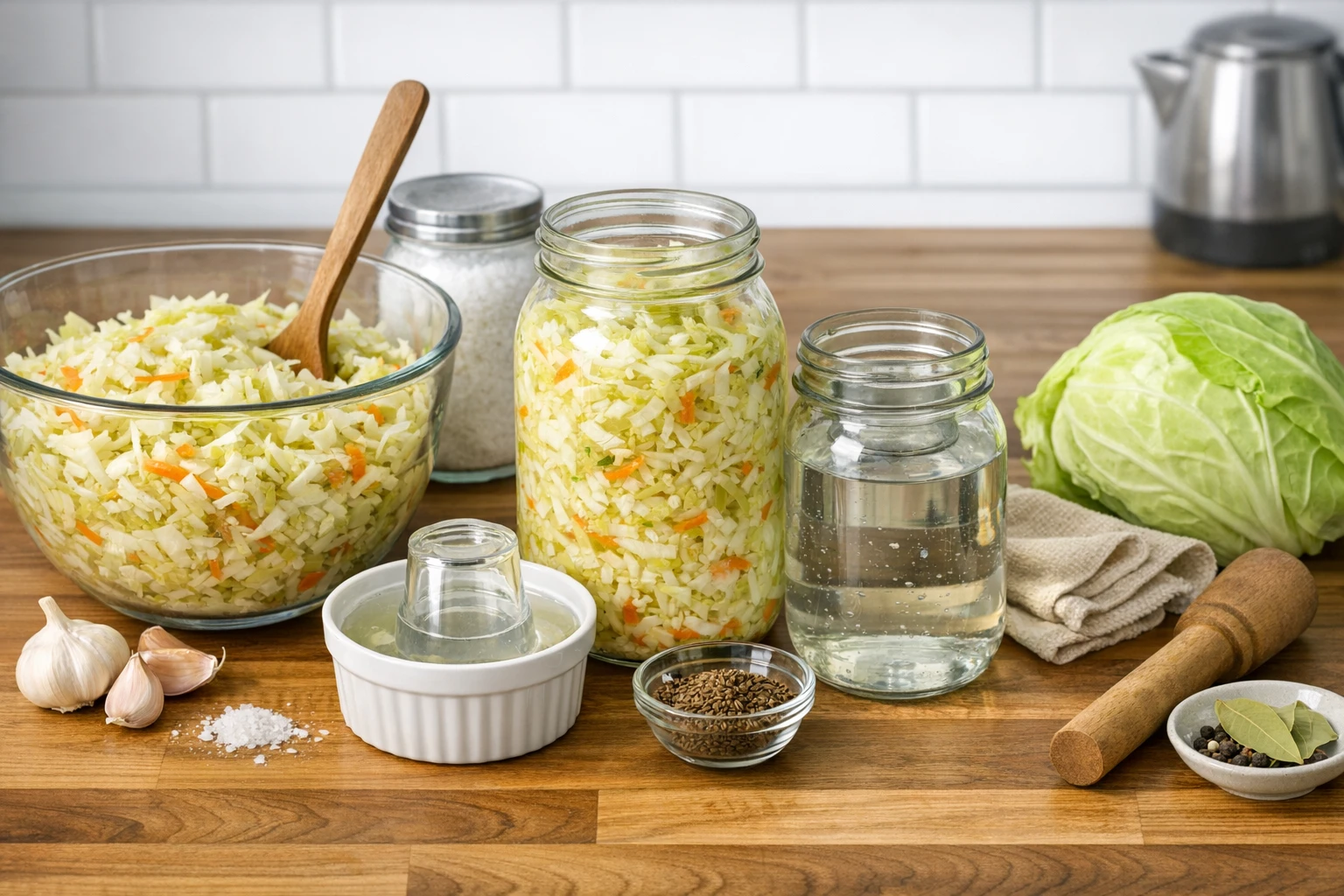
How to Ferment Sauerkraut at Home Without Special Equipment: Easy Step‑by‑Step Guide Using Everyday Kitchen Tools
Introduction
Fermenting sauerkraut at home is a rewarding way to preserve vegetables while creating a probiotic‑rich food that supports digestion. This guide will teach the reader how to transform a simple head of cabbage into tangy, crunchy sauerkraut without the need for costly fermentation kits. By following clear, actionable steps, one can achieve consistent results, understand the science behind lactic‑acid fermentation, and enjoy the health benefits of a homemade staple.
The method described uses common kitchen items—knife, bowl, jar, and a few optional tools that enhance safety and efficiency. Whether one is a beginner or an experienced home fermenter, the process remains straightforward, and the optional accessories are selected for their proven usefulness and excellent customer feedback.
What You’ll Need
- Fresh green cabbage (1‑2 kg)
- Non‑iodized salt (1‑2 % of cabbage weight)
- Large mixing bowl
- Clean wide‑mouth Mason jar or a 2 L fermentation crock
- Weight to keep cabbage submerged
- Optional tools: Neletao Cabbage Knife, SOLIGT Sauerkraut Pounder, SOLIGT Fermentation Glass Weights, Kenley Fermentation Crock Kit
Step‑by‑Step Instructions
1. Select and Prepare the Cabbage
Choose a fresh, firm head of cabbage that feels heavy for its size; this indicates high water content, which is essential for brine formation. Remove any wilted outer leaves, then rinse the cabbage under cool running water to eliminate surface dirt. Cut the cabbage into quarters and remove the core, which can hinder even shredding.
At this stage, no special equipment is required, but using a sturdy cutting board and a sharp chef’s knife will speed up the process.
2. Shred the Cabbage Efficiently
Thin, uniform shreds allow salt to penetrate quickly and promote consistent fermentation. The Neletao Cabbage Knife combines the comfort of a traditional knife with dual blades that shred cabbage in seconds. Its safety‑enhanced design prevents the user’s hand from contacting the cutting edge, and the ergonomic grip reduces fatigue during extended use.
Key features include dual blades that can shred one kilogram of cabbage in under five minutes, a safety guard for right‑handed users, and a dishwasher‑unsafe but easy‑rinse design. Priced at $5.99, it holds a 4.6‑star rating from 50 reviews, indicating reliable performance for home cooks.
To use, position the cabbage on a stable surface, grip the handle firmly, and push the knife forward while the blades slice and shred simultaneously. Collect the shreds in a large bowl.
3. Salt and Massage the Shreds
Measure 1‑2 % salt by weight (approximately 10‑20 g for a 1 kg cabbage). Sprinkle the salt evenly over the shredded cabbage and begin massaging with clean hands. The mechanical action releases cellular water, forming a natural brine that will cover the vegetables during fermentation.
Massage for 5‑10 minutes until the cabbage becomes limp and a noticeable liquid pools at the bottom of the bowl. This step is crucial because the brine creates an anaerobic environment that suppresses spoilage organisms.
4. Pack the Cabbage into a Fermentation Vessel
Transfer the salted cabbage and its brine into a clean wide‑mouth Mason jar, pressing down firmly to eliminate air pockets. A tightly packed mass ensures that the brine remains in contact with every leaf.
If a larger batch is desired, the Kenley Fermentation Crock Kit offers a 2 L stoneware container with a water‑seal lid that automatically releases gases while keeping air out. The crock’s ceramic body maintains a stable temperature, which is beneficial for consistent fermentation. It is priced at $44.98 and enjoys a 4.6‑star rating from 966 reviews, reflecting its durability and ease of use.
When using a jar, leave at least 2 cm of headspace to accommodate expansion during fermentation.
5. Add a Weight to Keep the Cabbage Submerged
Exposure of cabbage to air can lead to mold formation; therefore, the vegetables must remain fully submerged beneath the brine. The SOLIGT Fermentation Glass Weights are lead‑free, non‑porous glass pieces with a bulged handle for easy removal. Each weight is heavy enough to press the cabbage down without breaking the jar, and the set of four provides flexibility for different jar sizes.
These weights are priced at $14.99 and have a 4.6‑star rating from over 6,000 reviews, indicating widespread satisfaction among home fermenters.
Place one or more weights on top of the cabbage, ensuring that the brine fully covers the surface. If using the Kenley crock, the included unglazed stones serve the same purpose.
6. Seal the Vessel and Begin Fermentation
For Mason jars, loosely secure the lid or use a fermentation airlock to allow carbon dioxide to escape while preventing oxygen ingress. The Kenley crock’s water‑seal lid performs this function automatically, offering a hands‑free solution.
Store the sealed vessel in a cool, dark location (55‑68 °F / 13‑20 °C) for 1‑4 weeks. The temperature range influences the speed of fermentation; warmer environments accelerate acid production, while cooler ones yield a milder flavor.
During the first few days, check daily to ensure the cabbage stays submerged. If necessary, add a little extra brine (cabbage juice mixed with water and salt) to top up the level.
7. Pack Down the Cabbage with a Pounder (Optional but Recommended)
After the initial fermentation period, many home makers find that the cabbage settles, creating air pockets. The SOLIGT Sauerkraut Pounder is a solid piece of food‑grade beech wood with two ends of different diameters, allowing it to fit both wide‑mouth and regular‑mouth jars.
Using the larger end, press gently on the cabbage to release additional juices, which enriches the brine and speeds up the final fermentation stage. The pounder’s heavy construction ensures efficient packing without damaging the jar, and its ergonomic curve reduces hand strain.
Priced at $14.99 with a 4.8‑star rating from 3,357 reviews, this tool is praised for its durability and effectiveness.
8. Monitor, Taste, and Store
After 1‑4 weeks, begin tasting the sauerkraut daily. When the desired sourness is achieved, remove the weight, close the lid tightly, and transfer the jar to the refrigerator. Cold storage slows fermentation, preserving the flavor and texture for several months.
If the sauerkraut becomes overly soft or develops off‑flavors, it may have fermented too long; simply refrigerate it sooner next time.
Properly sealed and refrigerated sauerkraut can remain edible for up to six months, providing a ready‑to‑eat probiotic side dish.
Tips & Pro Tips
- Use non‑iodized sea salt or kosher salt; iodine can inhibit the beneficial bacteria.
- Always wash hands and sterilize jars before use to minimize unwanted microbes.
- For extra flavor, add grated carrots, garlic cloves, or juniper berries during the initial mixing stage.
- Maintain a consistent temperature; avoid direct sunlight or drafts.
- If mold appears on the surface, remove it immediately and add more brine; the underlying cabbage is still safe.
Troubleshooting
| Problem | Possible Cause | Solution |
|---|---|---|
| Excessive bubbling | High temperature or too much salt | Move the jar to a cooler area; ensure salt concentration is within 1‑2 %. |
| Mold growth | Insufficient brine coverage | Add more brine and ensure weight keeps cabbage submerged. |
| Soft, mushy texture | Over‑fermentation | Transfer to refrigerator earlier in the next batch. |
Conclusion
Fermenting sauerkraut at home requires only a few basic tools, a modest amount of time, and an understanding of the fermentation process. By following the steps outlined above—selecting fresh cabbage, shredding with the Neletao Cabbage Knife, salting, packing, weighting, and optionally using the SOLIGT Sauerkraut Pounder and SOLIGT Fermentation Glass Weights, one can produce safe, flavorful sauerkraut without specialized equipment. The optional Kenley Fermentation Crock Kit offers a premium, all‑in‑one solution for those who prefer a traditional ceramic vessel.
Experiment with spices, monitor the fermentation, and enjoy the health benefits of this timeless preserved food.
Products Mentioned in This Guide
Frequently Asked Questions
What amount of non‑iodized salt should I use for fermenting 1 kg of cabbage?
Use 1‑2 % of the cabbage’s weight, which is about 10‑20 g of salt per kilogram.
Can I ferment sauerkraut using just a Mason jar and no special fermentation crock?
Yes, a clean wide‑mouth Mason jar works fine as long as the cabbage stays submerged under its brine.
How long does it take for sauerkraut to reach optimal tanginess?
Typical fermentation takes 1‑3 weeks at room temperature, tasting after the first week to decide when it’s ready.
Do I need any special tools to keep the cabbage submerged?
A simple weight (like a small glass jar or fermentation stone) or a clean plate will keep the cabbage below the brine.
How should I store homemade sauerkraut after fermentation?
Transfer the finished sauerkraut to the refrigerator; it will stay safe and flavorful for several months.