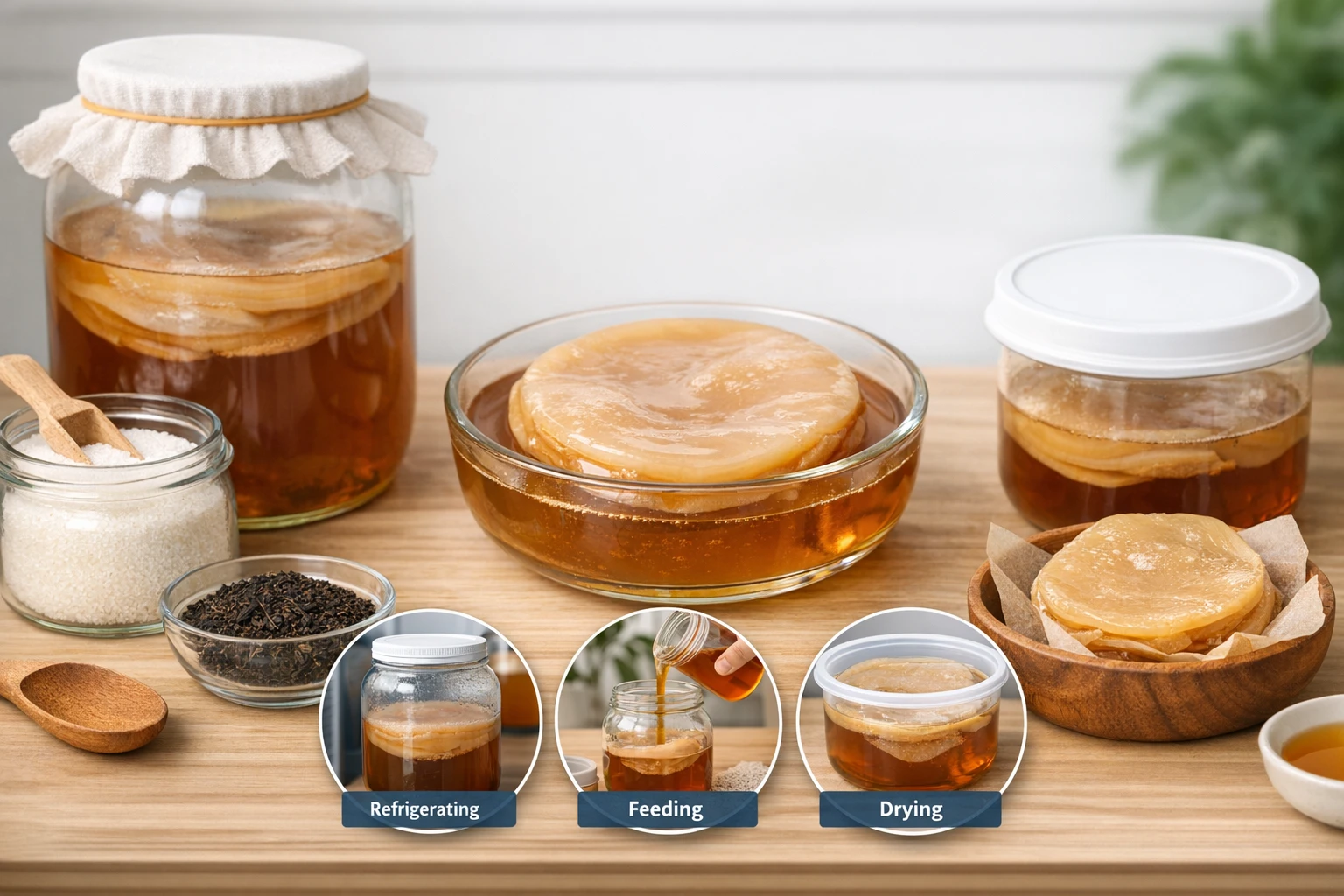
How to Store and Care for a Kombucha SCOBY: Complete Step‑by‑Step Guide to Long‑Term Storage, Feeding & SCOBY Hotels
Introduction
One of the most valuable assets for a home kombucha brewer is a healthy SCOBY. This guide explains how to store a SCOBY, how to feed it regularly, and how to create a SCOBY hotel that will keep the culture thriving for years. Readers will learn practical techniques, understand the science behind fermentation, and discover tools that simplify each stage of the process. By following these instructions, one can reduce waste, save money, and ensure a consistent supply of probiotic‑rich kombucha.
What You’ll Need
- Fresh SCOBY and starter liquid (recommended: Kombucha SCOBY Kit)
- Glass brewing container (recommended: Continuous Kombucha Jar)
- Additional glass jar for a SCOBY hotel (recommended: Fermentaholics Brewing Jar)
- Air‑tight lid or airlock (recommended: FastRack Mason Jar with Airlock)
- Organic sweet tea (optional starter: Organic Kombucha Starter Kit)
- Cloth cover and rubber band
- Thermometer and pH strips
1. Prepare the Initial SCOBY Starter
The first step is to activate the SCOBY that arrives in the Kombucha SCOBY Kit. The kit includes 16 oz of liquid starter tea, which contains a mature culture ready to ferment one gallon of sweet tea. Pour the starter into a clean, food‑grade glass jar and add one gallon of brewed sweet tea that has cooled to 75‑80°F (24‑27°C). Stir gently to distribute the culture evenly.
This mixture will begin to ferment within 24 hours, producing a new pellicle on the surface. After five to seven days, a thick SCOBY will form, indicating that the starter is viable for long‑term use. The kit’s rating of 4.4 out of 5 stars from over one thousand reviews confirms its reliability for beginners and experienced brewers alike.
2. Choose the Right Storage Container
Glass is the preferred material for kombucha fermentation because it does not react with the acidity of the brew. The Continuous Kombucha Jar provides a 1.3‑gallon capacity and includes a spigot for easy dispensing, making it ideal for both brewing and storage. Its stainless‑steel mesh lid allows airflow while protecting the culture from fruit flies.
If a separate hotel is desired, the Fermentaholics Brewing Jar offers a one‑gallon, USDA‑food‑grade glass vessel with a breathable muslin cover. The jar’s printed “brew notes” area helps track batch dates and flavor experiments. Both containers are rated above 4.3 stars, indicating strong customer satisfaction.
3. Create a SCOBY Hotel
A SCOBY hotel is a dedicated jar that houses extra SCOBYs and starter liquid for future batches. Fill the chosen hotel jar with enough sweet tea to cover the SCOBY completely; a 70 % sugar‑to‑water ratio is typical for starter tea. Add one or two SCOBYs and pour in any remaining starter liquid from the initial brew.
Seal the jar with a breathable cloth and rubber band. The cloth prevents contaminants while allowing carbon dioxide to escape. Store the hotel in a dark, temperature‑stable location (65‑80°F). The Organic Kombucha Starter Kit provides an organic, lab‑tested culture that can be used as a backup starter if the primary SCOBY ever becomes compromised.
4. Feed the SCOBY Regularly
Feeding the SCOBY involves transferring a portion of the hotel liquid into a fresh batch of sweet tea. For each gallon of new tea, add 10 % of the hotel liquid as starter. This practice maintains the acidic environment that suppresses unwanted microbes.
When using the FastRack Mason Jar with Airlock, the built‑in airlock releases excess pressure, reducing the risk of over‑carbonation. The jar’s BPA‑free, heat‑resistant glass is safe for both hot tea preparation and cold storage.
5. Monitor Temperature and pH
Temperature has a direct impact on fermentation speed. Ideal temperatures range from 75°F to 85°F; lower temperatures slow the process, while higher temperatures may produce off‑flavors. Use a digital thermometer to keep the environment within this range.
pH should drop from around 5.0 to 3.0 during fermentation. Test strips are inexpensive and provide quick feedback. If pH remains above 4.0 after seven days, consider adding a small amount of fresh starter liquid from the hotel to boost acidity.
6. Transfer and Store the SCOBY for Long‑Term Preservation
For long‑term storage beyond a few months, the SCOBY can be refrigerated in a sealed container with enough starter liquid to keep it submerged. Place the container in the refrigerator’s vegetable drawer to maintain a stable temperature around 40°F.
Before returning the SCOBY to room temperature for a new batch, allow it to acclimate for 24 hours. This gradual transition prevents shock and encourages rapid re‑activation. The Kombucha SCOBY Kit includes a detailed brewing guide that outlines these steps in greater detail.
Tips & Pro Tips
- Use filtered or distilled water to avoid chlorine, which can inhibit yeast activity.
- Maintain a consistent sugar concentration; variations affect the SCOBY’s health.
- Label each jar with the date of creation and the type of tea used; this aids in tracking flavor development.
- When using the Continuous Kombucha Jar, clean the spigot with warm water after each use to prevent biofilm buildup.
- Consider adding a small piece of ginger or fruit during the second fermentation for enhanced flavor without compromising the SCOBY.
Troubleshooting
| Problem | Possible Cause | Solution |
|---|---|---|
| Slow fermentation (more than 14 days) | Low temperature or insufficient starter | Move jar to a warmer spot; add 10 % more starter liquid from the hotel. |
| Mold growth on surface | Contamination from air or dirty equipment | Discard the batch, sanitize all tools, and ensure cloth cover is tightly secured. |
| Thin or weak SCOBY | Insufficient nutrients or overly acidic starter | Use a fresh batch of sweet tea with a 1:1 sugar‑to‑water ratio and ensure starter pH is below 4.0. |
Conclusion
By following the systematic steps outlined above, one can store, feed, and maintain a kombucha SCOBY for indefinite periods. Proper container selection, regular feeding, and vigilant monitoring of temperature and pH are essential for a thriving culture. The recommended products—such as the Kombucha SCOBY Kit, Continuous Kombucha Jar, and others—provide reliable tools that streamline each phase of the process. Armed with this knowledge, readers can enjoy a continuous supply of probiotic‑rich kombucha while minimizing waste and expense.
Products Mentioned in This Guide
Frequently Asked Questions
How often should I feed a SCOBY that’s stored in a hotel?
Feed the SCOBY hotel every 4–6 weeks with fresh sweet tea to keep the culture active.
Can I store a SCOBY at room temperature instead of refrigeration?
Yes, but it will need more frequent feeding (about every 2 weeks) to prevent mold and acidity buildup.
What is the best container for long‑term SCOBY storage?
A clean glass jar with a loose‑fitting lid works best, allowing gas exchange while keeping out contaminants.
How do I know if a stored SCOBY has gone bad?
Signs of spoilage include black or green mold, foul odors, or a slimy texture; discard it immediately if any appear.
Is it safe to reuse starter liquid from a SCOBY hotel for a new batch?
Yes, as long as the liquid is clear, slightly acidic, and free of mold, it can be used as starter for fresh kombucha.