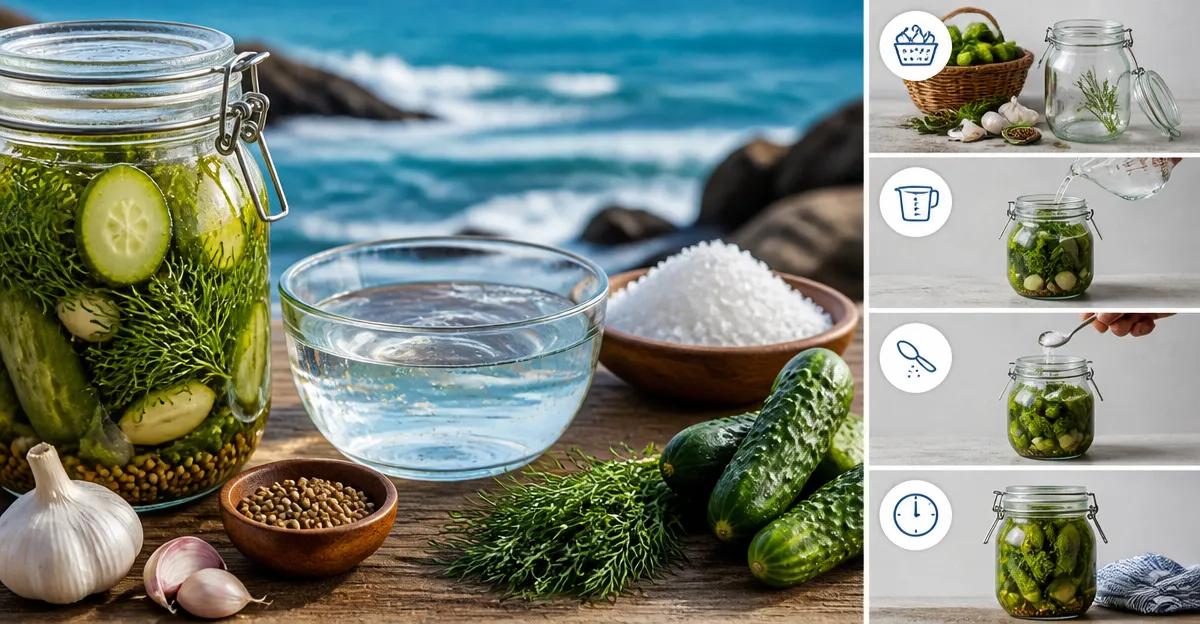
Introduction
One will discover how to transform raw seawater into a reliable brine for pickling vegetables, fruits, or proteins. The guide explains essential salt ratios, highlights potential hazards such as contamination or excessive sodium, and provides a structured workflow that minimizes error. Readers will also receive curated product recommendations that simplify measurement and enhance flavor. By following this method, one can achieve consistent, safe, and delicious pickles without relying on pre‑made brine mixes.
What You'll Need
- Clean, filtered seawater or a reliable source of natural seawater.
- Accurate kitchen scale (minimum 1‑gram precision).
- Non‑reactive fermentation vessel (glass or food‑grade stainless steel).
- Sealing lids or air‑lock system.
- Fresh produce or protein to be pickled.
- Redmond Real Sea Salt – fine grain for precise brine calculations.
- Le Saunier Fleur de Sel – premium finishing salt for flavor adjustment.
Step 1: Prepare Seawater
The first task is to collect seawater from a clean, open location away from industrial runoff. One should filter the water through a fine‑mesh cheesecloth or coffee filter to remove debris, then bring it to a rolling boil for five minutes to eliminate pathogenic microorganisms. After boiling, allow the water to cool to room temperature before proceeding. This step ensures that the brine base is microbiologically safe while preserving natural mineral content.
Step 2: Calculate Salt Ratio
Accurate salinity is the cornerstone of safe pickling; a typical brine contains 5% to 7% salt by weight. To achieve a 6% solution, one must add six grams of salt for every ninety‑four grams of seawater. Using a kitchen scale, measure the required amount of Redmond Real Sea Salt. This product provides a fine, unrefined grain that dissolves quickly and offers trace minerals that enhance the nutritional profile of the final product.
- Price: $12.32
- Rating: 4.8/5.0 (11,044 reviews)
- Key features: natural, unrefined, subtly sweet flavor, mined in Utah, gluten‑free.
Mix the measured salt into the cooled seawater, stirring until fully dissolved. Verify the salinity with a calibrated hydrometer; the reading should indicate approximately 6% salinity for most vegetable pickles.
Step 3: Sterilize Vessels
All containers, lids, and utensils must be sterilized to prevent unwanted bacterial growth. Submerge glass jars and lids in a pot of boiling water for ten minutes, then remove with tongs and place on a clean towel. Allow the items to air‑dry without touching surfaces that might re‑contaminate them. Proper sterilization reduces the risk of mold and ensures a predictable fermentation environment.
Step 4: Combine Ingredients
Pack the prepared produce tightly into the sterilized vessel, leaving approximately one inch of headspace at the top. Pour the salted seawater brine over the produce until it is fully submerged, using a fermentation weight if necessary to keep items below the liquid surface. Seal the jar with a lid or attach an air‑lock to allow gases to escape while preventing oxygen ingress. For a final flavor boost, sprinkle a pinch of Le Saunier Fleur de Sel on the surface before sealing.
- Price: $22.64
- Rating: 4.8/5.0 (443 reviews)
- Key features: hand‑harvested, delicate texture, high mineral content, 100% natural.
This finishing salt adds a subtle crunch and enhances the overall flavor profile without overwhelming the natural taste of the vegetables. Its fine grain dissolves slowly, providing a gentle, evolving seasoning during the fermentation period.
Step 5: Fermentation and Monitoring
Store the sealed jars in a cool, dark location with a temperature range of 60°F to 70°F (15°C to 21°C). Check the jars daily for signs of mold, off‑odors, or excess gas pressure; release pressure gently if using a regular lid. Fermentation typically lasts three to seven days for crisp vegetables; longer periods produce softer textures and stronger tang.
Record the date of sealing and the date of each observation to track progress. If the brine becomes cloudy or develops an unpleasant smell, discard the batch to avoid health risks.
Step 6: Store Pickles
When the desired flavor and texture are achieved, transfer the jars to the refrigerator. Cold storage slows fermentation, preserving the pickles for several months. Ensure that the produce remains fully submerged; add additional brine if necessary, using the same salt‑to‑water ratio as previously calculated.
Label each jar with the production date and type of produce for easy inventory management. Proper labeling assists in quality control and helps consumers rotate stock before spoilage occurs.
Tips & Pro Tips
- Use a digital scale for the most accurate salt measurement; small deviations can significantly affect salinity.
- When using seawater from a new source, test its baseline salinity with a hydrometer before adding additional salt.
- For extra crunch, add a thin slice of raw garlic or a few peppercorns to the jar before sealing.
- Maintain a consistent temperature; fluctuations accelerate unwanted bacterial growth.
- Consider using a fermentation weight to keep vegetables fully submerged, preventing surface mold.
Troubleshooting
| Problem | Possible Cause | Solution |
|---|---|---|
| Excessive cloudiness | Insufficient filtration of seawater | Re‑filter water before boiling and ensure all debris is removed. |
| Soft, mushy texture | Brine salinity too low | Increase salt by 0.5% and monitor fermentation time. |
| Off‑flavor or foul odor | Contamination from unsterilized equipment | Re‑sterilize jars and start a new batch with fresh produce. |
Conclusion
This guide has outlined a safe, reproducible method for using seawater as a pickling brine, emphasizing accurate salt ratios, thorough sterilization, and vigilant monitoring. By integrating high‑quality salts such as Redmond Real Sea Salt and Le Saunier Fleur de Sel, one can enhance flavor while maintaining nutritional integrity. The step‑by‑step process empowers home cooks to produce safe, delicious pickles without reliance on commercial brines. Continued experimentation within the outlined safety parameters will yield a diverse portfolio of preserved foods for personal enjoyment and sharing.
Products Mentioned in This Guide
Frequently Asked Questions
Can I use raw seawater directly for pickling, or does it need treatment?
Raw seawater should be filtered and optionally boiled to remove debris and reduce pathogens before making brine.
What is the ideal salt-to-water ratio when converting seawater into pickling brine?
Aim for a 5%–6% salt concentration (about 50‑60 g salt per litre of water) to ensure safe fermentation.
Is it safe to pickle with seawater if I have a low‑sodium diet?
Seawater brine is high in sodium, so low‑sodium dieters should use reduced‑salt recipes or commercial low‑sodium brines instead.
Do I need a special container for seawater pickling?
Use non‑reactive vessels such as glass jars or food‑grade stainless steel to prevent metal leaching.
How can I prevent contamination when using natural seawater?
Filter the water, sterilize all equipment, and keep the fermentation vessel sealed with an air‑lock or tight lid.