How to Stop Kombucha Smell in an Apartment: 7 Quick, Effective Odor‑Control Tips
Introduction
Living in an apartment often means limited ventilation and close proximity to neighbors, making strong fermentation aromas a potential source of discomfort. This guide explains seven actionable strategies that will reduce or eliminate kombucha odor while preserving the health of the brew. Readers will learn how to select appropriate containers, control temperature, improve air circulation, and use proven odor‑absorbing tools. By following these steps, one can enjoy kombucha at home without compromising indoor air quality or neighborly relations.
What You'll Need
- Glass fermentation jar with airtight lid or swing‑top closure
- Silicone sealing ring (optional for extra airtightness)
- Cleaning brush and food‑grade sanitizer
- Natural odor absorbers such as activated charcoal or baking soda
- Air purification device (choose one that matches the size of the living space)
For air purification, consider the following products that have proven performance and are suitable for apartment environments:
- Levoit Core300-P Air Purifier
- Levoit Core 200S-P Smart Air Purifier
- Levoit Core Mini-P Air Purifier
- Blueair Blue Pure 511i Max
Step 1: Choose an Appropriate Fermentation Container
Selecting a container that limits the escape of volatile compounds is the first line of defense against unwanted odor. A wide‑mouth glass jar fitted with a swing‑top or a silicone‑sealed lid creates a closed environment, preventing aromatic gases from diffusing into the apartment. The airtight seal also protects the culture from contaminants, which can otherwise produce off‑flavors and stronger smells. For those who prefer a secondary barrier, a breathable cloth cover placed over the lid can further reduce vapor release while still allowing the SCOBY to breathe.
Step 2: Optimize Brewing Temperature and Location
Kombucha ferments most efficiently between 68°F and 78°F (20°C‑26°C); temperatures outside this range increase the production of acetic acid, which intensifies sour odor. Place the jar in a location that maintains a stable temperature, such as a pantry shelf away from direct sunlight or a kitchen cabinet with a small LED nightlight for visibility. If the apartment lacks a naturally warm spot, a low‑power heating pad set to a gentle warmth can be used, but it should be monitored to avoid overheating. Keeping the brew out of high‑traffic areas also reduces the chance that odors will be noticed by visitors.
Step 3: Use a Tight‑Fitting Lid and Airlock
Even with a well‑sealed jar, pressure changes during fermentation can force gases out through the lid. Installing a simple airlock—such as a small piece of silicone tubing fitted with a one‑way valve—allows carbon dioxide to escape while keeping aromatic compounds contained. Commercial kombucha kits sometimes include these airlocks, but a DIY version can be assembled from a plastic bottle cap and a piece of breathable tubing. The airlock not only curtails odor but also reduces the risk of accidental spills caused by pressure buildup.
Step 4: Implement a Regular Cleaning Routine
Residue from previous batches can harbor yeast and bacterial colonies that generate unpleasant smells during subsequent fermentations. After each brew, clean the jar, lid, and any accessories with warm, soapy water followed by a rinse with a food‑grade sanitizer such as hydrogen peroxide diluted to 3%. For stubborn buildup, a soft brush combined with a baking soda paste can gently scrub away deposits without scratching the glass. Maintaining a spotless brewing environment ensures that each new batch produces a consistent, mild aroma rather than a pungent one.
Step 5: Introduce Active Air Filtration
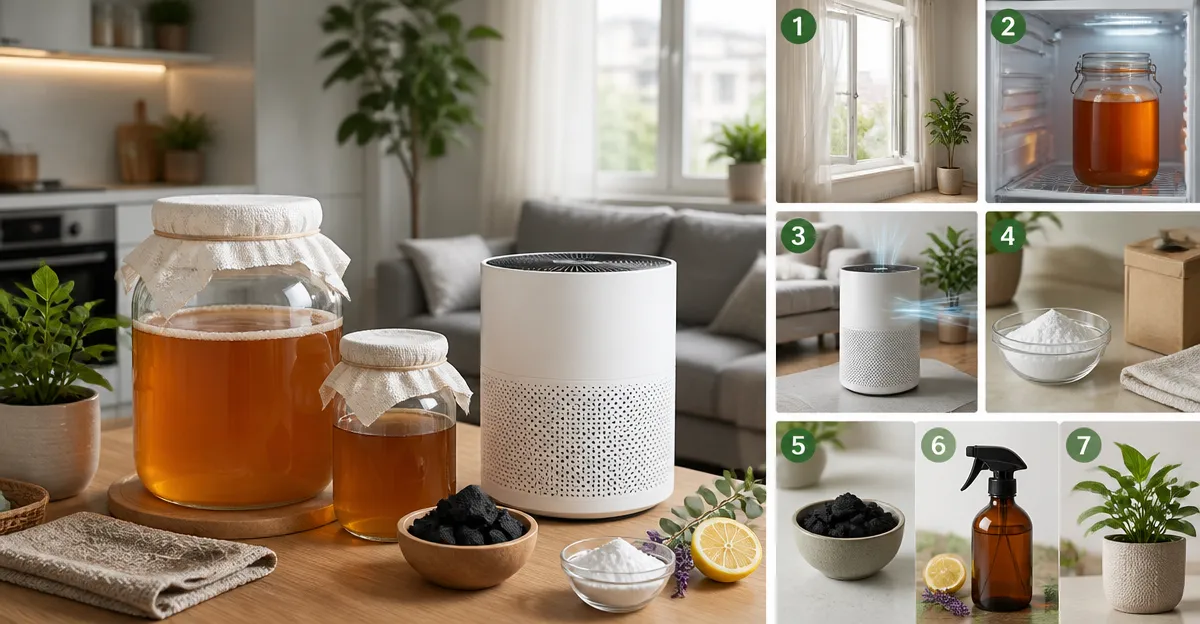
Even with a sealed container, some odor molecules may still escape, especially in small apartments where air circulates quickly. Deploying an air purifier equipped with a HEPA‑grade filter and activated carbon layer can capture these volatile organic compounds before they become noticeable. For larger living areas up to 1,073 ft², the Levoit Core300-P Air Purifier offers a 56 W high‑torque motor, a CADR of 143 CFM for smoke, and an AHAM VERIFIDE certification, guaranteeing reliable performance. It operates silently in Sleep Mode, making it ideal for bedroom use. For smaller rooms under 140 ft², the Levoit Core Mini-P Air Purifier provides a compact design, a 7 W power draw, and a rating of 4.6 / 5 from over 44,000 reviewers, priced at $39.99. The Blueair Blue Pure 511i Max is another excellent option for rooms up to 1,138 ft²; it combines HEPASilent technology with a quiet 19 dB operation and is priced at $99.90. Each of these devices removes 99.97 % of particles down to 0.1 µm, effectively reducing kombucha‑related volatile compounds.
Step 6: Employ Natural Odor Absorbers
Complementing mechanical filtration with natural absorbers creates a layered defense against smell. Activated charcoal bags placed near the brewing area attract and trap odor molecules, while a shallow dish of baking soda can be refreshed weekly to maintain absorption capacity. For those who enjoy a pleasant scent without masking the kombucha aroma, a few drops of essential oil on a cotton ball—placed away from the jar—can provide a subtle fragrance without contaminating the brew. Ensure that any aromatic additives are kept separate from the fermentation vessel to avoid altering the flavor profile.
Step 7: Maintain Proper Storage After Fermentation
Once the kombucha reaches the desired acidity, transfer it to sealed bottles for secondary fermentation or immediate consumption. Using swing‑top bottles with rubber gaskets creates an airtight seal that prevents any remaining gases from escaping into the apartment. Store the bottles in the refrigerator, where the low temperature slows further fermentation and suppresses odor production. If a secondary fermentation is desired for carbonation, keep the bottles in a cool, dark cabinet for 24‑48 hours, then return them to the fridge to halt the process.
Tips & Pro Tips
- Rotate the brewing jar every few days to release built‑up pressure without opening the seal fully.
- Place the air purifier at least three feet away from the kombucha jar to allow optimal airflow.
- Use a digital hygrometer to monitor humidity; high humidity can encourage mold growth, which contributes to odor.
- When using the Levoit Core 200S-P Smart Air Purifier, enable the auto‑mode feature so the device adjusts fan speed based on real‑time air quality readings.
- Refresh charcoal bags every two months to maintain absorption efficiency.
Troubleshooting
Problem: Persistent sour smell despite using an air purifier.
Solution: Verify that the purifier’s filter is not saturated; replace the HEPA or carbon filter according to the manufacturer’s schedule (typically every 6‑8 months for Levoit models). Also, check the jar for any micro‑leaks around the lid or silicone ring.
Problem: Mold appears on the surface of the kombucha.
Solution: Immediately discard the batch, sanitize all equipment, and ensure the brewing environment remains below 80°F with adequate airflow. Consider adding a small amount of white vinegar to the cleaning routine to inhibit future mold spores.
Conclusion
By selecting a sealed container, controlling temperature, employing an airlock, maintaining rigorous cleanliness, and integrating effective air filtration, one can dramatically reduce kombucha odor in an apartment. The combination of mechanical purification devices such as the Levoit Core300-P Air Purifier and natural absorbers creates a comprehensive odor‑control system. Implementing these seven steps will allow enthusiasts to brew kombucha confidently, enjoy its health benefits, and preserve harmonious living conditions.
Products Mentioned in This Guide
Frequently Asked Questions
What type of container best prevents kombucha odor in an apartment?
Use a glass fermentation jar with an airtight lid or swing‑top closure, optionally adding a silicone sealing ring for extra seal.
How does temperature affect kombucha smell and how can I control it?
Higher temperatures accelerate fermentation and increase aroma; keep the brew at 68‑75°F (20‑24°C) using a cool spot or a small temperature‑controlled cabinet.
Can natural odor absorbers like baking soda or charcoal eliminate kombucha fumes?
Yes, placing activated charcoal or an open box of baking soda near the fermenting jar absorbs volatile compounds without affecting the brew.
What role does air circulation play in reducing kombucha odor?
Improving airflow with a fan or vent directs smelly air away from living spaces, dispersing the scent more quickly.
Do I need a specific air purifier for kombucha fermentation?
A compact HEPA‑plus‑activated‑carbon purifier sized for your apartment effectively captures both particles and odors from kombucha.