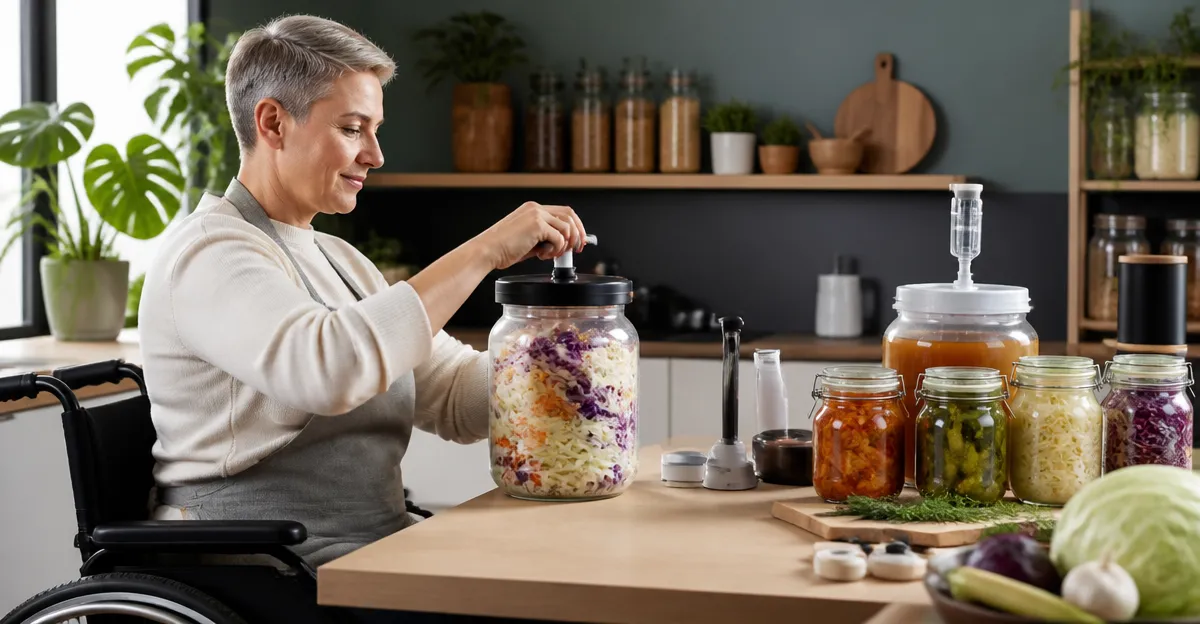
Accessible Fermentation Equipment: A Practical Guide for People with Limited Mobility
Introduction
Fermentation offers a nutritious and flavorful way to preserve vegetables, fruits, and beverages. For individuals with limited mobility, the process can present unique challenges related to handling heavy jars, managing airlocks, and performing routine burping. This guide explains essential concepts, outlines adaptive strategies, and recommends equipment that reduces physical strain while maintaining high-quality results. Readers will learn how to select appropriate tools, apply best‑practice techniques, and answer common questions about safe, hands‑free fermentation.
By the end of this guide, one will understand the core principles of fermentation, be able to compare popular kits, and possess actionable tips for a smoother, more independent experience.
Background and Context
Fermentation relies on beneficial microorganisms that convert sugars into acids, gases, or alcohol. The most common home‑fermented foods include sauerkraut, kimchi, pickles, and kombucha. Successful fermentation requires a stable, low‑oxygen environment, consistent temperature, and the ability to keep ingredients submerged beneath a brine.
People with limited mobility often encounter obstacles such as lifting heavy containers, tightening lids, or cleaning narrow openings. Modern fermentation kits address many of these issues by incorporating wide mouths, built‑in airlocks, and ergonomic seals. Understanding how these features interact with the fermentation process is essential before selecting equipment.
In addition, safety considerations such as lead‑free glass, airtight seals, and reliable weight systems help prevent contamination and ensure that the final product remains safe to consume.
Key Concepts and Adaptive Strategies
One of the first steps toward accessible fermentation is to choose containers that minimize lifting and allow easy access. Wide‑mouth jars reduce the need for excessive force when adding or removing ingredients. Airlock systems automate gas release, eliminating the need for daily burping—a task that can be difficult for individuals with limited hand strength.
Weight systems keep vegetables below the brine without requiring constant manual adjustment. Glass weights are preferred because they are non‑porous, do not absorb odors, and are easy to clean. Silicone seals and clamp lids provide a secure closure that can be tightened with minimal effort.
Finally, clear measurement markings on the jar exterior enable precise ingredient ratios without the need for additional measuring tools, further simplifying the workflow.
Recommended Products for Accessible Fermentation
The following products have been selected because they incorporate the adaptive features described above. Each product description includes specific data drawn from the Amazon listings.
Glolaurge 1L Fermentation Jar Kit
Glolaurge 1L Fermentation Jar Kit provides a 1‑liter wide‑mouth glass jar with an integrated airlock, glass weight, and stainless‑steel clamp lid. The 3.3‑inch opening allows easy packing of cucumbers, cabbage, or kimchi, and the thick lead‑free glass resists breakage during repeated use. The kit is rated 4.6 out of 5 stars based on 43 reviews, indicating strong customer satisfaction. Priced at $23.99 for a two‑pack, it offers an economical entry point for users seeking hands‑free fermentation.
Key features include:
- No daily burping required thanks to the automatic airlock system.
- Glass weights keep produce submerged, promoting consistent results.
- Airtight, leak‑proof design with silicone seal for reliable fermentation.
- Versatile use for sauerkraut, kimchi, pickles, kombucha, and even pantry storage after fermentation.
IceFun 32oz Mason Fermenting Jar Kit
IceFun 32oz Mason Fermenting Jar Kit includes four 32‑ounce wide‑mouth mason jars, plastic fermentation lids, dual‑channel airlocks, and glass weights. The plastic lids eliminate rust and reduce wear on silicone grommets, extending the lifespan of each jar. The kit carries a 4.6 rating from 132 reviews and is priced at $39.99, offering a larger batch capacity for families or avid fermenters.
Key features include:
- Complete kit with 20 date‑and‑note tags for organized tracking.
- Plastic lids that transition seamlessly from fermentation to storage.
- Wide 3.4‑inch opening and clear volume markings for precise measurements.
- Dual‑channel airlocks that maintain a stable low‑oxygen environment.
Comparison and Selection Guide
Choosing the right kit depends on several factors: jar capacity, ease of lid operation, weight handling, and budget. The table below summarizes the most relevant attributes for the two recommended products.
| Attribute | Glolaurge 1L Kit | IceFun 32oz Mason Kit |
|---|---|---|
| Jar Capacity per Unit | 1 liter (≈ 34 oz) | 32 oz |
| Number of Jars | 2 | 4 |
| Opening Width | 3.3 inches | 3.4 inches |
| Lid Material | Stainless‑steel clamp with silicone seal | Food‑safe plastic with silicone grommet |
| Airlock Type | Single‑piece automatic airlock | Dual‑channel airlock |
| Weight Material | Lead‑free glass | Lead‑free glass |
| Price (USD) | $23.99 | $39.99 |
| Average Rating | 4.6/5 (43 reviews) | 4.6/5 (132 reviews) |
If one requires a smaller batch size and prefers a metal clamp for a traditional feel, the Glolaurge kit is appropriate. For larger families or those who value the ability to convert fermentation jars directly into storage containers, the IceFun kit offers greater flexibility. Both kits eliminate daily burping, but the IceFun dual‑channel airlock provides an extra safety margin for gas release.
Best Practices and Tips for Limited Mobility
- Prepare the brine in a lightweight pitcher or measuring cup before transferring it to the jar; this reduces the number of lifts required.
- Use a kitchen tongs or jar‑gripping aid to secure the lid while tightening the clamp or plastic lid, minimizing strain on the fingers.
- Position the jars on a stable countertop or a rolling cart at waist height to avoid bending or reaching.
- Label each batch with the included date‑and‑note tags; this prevents the need to open jars frequently for verification.
- Monitor temperature with a digital probe placed on the outside of the jar; stable room temperature (65‑75 °F) yields consistent fermentation without constant adjustment.
- When removing the weight, use a silicone spatula to slide it out gently, preventing sudden jar movement.
- After fermentation, store the jars in the refrigerator or pantry using the same lid; this reduces the number of containers that must be cleaned.
Implementing these strategies reduces repetitive motions and lowers the risk of fatigue, thereby making the fermentation experience more enjoyable and sustainable.
Frequently Asked Questions
1. Do I need to burp my fermentation jars daily?
With an automatic airlock system such as those included in the Glolaurge and IceFun kits, daily burping is unnecessary. The airlock releases excess gas while preventing oxygen ingress, allowing a hands‑free process.
2. Are the glass jars safe for microwave or oven use?
The jars are made of lead‑free tempered glass, which is safe for refrigerator storage and can tolerate brief heating in a microwave for sterilization. They should not be placed in a conventional oven or subjected to direct flame.
3. How can I ensure my vegetables stay submerged?
Both kits provide glass weights that sit directly on top of the produce, keeping it below the brine. It is important to arrange vegetables evenly and add the weight immediately after sealing the jar.
4. Can I use these kits for beverages such as kombucha?
Yes. The airtight, leak‑proof design and airlock system support low‑oxygen fermentation required for kombucha and mead. However, for carbonated beverages, additional venting may be necessary during bottling.
5. What cleaning method is recommended for the lids and airlocks?
All components can be washed with warm, soapy water and rinsed thoroughly. For deeper sanitation, a brief soak in a 1% bleach solution followed by a rinse is effective and does not degrade the silicone seals.
6. Are the plastic lids on the IceFun kit BPA‑free?
The manufacturer states that the lids are food‑safe plastic, which typically indicates BPA‑free composition. For absolute certainty, one may contact the seller directly.
7. How long can fermented foods be stored after completion?
Properly sealed fermented vegetables can be stored in the refrigerator for several months, often up to six months, while maintaining flavor and safety.
Conclusion
Accessible fermentation equipment empowers individuals with limited mobility to produce nutritious, probiotic‑rich foods without excessive physical effort. By selecting wide‑mouth jars, automatic airlocks, and ergonomic weight systems, one can achieve consistent results while preserving independence. The Glolaurge 1L Fermentation Jar Kit and IceFun 32oz Mason Fermenting Jar Kit each address specific needs, whether one prefers smaller batches or larger family‑size portions. Coupled with the best‑practice tips outlined above, these tools enable a safe, enjoyable, and sustainable fermentation journey.
Products Featured in This Guide
Glolaurge 1L Fermentation Jar Kit
Price: $23.99 | Rating: 4.6/5 (43 reviews)
Featured because it provides a compact, wide‑mouth jar with an automatic airlock and glass weight, ideal for users seeking a lightweight, hands‑free solution.
IceFun 32oz Mason Fermenting Jar Kit
Price: $39.99 | Rating: 4.6/5 (132 reviews)
Featured because it offers a larger batch capacity, plastic lids that double as storage closures, and a dual‑channel airlock system, making it suitable for families or advanced fermenters.