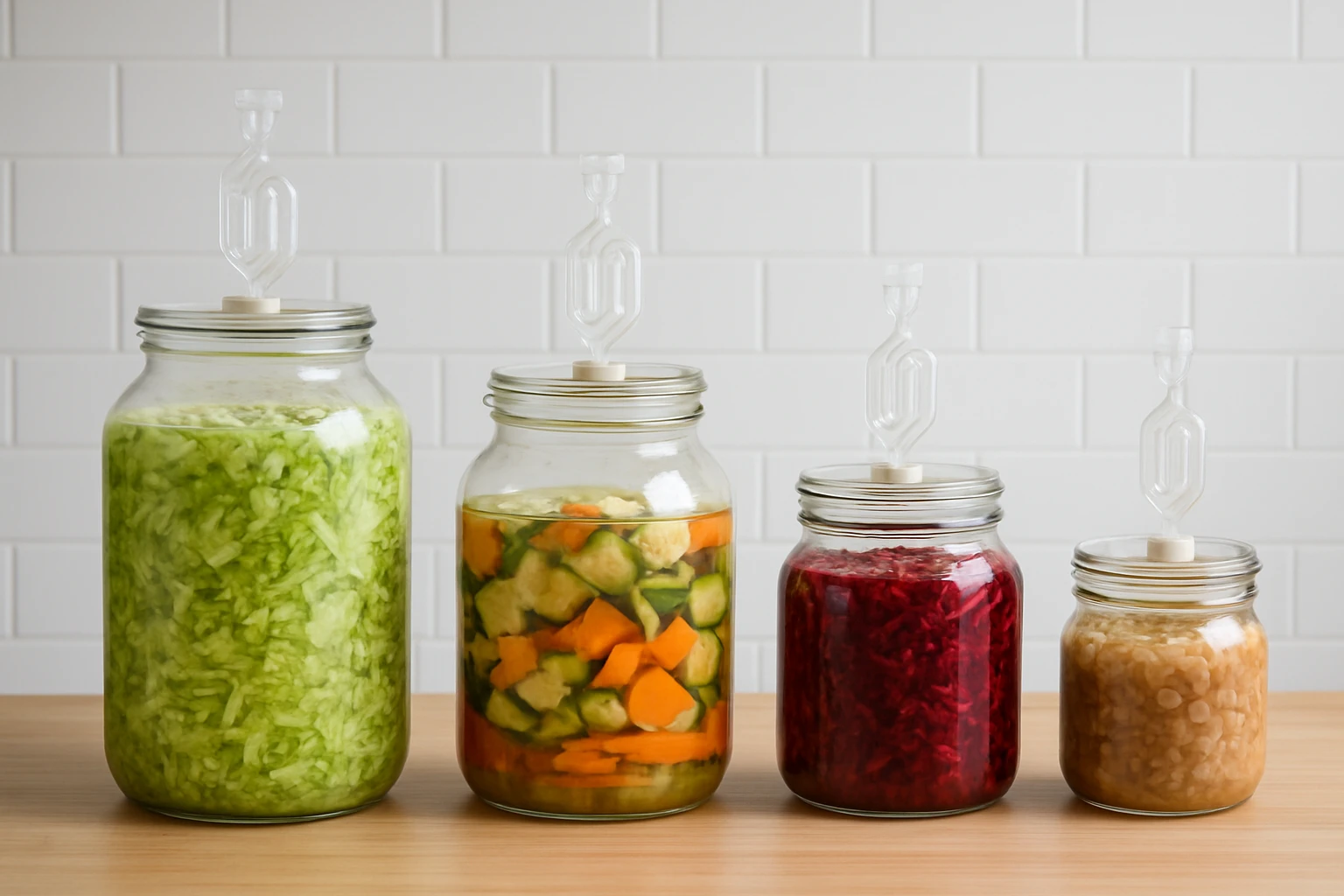
The Ultimate Fermentation Jar Size Guide: How to Choose the Right Jar for Every Batch
Introduction
Fermentation is a timeless culinary technique that transforms simple ingredients into complex flavors, and the vessel used plays a pivotal role in the outcome. This guide explains how to assess batch volume, fermentation type, and storage conditions so that readers can select the optimal jar for any project. Readers will learn about the science of headspace, the impact of material thickness, and practical considerations such as cleaning and durability. By the end of this article, one will be equipped to make an informed purchase decision and to ferment with confidence.
Background and Context
Fermentation relies on microorganisms that thrive in an environment that is both oxygen‑limited and moisture‑rich. The size of the container determines the amount of headspace, which influences gas buildup and the risk of overflow. Smaller jars create a tighter seal but may require more frequent burping, while larger vessels reduce the frequency of monitoring but can lead to excessive gas if not managed properly. Understanding these dynamics is essential before selecting a jar, because the wrong size can result in off‑flavors, contamination, or wasted effort.
Key Concepts for Selecting the Right Jar Size
There are three core concepts that guide the selection process: batch volume, headspace ratio, and material durability. Batch volume refers to the total amount of liquid or solid substrate that will be fermented; it is usually measured in gallons or liters. Headspace ratio is the proportion of empty space to total volume; a common rule of thumb is to leave 10‑15% headspace for active fermentations such as kombucha or mead. Material durability encompasses glass thickness, seal integrity, and resistance to temperature fluctuations, all of which affect long‑term performance.
Batch Volume
Home fermenters typically produce batches ranging from a single quart of sauerkraut to several gallons of cider. For small‑batch projects, a 1‑gallon jar offers ample capacity while remaining easy to handle. Larger endeavors, such as a family‑size kimchi or a multi‑gallon kombucha brew, benefit from containers of 4‑5 liters or more. Selecting a jar that matches the intended batch size minimizes waste and simplifies storage.
Headspace Ratio
During active fermentation, carbon dioxide displaces liquid and creates pressure. If the headspace is too small, the jar may overflow or the seal may be forced open. Conversely, excessive headspace slows the fermentation rate because the microbes have a larger volume to colonize. A balanced headspace of roughly one‑tenth of the total volume provides optimal gas release while maintaining a stable environment.
Material Durability
Glass is the preferred material for most fermentations because it is non‑porous, does not react with acids, and allows visual monitoring. However, not all glass is created equal; soda‑lime glass with a thickness of at least 4 mm offers resistance to thermal shock and mechanical impact. Seals should be silicone‑based for airtight performance, and lids must lock securely without relying on rubber gaskets that degrade over time.
Product Recommendations Aligned with Key Concepts
Below are curated product suggestions that illustrate how specific features address the concepts discussed above. The first mention of each product includes a clickable link to the Amazon listing.
Versatile Small‑Batch Option
The Spreccio Mason Jar Pitcher offers a 64‑oz (2‑quart) capacity, making it ideal for small batches of cold brew, sun tea, or starter cultures. Its airtight silicone seal prevents leaks, and the wide‑mouth design simplifies the addition of fruit, herbs, or ice. With a 4.8‑star rating from 1,629 reviews, users praise its durability and ease of pouring. Priced at $22.99, this jar provides a cost‑effective entry point for beginners who need a reliable, leak‑proof vessel.
Dedicated Fermentation Jar for One‑Gallon Batches
The kitchentoolz 1‑Gallon Fermenting Jar combines precise ounce and milliliter markings with a pre‑drilled air‑lock lid, facilitating accurate tracking of ingredients and controlled gas release. Its thick glass construction ensures durability, and the metal clasp maintains an airtight seal during primary and secondary fermentation. At $29.99 and a 4.6‑star rating from 42 reviews, it is praised for its versatility across mead, kombucha, and pickling applications.
Value Pack for Multiple Small‑Batch Projects
The Qianfenie 1‑Gallon Fermentation Jars 2‑Pack supplies two jars, three airlocks, and spare silicone gaskets, delivering comprehensive support for batch fermentation. The wide 4.3‑inch mouth eases ingredient handling, and the scale markings allow precise monitoring. Users note the heavy‑duty glass and included accessories as a strong value proposition at $32.99, with a 4.7‑star rating from 971 reviews.
Large‑Capacity Crock for Family‑Size Ferments
The Urban Trend 4.5L Fermentation Crock provides a 1.21‑gallon capacity suitable for kimchi, sauerkraut, or large‑scale pickles. Its traditional water‑seal airlock eliminates the need for rubber gaskets, reducing maintenance. Although priced higher at $54.99, the 4.3‑star rating from 303 reviews reflects satisfaction with its sturdy construction and clear glass visibility.
Comparison and Selection Guide
| Feature | Spreccio Mason Jar Pitcher | kitchentoolz 1‑Gallon Fermenting Jar | Qianfenie 1‑Gallon Jars (2‑Pack) | Urban Trend 4.5L Crock |
|---|---|---|---|---|
| Capacity | 2 qt (64 oz) | 1 gal | 1 gal each (2 jars) | 4.5 L (1.21 gal) |
| Seal Type | Silicone airtight lid | Airlock lid with metal clasp | Silicone airtight lid with airlock | Water‑seal airlock lid |
| Markings | None | Ounce & milliliter markings | Scale marks on glass | None |
| Price (USD) | 22.99 | 29.99 | 32.99 (pack) | 54.99 |
| Average Rating | 4.8/5 (1,629 reviews) | 4.6/5 (42 reviews) | 4.7/5 (971 reviews) | 4.3/5 (303 reviews) |
| Best For | Small beverages, starter cultures | Precise measurement fermentations | Multiple small batches, backup jars | Large family‑size pickles & kimchi |
When deciding between these options, consider the intended batch size, the need for measurement markings, and whether a single jar or a set better matches your workflow. For example, a home brewer who frequently alternates between mead and kombucha will benefit from the marked jar and airlock of the kitchentoolz model. A family that prepares weekly kimchi may prefer the larger capacity and water‑seal simplicity of the Urban Trend crock. Those on a budget who need flexibility for both beverages and small ferments will find the Spreccio pitcher a versatile entry point.
Best Practices & Tips for Successful Fermentation
- Always sanitize jars, lids, and accessories with a non‑chlorine solution or boiling water before use.
- Maintain a consistent temperature range appropriate to the microorganism; most vegetables ferment best between 65°F and 75°F.
- Monitor headspace daily during active fermentation; adjust the burp frequency of air‑lock lids to release excess carbon dioxide.
- Use weight plates or fermentation weights to keep solids submerged, especially in wide‑mouth jars.
- Label each batch with the start date, ingredients, and expected finish date to track progress and replicate successful recipes.
Applying these practices reduces the risk of mold, off‑flavors, and container failure. Additionally, storing jars in a dark, cool pantry after fermentation slows further microbial activity, preserving the desired taste profile.
Frequently Asked Questions
- Can I use a glass pitcher for hot fermentations? Most glass jars, including the Spreccio Mason Jar Pitcher, are rated for cold or room‑temperature liquids only; exposing them to temperatures above 160°F may cause breakage.
- Do I need an airlock for vegetable ferments? An airlock or water‑seal lid is recommended for long‑term ferments to prevent oxygen ingress while allowing carbon dioxide to escape.
- How often should I burp a sealed jar? During the first 48‑72 hours, burp once or twice daily; thereafter, reduce to every few days as gas production slows.
- Is dishwasher safe glass safe for fermentation? Yes, all featured jars are dishwasher safe, but it is advisable to place lids on the top rack to avoid damage to silicone seals.
- What is the advantage of scale markings on a jar? Scale markings enable precise measurement of liquid volume, which is critical for recipes that require exact sugar or acid ratios.
- Can I reuse the same jar for different types of fermentations? Absolutely; thorough cleaning and occasional replacement of silicone gaskets ensure the jar remains hygienic for varied uses.
- What size jar should I choose for a first‑time kombucha batch? A 1‑gallon jar, such as the kitchentoolz or Qianfenie models, provides sufficient volume for a standard 8‑cup starter while allowing ample headspace.
Conclusion
Choosing the right fermentation jar hinges on understanding batch volume, headspace, and material durability. By matching these criteria to the product features outlined above, one can avoid common pitfalls and achieve consistent, flavorful results. Whether the goal is a single quart of cold brew, a gallon of kombucha, or a family‑size kimchi, the market offers a suitable glass vessel that balances cost, convenience, and performance. Armed with this knowledge, readers can confidently select a jar that supports both experimentation and reliable fermentation.
Products Featured in This Guide
Spreccio Mason Jar Pitcher
Price: $22.99 | Rating: 4.8/5 (1,629 reviews)
Featured for its airtight silicone seal, wide‑mouth design, and suitability for small‑batch beverages and starter cultures.
kitchentoolz 1‑Gallon Fermenting Jar
Price: $29.99 | Rating: 4.6/5 (42 reviews)
Featured for its precise measurement markings, pre‑drilled airlock lid, and versatility across mead, kombucha, and pickling.
Qianfenie 1‑Gallon Fermentation Jars 2‑Pack
Price: $32.99 | Rating: 4.7/5 (971 reviews)
Featured for its value pack, scale markings, and comprehensive accessory set including airlocks and spare gaskets.
Urban Trend 4.5L Fermentation Crock
Price: $54.99 | Rating: 4.3/5 (303 reviews)
Featured for its large 1.21‑gallon capacity, traditional water‑seal airlock, and suitability for family‑size kimchi and sauerkraut.