How to Control Humidity for Sauerkraut Fermentation: Ideal Levels, Tools & Mold Prevention
Introduction
Fermenting sauerkraut is a rewarding process that transforms simple cabbage into a probiotic-rich food. Understanding how humidity influences the fermentation environment is essential for consistent texture and flavor. This guide explains the science behind humidity, outlines practical steps to maintain optimal levels, and recommends tools that simplify the process. By the end, readers will be able to produce safe, delicious sauerkraut while minimizing the risk of mold.
What You'll Need
- Fresh cabbage, kosher salt, and optional spices.
- Fermentation container(s) – see product recommendations below.
- Weight(s) to keep vegetables submerged.
- Thermometer and hygrometer (optional but helpful).
- Clean cloth or lid with airlock.
While many household items can serve these purposes, specialized fermentation jars provide reliable seals, built‑in airlocks, and weighted designs that reduce daily monitoring.
Step 1: Prepare the Cabbage
Begin by removing any wilted outer leaves and slicing the cabbage into thin ribbons. Sprinkle kosher salt at a rate of 2 % of the cabbage weight and massage until the cells release their juices, creating a natural brine. Let the mixture rest for 30 minutes to allow further liquid extraction. This brine will act as the primary moisture source, making external humidity control a secondary concern.
Step 2: Choose and Pack the Fermentation Jar
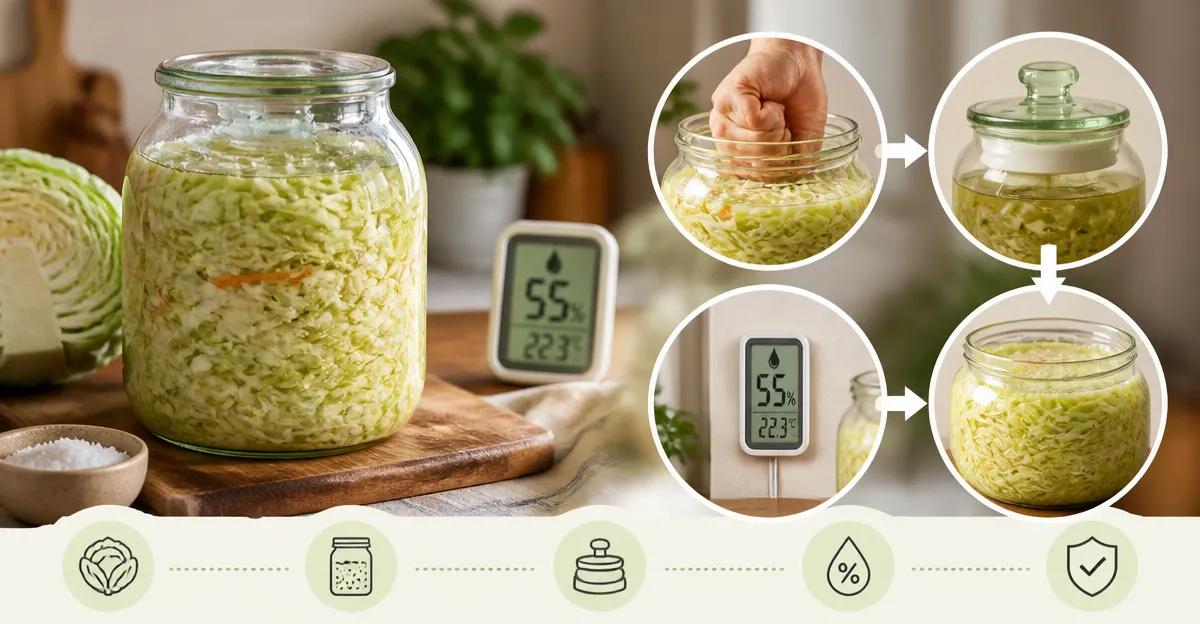
For small batches (up to 1.5 L), the JILLMO Fermentation Jar offers a thick, lead‑free glass body, an airtight clamp lid, and a silicone‑sealed airlock. Its wide mouth simplifies filling, and the included glass weight ensures vegetables remain fully submerged. Price: $34.99, Rating: 4.5/5 (1,812 reviews). For larger batches, the Qianfenie Fermentation Jars provide a 1‑gallon capacity, threaded airtight lids, and three airlocks per set. The scale markings on the glass let you monitor brine level without opening the jar. Price: $32.99, Rating: 4.7/5 (1,046 reviews). Pack the salted cabbage tightly, press out air pockets, and place the provided weight on top. Seal the jar with its lid and airlock, ensuring the silicone grommet is seated correctly.
Step 3: Monitor and Adjust Ambient Humidity
The ideal relative humidity (RH) for sauerkraut fermentation lies between 75 % and 85 %. Below this range, the brine may evaporate, exposing vegetables to oxygen and encouraging mold. Above 90 % RH, condensation can drip onto the surface, creating pockets of excess moisture that also foster mold growth. Use a small hygrometer placed near the fermentation area to track RH; many home brewers keep a digital thermometer/hygrometer combo on a kitchen shelf.
If humidity falls below 75 %, increase it by covering the jar with a clean, breathable cloth (e.g., cheesecloth) and placing a shallow water dish nearby. The water will evaporate slowly, raising local RH. Conversely, if humidity exceeds 90 %, improve airflow by moving the jar to a less enclosed spot or using a small fan on low speed. Avoid direct drafts, which can cause temperature fluctuations.
Step 4: Maintain Consistent Temperature and Pressure
Temperature interacts with humidity; a stable 65 °F–72 °F (18 °C–22 °C) range supports lactic‑acid bacteria while limiting unwanted yeast. Place the jar in a pantry, cabinet, or dedicated fermentation cabinet. The FastRack Fermentation Jar is an economical option for temperature‑stable environments. Its 1‑gallon USDA‑certified glass is 20 % heavier than standard jars, reducing movement that could disturb the seal. Price: $14.99, Rating: 4.5/5 (2,888 reviews). The built‑in Econolock airlock releases CO₂ while preventing oxygen ingress, maintaining the anaerobic environment essential for sauerkraut.
For enthusiasts who enjoy a complete kit, the Masontops Mason Jar Fermentation Kit supplies four wide‑mouth mason jars, airlock lids, glass weights, and a wooden tamper. This kit is ideal for experimenting with multiple flavor variations simultaneously. Price: $54.95, Rating: 4.8/5 (4,766 reviews). The included tamper helps pack cabbage tightly, reducing trapped air and further stabilizing humidity inside the jar.
Step 5: Observe, Burp (If Needed), and Finish
During the first 48 hours, check the jar daily for signs of excess moisture on the lid or surface mold. If condensation forms, gently wipe it away with a clean cloth and ensure the weight remains submerged. The airlock design of the recommended jars eliminates the need for frequent “burping,” but if you use a simple cloth cover, lift it briefly each day to release built‑up CO₂.
After 3–5 days, taste a small sample. When the cabbage reaches the desired tanginess and the texture is crisp, remove the weight, seal the jar with a regular lid, and transfer it to the refrigerator. The cooler environment slows fermentation and preserves the flavor for several months.
Tips & Pro Tips
- Always use non‑iodized, food‑grade salt; iodine can inhibit bacterial activity.
- Keep the fermentation jar away from direct sunlight, which can raise temperature and promote mold.
- If you notice white surface growth, it is usually harmless kahm yeast; skim it off and continue.
- For precise humidity control, consider a small humidifier/dehumidifier set to the target range.
- When using the Masontops Fermentation Jar Starter Set, the silicone seal provides a self‑burping mechanism, reducing manual intervention.
Troubleshooting
| Problem | Possible Cause | Solution |
|---|---|---|
| Mold on surface | Insufficient brine or low humidity | Add salted water to fully submerge vegetables; increase ambient RH. |
| Jar leaks | Improper lid seal or damaged grommet | Replace the silicone grommet; ensure the lid clamps evenly. |
| Fermentation stalls | Temperature below 60 °F or excessive salt | Move jar to a warmer spot; verify salt concentration. |
Conclusion
Controlling humidity is a pivotal yet manageable aspect of sauerkraut fermentation. By selecting the appropriate jar, maintaining 75 %–85 % relative humidity, and monitoring temperature, one can prevent mold and achieve consistent flavor. The recommended tools—such as the JILLMO Fermentation Jar for small batches or the Qianfenie 1‑Gallon Jars for larger productions—provide reliable seals and built‑in airlocks that simplify the process. With these practices, any home cook can enjoy probiotic‑rich sauerkraut with confidence.
Products Mentioned in This Guide
Frequently Asked Questions
What humidity range is ideal for sauerkraut fermentation?
Aim for 70‑80% relative humidity to keep the cabbage moist without encouraging mold.
How does high humidity cause mold on sauerkraut?
Excess moisture creates a surface film where mold spores can grow, especially if vegetables aren’t fully submerged.
Do I need a hygrometer for home sauerkraut fermentation?
A hygrometer is optional but helps you monitor humidity and adjust ventilation or water sources more precisely.
What simple tools can I use to control humidity in a fermentation jar?
Use a breathable cloth lid, a water‑filled tray, or a small humidifier/dehumidifier to raise or lower ambient moisture as needed.
Can I prevent mold by adjusting the weight on the cabbage?
Yes, a proper weight keeps the cabbage under the brine, reducing exposure to humid air and minimizing mold risk.