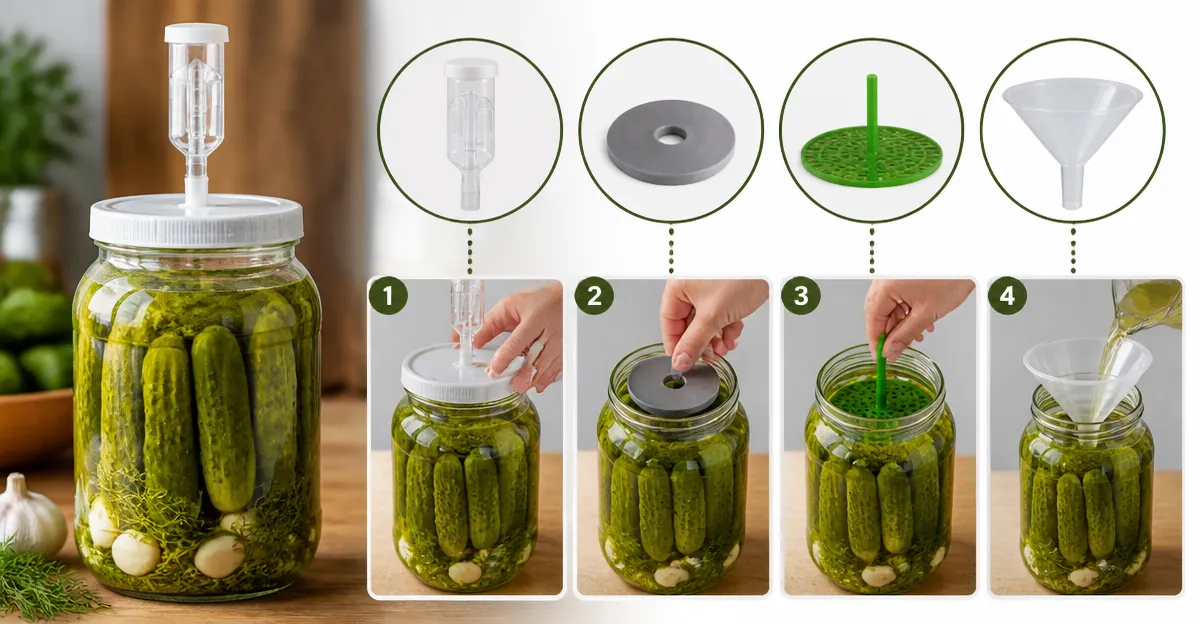
How to Modify Pickling Equipment to Boost Pickle Crunch: Proven Upgrades for Crunchier, Longer-Lasting Pickles
Introduction
Pickles that retain a firm bite and stay fresh for weeks are the hallmark of a skilled home canner. This guide explains how to modify standard pickling equipment to create an optimal fermentation environment that preserves texture, enhances flavor, and extends shelf life. Readers will learn which tools improve brine circulation, prevent sogginess, and simplify handling, while understanding the science behind each upgrade.
Even if one already possesses a basic set of jars and lids, small adjustments—such as adding airlock caps, using glass weights, or employing ergonomic jar lifters—can dramatically increase crunch. The steps below are organized for clarity, and each recommended product is linked to its Amazon page for convenient purchase.
What You'll Need
- Masontops Mason Jar Fermentation Kit
- Masontops Pickle Pipes
- SOLIGT Fermentation Glass Weights
- EEOYU Canning Jar Lifter Tongs
- Delove Canning Funnel Set
- Food‑grade salt, fresh cucumbers, garlic, dill, and optional spices
- Non‑metallic mixing bowl and a clean kitchen towel
Step 1: Select Wide‑Mouth Mason Jars with Proper Seal
The foundation of a crunchy pickle is a jar that allows the vegetables to stay fully submerged while preventing oxygen ingress. Wide‑mouth mason jars provide ample headspace for brine circulation and make it easier to add weights later. The Masontops Mason Jar Fermentation Kit includes four wide‑mouth jars (not supplied, but the kit’s lids are calibrated for standard sizes). Each jar should be sterilized in boiling water for 10 minutes before use.
Why this kit? It supplies specialized fermentation lids that replace ordinary screw‑on caps, creating a controlled anaerobic environment essential for preserving crispness. The kit is rated 4.8/5.0 by 4,794 reviewers and costs $52.20, representing a comprehensive starter package.
Step 2: Install Air‑Lock Fermentation Lids for Pressure Release
Traditional screw caps trap gases produced by lactic‑acid bacteria, leading to pressure buildup that can force brine out of the jar or cause the lid to pop, exposing the pickles to oxygen. The Masontops Pickle Pipes are self‑burping silicone airlock caps that vent carbon dioxide while keeping contaminants out.
Features include a waterless one‑way valve, BPA‑free silicone construction, and a low‑profile design that fits comfortably under pantry shelves. Priced at $23.99 with a 4.7/5.0 rating, these lids eliminate the need for manual “burping” and maintain a stable anaerobic environment, both of which are critical for retaining crunch.
Step 3: Add Glass Weights to Keep Vegetables Submerged
When cucumbers float, they sit above the brine and become exposed to air, resulting in soft, mushy texture. The SOLIGT Fermentation Glass Weights provide a non‑porous, lead‑free solution that sits securely on top of the vegetables.
Each weight features an ergonomic grip handle, allowing easy placement and removal. At $14.99 for a four‑pack and a 4.6/5.0 rating, they are heavier than typical plastic alternatives, ensuring consistent submersion throughout the fermentation period.
Step 4: Use a Jar Lifter for Safe Handling of Hot Jars
Transferring jars in and out of boiling water presents a burn risk. The EEOYU Canning Jar Lifter Tongs feature a vinyl‑coated, stainless‑steel grip that securely clamps the jar rim, keeping hands away from heat.
These lifters are sized at approximately 8.6 × 3.1 × 2.4 inches, making them compatible with both pint‑size and quart‑size jars. Priced at $6.88 and rated 4.6/5.0, they are a durable, low‑cost addition that improves safety during the sterilization and cooling phases.
Step 5: Funnel Brine and Spices Efficiently
Spillage while pouring brine can disturb the vegetable layer, causing air pockets that degrade crunch. The Delove Canning Funnel Set includes a large wide‑mouth funnel, a smaller funnel, and a stainless‑steel strainer, all dishwasher‑safe.
Using the large funnel, pour the prepared brine directly onto the cucumbers without splashing. The strainer helps sift out any debris or spice fragments, ensuring a clear brine that does not cloud the jar. The set costs $12.99, carries a 4.8/5.0 rating, and offers a reusable alternative to disposable plastic funnels.
Step 6: Optimize Brine Composition for Crunch
Beyond equipment, the brine itself influences texture. A standard ratio of 2%–3% salt (by weight) creates the ideal osmotic pressure for firm pickles. Dissolve the salt in water, add a tablespoon of pickling spice per quart, and optionally include a few grape leaves or a pinch of calcium chloride (also known as “Pickle Crisp”) to reinforce pectin structures.
After filling the jar with cucumbers, pour the brine using the funnel, then place the glass weights on top. Seal with the air‑lock lids and store at 65–70°F for 3–7 days, checking daily for desired sourness.
Tips & Pro Tips
- Use cold, filtered water for the brine to avoid chlorine interference with fermentation bacteria.
- Leave the cucumber stems intact; they contain natural pectin that aids firmness.
- For extra crunch, add a few whole peppercorns or a small slice of fresh horseradish to the jar.
- Rotate the jar gently once during fermentation to redistribute brine without disturbing the weight.
- If the airlock releases excess liquid, place a clean towel under the jar to catch drips.
Troubleshooting
| Problem | Possible Cause | Solution |
|---|---|---|
| Pickles become soft | Insufficient submersion or low salt concentration | Ensure glass weights keep vegetables fully covered; increase salt to 3%. |
| Cloudy brine | Improper sterilization or excess debris | Rinse cucumbers, sterilize jars, and use the funnel’s strainer. |
| Off‑odor or mold | Oxygen exposure | Verify air‑lock lids are seated correctly; replace any damaged seals. |
Conclusion
By integrating air‑lock lids, glass weights, ergonomic lifters, and precise funnels, home picklers can create a controlled anaerobic environment that preserves the natural crispness of vegetables. The equipment upgrades outlined above are affordable, easy to use, and supported by strong customer feedback. Implement these steps, monitor the fermentation, and enjoy crunchy, probiotic‑rich pickles for weeks to come.
Products Mentioned in This Guide
Frequently Asked Questions
What equipment modifications most improve brine circulation for crunchier pickles?
Adding airlock caps and using fermentation-weighted lids create a sealed environment that encourages even brine flow and prevents sogginess.
How do glass weights help maintain pickle texture?
Glass weights keep vegetables fully submerged, reducing exposure to oxygen that can cause softening.
Are ergonomic jar lifters necessary for safe handling of heavy fermentation jars?
Yes, they reduce strain and the risk of dropping jars, which can compromise seals and texture.
Can the Masontops Pickle Pipes be used with standard mason jars?
The Pickle Pipes fit standard mason jar openings and provide a convenient airlock to maintain consistent pressure.
Do these equipment upgrades extend the shelf life of pickles?
Proper sealing and weight distribution slow spoilage, often extending shelf life by several weeks.