Kitchen Ventilation Upgrades for Home Fermenters: The Complete Guide to Odor, Moisture & Mold Control
Introduction
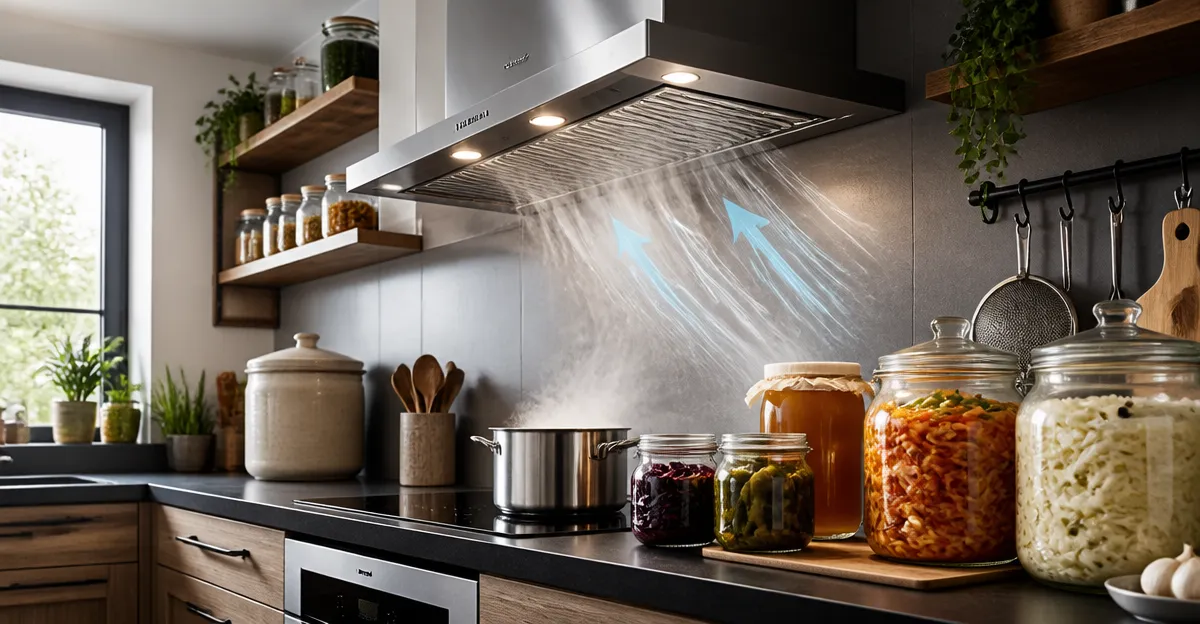
Home fermentation enthusiasts often overlook the importance of proper kitchen ventilation. Without adequate airflow, odors linger, excess humidity accumulates, and mold can develop on surfaces and equipment. This guide explains the science behind ventilation, outlines practical strategies, and recommends five range hood products that excel in odor removal, moisture reduction, and quiet operation. Readers will learn how to assess their kitchen layout, select the appropriate hood type, and implement best‑practice installation techniques that protect both the fermentation process and the surrounding living space.
By the end of this guide, one will be able to design a ventilation system that maintains a healthy environment for fermenting vegetables, kombucha, sourdough, and other cultured foods while preserving the comfort of the home.
Background and Context
Fermentation generates volatile compounds such as acetic acid, ethanol, and various esters. These compounds contribute to the characteristic aromas of fermented foods but can become overwhelming in a confined kitchen. In addition, the metabolic activity of yeast and bacteria releases water vapor, raising relative humidity. When humidity remains elevated for extended periods, mold spores find a favorable substrate on walls, cabinets, and storage containers.
Effective ventilation addresses three core challenges: removal of odorous gases, control of excess moisture, and prevention of stagnant air zones where mold thrives. Mechanical ventilation, typically provided by an under‑cabinet or wall‑mount range hood, creates a pressure differential that draws contaminated air away from the work surface and exhausts it outdoors or filters it through activated carbon when ducting is not possible.
Understanding airflow measurement is essential. Cubic feet per minute (CFM) quantifies the volume of air moved by a fan. For a standard 30‑inch stovetop, a hood rated at 300‑450 CFM is sufficient to capture most cooking fumes. Noise level, expressed in decibels (dB), influences user comfort; values below 45 dB are considered whisper‑quiet, while levels above 55 dB may become distracting during extended fermentation sessions.
Key Concepts and Strategies
Three interrelated concepts guide the selection of a ventilation solution for home fermenters:
- Airflow Capacity: Choose a hood whose CFM rating matches the size of the cooking surface and the expected volume of fermenting vapors. A higher CFM rating provides faster clearance but may increase noise.
- Filtration Options: Ducted hoods vent directly outdoors, eliminating the need for filters. Ductless models rely on charcoal or carbon filters to adsorb odors; these filters require periodic replacement.
- Installation Flexibility: Under‑cabinet units are ideal for compact kitchens, while wall‑mount or chimney‑style hoods suit open‑plan layouts. Convertible designs allow a transition between ducted and ductless operation as the home evolves.
Applying these concepts, the following sections recommend specific products that excel in each category.
Product Recommendations
1. FIREGAS 30" Under Cabinet Range Hood
The FIREGAS 30" Under Cabinet Range Hood offers a 300 CFM dual‑speed fan, stainless‑steel construction, and integrated 2‑W LED lighting. Its quiet operation stays below 45 dB at high speed, making it suitable for continuous use during long fermentation cycles. The multi‑layer aluminum filter captures grease, while an optional carbon pad (sold separately) addresses odor removal in ductless mode. With a 1‑year limited warranty and a price of $65.69, it provides a cost‑effective solution for small apartments or condo kitchens.
2. Broan‑NuTone 30" Ductless Range Hood
The Broan‑NuTone 30" Ductless Range Hood features a 2‑speed fan and a replaceable charcoal filter designed to neutralize odors without external venting. Its white finish blends with most kitchen décor, and the optional 75 W LED bulb (sold separately) provides bright illumination. Rated at 4.6 stars from 20,452 reviews, it demonstrates strong consumer confidence. At $89.00, it balances performance with affordability for users who cannot install ductwork.
3. Tieasy 30" Wall Mount Range Hood
The Tieasy 30" Wall Mount Range Hood delivers 450 CFM airflow across three speed settings, with a noise level of 55 dB. Its chimney‑style design allows placement above a stove or a dedicated fermentation station. The unit includes reusable 5‑layer aluminum mesh filters and energy‑efficient LED lighting. Priced at $110.48, it is a strong candidate for larger kitchens where higher airflow is required.
4. Cosmo 30" Wall Mount Range Hood
The Cosmo 30" Wall Mount Range Hood provides 380 CFM and a maximum noise level of 45 dB when paired with rigid ducting. Its permanent dishwasher‑safe ARC‑FLOW filters eliminate the need for frequent filter changes. Soft‑touch controls simplify fan speed and lighting adjustments. Although priced higher at $247.99, its premium construction and low‑noise operation make it ideal for open‑plan homes where acoustic comfort matters.
5. Cosmo 30" Under Cabinet Range Hood
The Cosmo 30" Under Cabinet Range Hood combines a slim profile with 3‑speed operation and a 50 dB noise floor. Its reusable aluminum mesh filters and optional carbon filter kit enable both ducted and ductless configurations. At $125.99, it offers a versatile solution for kitchens that require a low‑profile appliance without sacrificing performance.
Comparison and Selection Guide
| Product | CFM | Noise (dB) | Installation Type | Filter Type | Price (USD) | Rating |
|---|---|---|---|---|---|---|
| FIREGAS Under Cabinet | 300 | <45 | Under Cabinet (hard‑wired) | Aluminum + optional carbon | 65.69 | 4.5 |
| Broan‑NuTone Ductless | Not specified (adequate for 30") | Not specified (quiet) | Under Cabinet (hard‑wired or power‑cord kit) | Replaceable charcoal | 89.00 | 4.6 |
| Tieasy Wall Mount | 450 | 55 | Wall mount, chimney style | Reusable aluminum mesh | 110.48 | 4.3 |
| Cosmo Wall Mount | 380 | 45 (rigid duct) | Wall mount, convertible | Permanent dishwasher‑safe ARC‑FLOW | 247.99 | 4.4 |
| Cosmo Under Cabinet | Not specified (adequate for 30") | 50 | Under Cabinet, convertible | Reusable aluminum mesh + optional carbon | 125.99 | 4.4 |
When choosing a hood, prioritize CFM that exceeds the minimum of 300 for a 30‑inch cooktop. If the kitchen cannot accommodate ductwork, select a ductless model with a high‑quality charcoal filter. Noise sensitivity should guide the decision between wall‑mount and under‑cabinet units; wall‑mount designs often achieve lower dB levels when paired with rigid ducting.
Best Practices & Tips for Fermentation‑Friendly Ventilation
- Position the hood directly above the fermentation workspace. Even when the stove is not in use, the hood can capture volatile compounds released during active fermentation.
- Maintain a minimum clearance of 18‑24 inches between the hood and the work surface. This distance ensures optimal airflow without obstructing the lid of a fermenter.
- Clean filters regularly. Grease buildup reduces airflow and can re‑emit odors. Aluminum mesh filters are washable; charcoal filters should be replaced every 3‑6 months depending on usage.
- Utilize the low‑speed setting for continuous background ventilation. A gentle airflow of 150‑200 CFM can keep humidity in check without creating drafts that disturb delicate cultures.
- Seal any duct connections with HVAC foil tape. Leaks compromise exhaust efficiency and can allow moist air to re‑enter the kitchen.
- Consider a humidity sensor. Pair the hood with a digital hygrometer to monitor relative humidity; aim for 45‑55 % during most fermentation processes.
- Upgrade lighting wisely. LED lights consume minimal power and generate little heat, preserving the ambient temperature needed for sourdough starters and kombucha SCOBYs.
Frequently Asked Questions
- Do I need a ducted hood for fermentation? A ducted hood provides the most effective odor removal because it exhausts air outdoors. However, a high‑quality ductless hood with an activated carbon filter can achieve satisfactory results when exterior venting is impractical.
- How often should I replace a charcoal filter? Replacement every three to six months is recommended for continuous odor control. The exact interval depends on the frequency of fermentation and cooking activities.
- Can I run a range hood continuously while fermenting? Yes, running the hood on its lowest speed creates a gentle draft that reduces humidity and removes volatile compounds without causing excessive cooling.
- Will the hood’s light affect fermentation temperature? Modern LED lighting generates minimal heat, typically raising ambient temperature by less than one degree Celsius, which is negligible for most fermentation processes.
- Is noise a concern for long‑term fermentation? Prolonged exposure to high noise levels can be uncomfortable. Selecting a hood with a noise rating below 45 dB, such as the FIREGAS or Cosmo wall‑mount models, mitigates this issue.
- Can I use a range hood in a kitchen without existing electrical wiring? Many under‑cabinet models, including the Broan‑NuTone, offer optional power‑cord kits that plug into a standard outlet, simplifying installation in retrofit scenarios.
- What maintenance is required for reusable filters? Rinse aluminum mesh filters in warm, soapy water after each use, then dry thoroughly before reinstalling. This practice preserves airflow and extends filter life.
Conclusion
Effective kitchen ventilation is a cornerstone of successful home fermentation. By understanding airflow requirements, selecting the appropriate ducted or ductless range hood, and following best‑practice installation and maintenance procedures, one can control odor, moisture, and mold growth while preserving the acoustic comfort of the home. The products highlighted in this guide provide a spectrum of options that cater to diverse budgets, kitchen layouts, and performance expectations.
Implementing the strategies outlined above will enable fermenters to focus on the art and science of their craft rather than on the side effects of inadequate ventilation.
Products Featured in This Guide
FIREGAS 30" Under Cabinet Range Hood
Price: $65.69 | Rating: 4.5/5 (1,996 reviews)
Featured for its affordable 300 CFM capacity, quiet operation below 45 dB, and convertible ducted/ductless design suitable for small kitchens.
Broan‑NuTone 30" Ductless Range Hood
Price: $89.00 | Rating: 4.6/5 (20,452 reviews)
Featured for its high‑quality replaceable charcoal filter, intuitive rocker switches, and suitability for kitchens lacking exterior venting.
Tieasy 30" Wall Mount Range Hood
Price: $110.48 | Rating: 4.3/5 (1,234 reviews)
Featured for its powerful 450 CFM airflow, chimney‑style mounting flexibility, and reusable aluminum mesh filters.
Cosmo 30" Wall Mount Range Hood
Price: $247.99 | Rating: 4.4/5 (1,963 reviews)
Featured for its low‑noise operation, permanent dishwasher‑safe ARC‑FLOW filters, and premium soft‑touch controls.
Cosmo 30" Under Cabinet Range Hood
Price: $125.99 | Rating: 4.4/5 (4,332 reviews)
Featured for its slim profile, 3‑speed quiet motor, and versatile ducted/ductless conversion capability.