Introduction
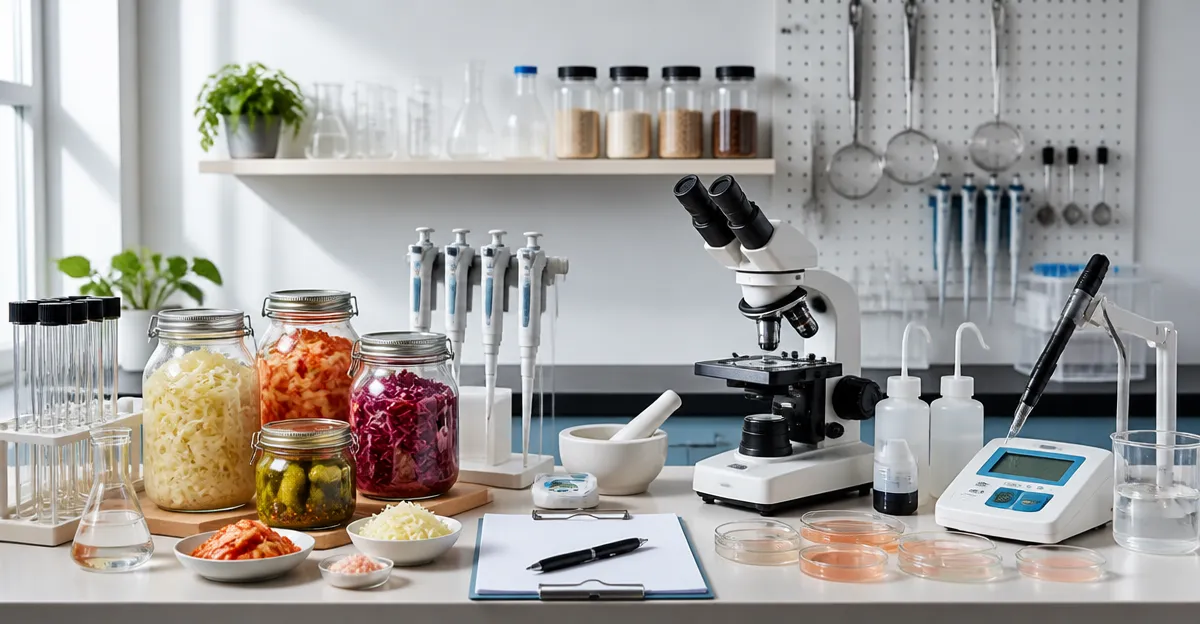
This guide explains how to create a quality‑assurance (QA) laboratory for small‑batch fermented foods such as sauerkraut, kimchi, kombucha, and artisanal cheese. Readers will learn the essential equipment, safety considerations, and workflow steps needed to produce consistent, safe products. The article balances scientific fundamentals with practical product recommendations that fit a modest budget. By the end of the guide, one will be able to design a functional lab space, select the right tools, and implement best‑practice procedures for reliable fermentation.
Background and Context
Fermentation relies on microbial activity, temperature control, and precise measurement of ingredients and by‑products. In a small‑scale setting, variability often stems from inaccurate volumes, contamination, or inconsistent mixing. A QA lab provides controlled conditions, reproducible measurements, and systematic documentation. Core concepts include pH monitoring, microbial enumeration, and proper sterilization techniques. Understanding these fundamentals allows the operator to troubleshoot off‑flavors, prevent spoilage, and comply with local food‑safety regulations.
Essential Equipment for a Small‑Batch Fermentation Lab
Below are the primary categories of equipment required for a functional QA lab. Each category includes a recommended product that offers high value for the price.
Measuring Vessels
Accurate volume measurement is critical when scaling recipes or preparing starter cultures. Glass beakers provide chemical resistance and thermal stability, while plastic graduated cylinders are lightweight and break‑resistant.
- Ronyes Glass Beaker Set – A 3‑pack of borosilicate beakers (50 mL, 100 mL, 250 mL) with uniform wall thickness and clear graduation marks. Rated 4.6/5 from 5,273 reviews, priced at $9.99.
- Teenitor Graduated Cylinder & Beaker Set – Includes five plastic cylinders (10‑250 mL) and five beakers (50‑1000 mL). Features a hexagonal base for stability and double‑sided raised scale. Rated 4.6/5 from 1,861 reviews, priced at $18.49.
Inoculation Tools
Transferring pure cultures onto agar or into liquid media requires sterile loops that can be quickly replaced. The loops must resist oxidation and be easy to flame‑sterilize.
- Hotop Inoculation Loop Set – Provides 90 replaceable loops (50 × 3 mm, 40 × 5 mm) on copper rods with chrome plating. Includes a protective plastic tube and weighs only 10 g. Rated 4.6/5 from 499 reviews, priced at $12.99.
Sample Handling
Retrieving powders or liquids from deep containers without spilling is essential during media preparation. Stainless‑steel micro scoops combine durability with a compact profile.
- Maxmoral Lab Scoop Spatula Set – Four stainless‑steel micro scoops, 220 mm long, designed for deep‑bottle sampling. Rated 4.5/5 from 559 reviews, priced at $7.99.
Mixing and Homogenization
Uniform mixing ensures even distribution of salts, sugars, and starter cultures. A magnetic stirrer offers hands‑free agitation and precise speed control.
- LAB FISH Magnetic Stirrer – Brushless motor with stepless speed up to 1800 rpm, suitable for 1‑3 L volumes. Compact, quiet, and covered by a 1‑year warranty. Rated 4.5/5 from 316 reviews, priced at $25.99.
Comparison and Selection Guide
Choosing the right tools depends on batch size, budget, and preferred workflow. The table below summarizes the key attributes of each recommended product.
| Category | Product | Material | Volume Range | Price | Rating |
|---|---|---|---|---|---|
| Beakers | Ronyes Glass Beaker Set | Borosilicate glass | 50‑250 mL | $9.99 | 4.6 |
| Cylinders & Beakers | Teenitor Graduated Cylinder & Beaker Set | Food‑grade plastic | 10‑1000 mL | $18.49 | 4.6 |
| Inoculation Loops | Hotop Inoculation Loop Set | Copper with chrome plating | 3 mm & 5 mm loops | $12.99 | 4.6 |
| Scoops | Maxmoral Lab Scoop Spatula Set | Stainless steel | Micro‑scale sampling | $7.99 | 4.5 |
| Stirrer | LAB FISH Magnetic Stirrer | Metal housing, magnetic bar | 1‑3 L | $25.99 | 4.5 |
For a starter lab, the glass beaker set offers the best thermal stability, while the plastic cylinder set provides flexibility for larger volumes. Inoculation loops are indispensable for pure‑culture work, and the magnetic stirrer streamlines media preparation. The scoop set is a low‑cost addition that improves accuracy when handling dry reagents.
Best Practices & Tips
Beyond equipment, disciplined procedures guarantee product safety and consistency.
- Calibrate measurement tools weekly. Use distilled water to verify that beaker graduations correspond to expected volumes.
- Sterilize inoculation loops before each transfer. Flame the loop until it glows red, then allow it to cool for three seconds to avoid killing the culture.
- Maintain a clean work surface. Wipe benches with 70 % isopropyl alcohol and replace disposable gloves regularly.
- Document pH and temperature. Record values at the start, midpoint, and end of fermentation to identify trends.
- Use magnetic stirring for media preparation. Set the stirrer to 600‑800 rpm for 5‑10 minutes to dissolve salts completely before autoclaving.
- Label all containers clearly. Include batch number, date, and target pH to avoid cross‑contamination.
- Store spare loops and scoops in a dry, sealed container. Moisture accelerates corrosion and compromises sterility.
Frequently Asked Questions
1. Do I need glass beakers if I already have plastic cylinders? Glass provides superior heat resistance and chemical inertness, making it ideal for sterilization and high‑temperature steps. Plastic is lighter and less breakable, suitable for routine volume checks.
2. How often should I replace inoculation loops? Replace loops after each use or when the wire shows signs of wear. The Hotop set includes 90 loops, which is sufficient for several weeks of routine work.
3. Can the magnetic stirrer handle viscous mixtures like yogurt? The LAB FISH stirrer is designed for low‑ to medium‑viscosity liquids. For very thick mixtures, a mechanical overhead stirrer is recommended.
4. Are the plastic cylinders food‑grade safe for acidic fermentations? Yes, the Teenitor cylinders are made from acid‑ and alkali‑resistant food‑grade plastic, suitable for vinegar‑based or lactic‑acid fermentations.
5. What is the best way to store the micro scoops? Keep the Maxmoral scoops in a dry drawer or a sealed plastic box to prevent rust and maintain their sharp edges.
6. Do I need a separate pH meter for a small lab? While not listed among the featured products, a low‑cost handheld pH meter is advisable. It complements the equipment described here by providing real‑time acidity data.
7. How can I ensure consistent fermentation temperature? Use a temperature‑controlled incubator or a water bath with the magnetic stirrer to maintain the desired range, typically 20‑30 °C for most vegetable fermentations.
Conclusion
Establishing a QA lab for small‑batch fermented foods does not require expensive industrial gear. By selecting reliable, affordable tools such as the Ronyes Glass Beaker Set, Teenitor Graduated Cylinder & Beaker Set, Hotop Inoculation Loop Set, Maxmoral Lab Scoop Spatula Set, and LAB FISH Magnetic Stirrer, one can achieve precise measurements, sterile transfers, and uniform mixing. Coupled with disciplined best practices and thorough documentation, these resources enable home‑based producers to deliver safe, high‑quality fermented products consistently.
Products Featured in This Guide
Ronyes Glass Beaker Set
Price: $9.99 | Rating: 4.6/5 (5,273 reviews)
Featured for its borosilicate construction, uniform wall thickness, and clear graduations, making it ideal for precise volume measurement and heat‑resistant tasks.
Teenitor Graduated Cylinder & Beaker Set
Price: $18.49 | Rating: 4.6/5 (1,861 reviews)
Featured for its comprehensive size range, double‑sided raised scale, and hexagonal bases that provide stability during measurements.
Hotop Inoculation Loop Set
Price: $12.99 | Rating: 4.6/5 (499 reviews)
Featured for its chrome‑plated copper rods, 90 replaceable loops, and lightweight design that facilitates sterile culture transfers.
Maxmoral Lab Scoop Spatula Set
Price: $7.99 | Rating: 4.5/5 (559 reviews)
Featured for its stainless‑steel construction, 220 mm length, and four different scoop sizes that simplify deep‑bottle sampling.
LAB FISH Magnetic Stirrer
Price: $25.99 | Rating: 4.5/5 (316 reviews)
Featured for its brushless motor, stepless speed up to 1800 rpm, and compact design that fits comfortably on a small lab bench.