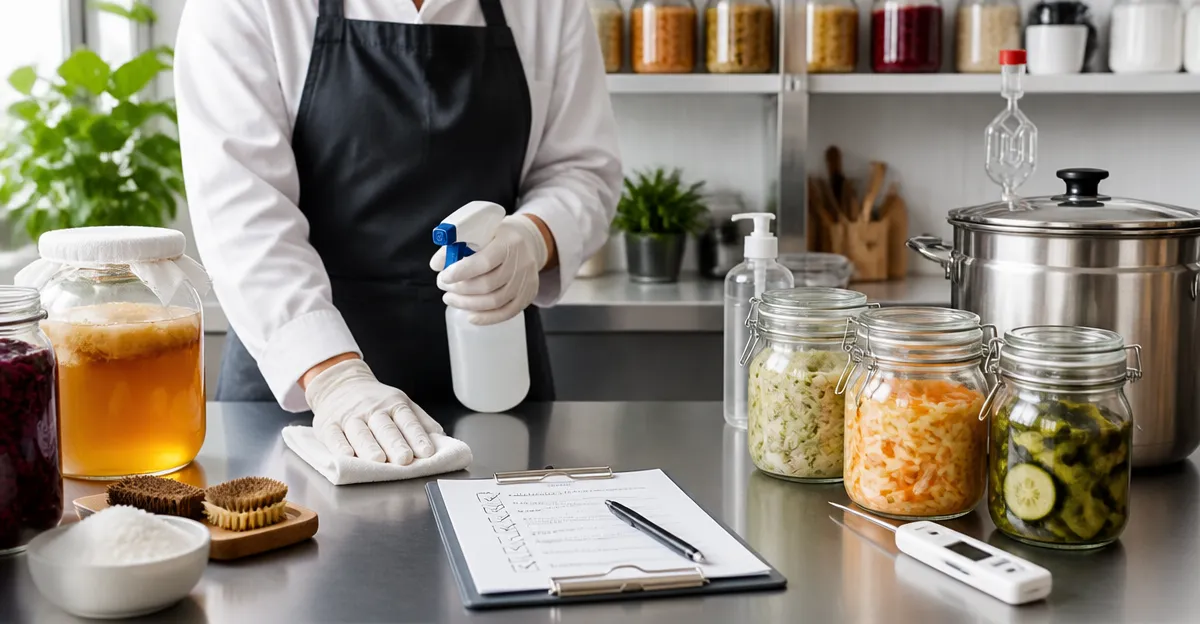
Essential Hygiene SOPs for Small‑Batch Home Fermentation Businesses: A Step‑by‑Step Guide & Checklist
Introduction
This guide explains how small‑batch home fermentation entrepreneurs can establish reliable hygiene standard operating procedures (SOPs). Readers will learn why sanitation matters, which tools provide the best protection, and how to implement a daily checklist that safeguards product quality and complies with local health regulations.
The content balances scientific background with actionable product recommendations, ensuring that even operators without a professional cleaning staff can maintain a sterile environment.
Background / Context
Fermentation relies on controlled microbial activity. Unwanted bacteria, molds, or viruses can spoil a batch, create off‑flavors, or pose health risks. Maintaining a clean workspace, proper equipment sanitation, and validated sanitizer concentrations are therefore non‑negotiable.
Key concepts include:
- Surface disinfection versus cleaning
- Cross‑contamination control
- Personal protective equipment (PPE) for hands and skin
- Verification of sanitizer efficacy with test kits
Understanding these principles allows entrepreneurs to design SOPs that are both practical and scientifically sound.
Sanitation of Work Surfaces
All surfaces that contact fermenting material must be cleaned and disinfected before each use. A two‑step process—cleaning followed by disinfection—removes organic residues and then kills residual microbes.
For routine cleaning, Lysol Disinfecting Wipes provide a convenient pre‑moistened solution. Each 4‑pack contains 80 lemon‑scented wipes that kill 99.9% of viruses and bacteria, including SARS‑CoV‑2, within 15 seconds. The product holds a 4.8‑star rating from over 91,000 reviews and costs $14.97. Its EPA registration (Reg. #777‑114) confirms compliance with federal disinfectant standards.
When larger areas or hard‑to‑reach spots require a spray, Clorox All‑Purpose Cleaner is an excellent bleach‑free alternative. The 32 fl oz bottle disinfects a wide range of non‑porous surfaces, eliminates odors, and also carries a 4.8‑star rating from 10,600 reviewers at $14.12.
Both products are safe for food‑contact surfaces when used as directed, and their distinct formats allow operators to choose the most efficient method for each cleaning task.
Equipment Disinfection and PPE
Hands are the most common vector for cross‑contamination. Disposable nitrile gloves protect both the product and the operator.
FINITEX Nitrile Gloves are 3.5 mil thick, powder‑free, and latex‑free, offering superior tear resistance and a textured grip for detailed tasks. They are priced at $11.49 for a 100‑pair box and have a 4.7‑star rating from 2,180 reviews.
For operators who prefer a darker glove that hides stains and provides a professional appearance, Schneider Nitrile Gloves deliver a 4‑mil, food‑grade barrier. The black color conceals ink and dye, making them popular among tattoo artists and kitchen staff. They cost $8.99 per box and enjoy a 4.7‑star rating from 17,440 reviewers.
Both glove options are hypoallergenic, reducing the risk of latex‑related skin reactions, and they are easy to don and remove without compromising tactile sensitivity.
Sanitizer Strength Verification
Even the most effective disinfectants can fail if diluted incorrectly. A quick, reliable test ensures that quaternary ammonium (Quat) and chlorine sanitizers remain within regulatory limits.
The Restaurant Sanitizer Test Kit includes 100 Quat strips (0‑200 ppm) and 100 chlorine strips (0‑400 ppm). Results appear within seconds via a color‑matching chart, allowing operators to adjust concentrations on the spot. Priced at $15.49, the kit holds a 4.7‑star rating from 1,260 reviewers.
Regular testing—at least once per shift—prevents under‑dosing, which can leave harmful microbes alive, and over‑dosing, which may damage equipment or affect product flavor.
Comparison / Selection Guide
| Category | Product | Form Factor | Key Benefits | Price | Rating |
|---|---|---|---|---|---|
| Surface Disinfectant (wipe) | Lysol Disinfecting Wipes | Pre‑moistened wipes | Fast kill (15 s), lemon scent, EPA‑registered | $14.97 | 4.8/5 (91k) |
| Surface Disinfectant (spray) | Clorox All‑Purpose Cleaner | Aerosol spray | Bleach‑free, odor control, multi‑surface | $14.12 | 4.8/5 (10.6k) |
| Hand Protection (light) | FINITEX Nitrile Gloves | 3.5 mil, pink | Textured grip, latex‑free, durable | $11.49 | 4.7/5 (2.2k) |
| Hand Protection (dark) | Schneider Nitrile Gloves | 4 mil, black | Food‑grade, stain‑hiding, high puncture resistance | $8.99 | 4.7/5 (17.4k) |
| Sanitizer Verification | Restaurant Sanitizer Test Kit | Test strips | Dual‑type (Quat & chlorine), instant results | $15.49 | 4.7/5 (1.3k) |
Best Practices & Tips
- Establish a cleaning schedule that differentiates between daily, weekly, and monthly tasks. Daily tasks include wiping worktables with Lysol wipes and testing sanitizer levels.
- Train all staff on proper glove donning and doffing techniques to avoid hand contamination.
- Use Clorox spray for large equipment such as fermentation vessels, allowing a 2‑minute contact time for full efficacy.
- Document sanitizer test results in a logbook; this record supports compliance during health inspections.
- Rotate gloves between batches to prevent cross‑contamination; discard any glove that shows visible wear.
- Store wipes, sprays, and test kits in a cool, dry area away from direct sunlight to maintain potency.
- Conduct a mock contamination drill quarterly to evaluate the effectiveness of SOPs and identify gaps.
Frequently Asked Questions
1. How often should I test sanitizer concentrations?
Test at the start of each production shift and after any dilution or refill. This ensures consistent antimicrobial activity.
2. Are Lysol wipes safe for direct contact with food?
Yes, when used as directed they are approved for food‑contact surfaces after the recommended drying time. Rinse if the product label specifies.
3. Can I substitute bleach‑free cleaners with bleach‑based ones?
Bleach‑based solutions are effective but can corrode metal fermenters and affect flavor. Bleach‑free options like Clorox provide comparable disinfection without these drawbacks.
4. Which glove thickness is best for handling acidic fermentations?
Schneider’s 4‑mil gloves offer higher puncture resistance, making them suitable for acidic or high‑temperature environments.
5. What is the minimum contact time for Lysol wipes to inactivate SARS‑CoV‑2?
EPA data indicates 15 seconds is sufficient for SARS‑CoV‑2 when the surface remains wet.
6. Do I need to wear gloves when using sanitizer test strips?
Gloves are recommended to prevent skin exposure to chemicals, especially when handling concentrated Quat solutions.
7. How can I verify that my cleaning SOPs meet local health codes?
Maintain documented cleaning logs, sanitizer test records, and employee training certificates. Submit these during inspections.
Conclusion
Implementing rigorous hygiene SOPs protects product integrity, reduces waste, and builds consumer trust. By combining proven disinfectants, reliable PPE, and accurate sanitizer testing, small‑batch home fermentation businesses can operate safely and efficiently.
Follow the checklist below to embed these practices into daily routines:
- Wipe all work surfaces with Lysol wipes before each batch.
- Spray large equipment with Clorox cleaner and allow a 2‑minute dwell.
- Wear FINITEX or Schneider nitrile gloves based on task requirements.
- Test sanitizer strength with the Restaurant Sanitizer Test Kit at shift start.
- Document all actions in a cleaning log.
Products Featured in This Guide
Lysol Disinfecting Wipes
Price: $14.97 | Rating: 4.8/5 (91,475 reviews)
Featured for its fast‑acting, EPA‑registered disinfecting power and convenient wipe format, ideal for daily surface sanitation.
Clorox All-Purpose Cleaner
Price: $14.12 | Rating: 4.8/5 (10,605 reviews)
Featured for its bleach‑free formulation that delivers hospital‑grade disinfection across large equipment and hard‑to‑reach areas.
FINITEX Nitrile Gloves
Price: $11.49 | Rating: 4.7/5 (2,181 reviews)
Featured for their durability, textured grip, and latex‑free composition, making them ideal for precise handling during fermentation.
Schneider Nitrile Gloves
Price: $8.99 | Rating: 4.7/5 (17,440 reviews)
Featured for their 4‑mil thickness, food‑grade certification, and dark color that hides stains, suitable for heavy‑duty cleaning and food‑contact tasks.
Restaurant Sanitizer Test Kit
Price: $15.49 | Rating: 4.7/5 (1,267 reviews)
Featured for providing rapid, dual‑type sanitizer verification, ensuring that Quat and chlorine solutions remain within safe and effective ranges.