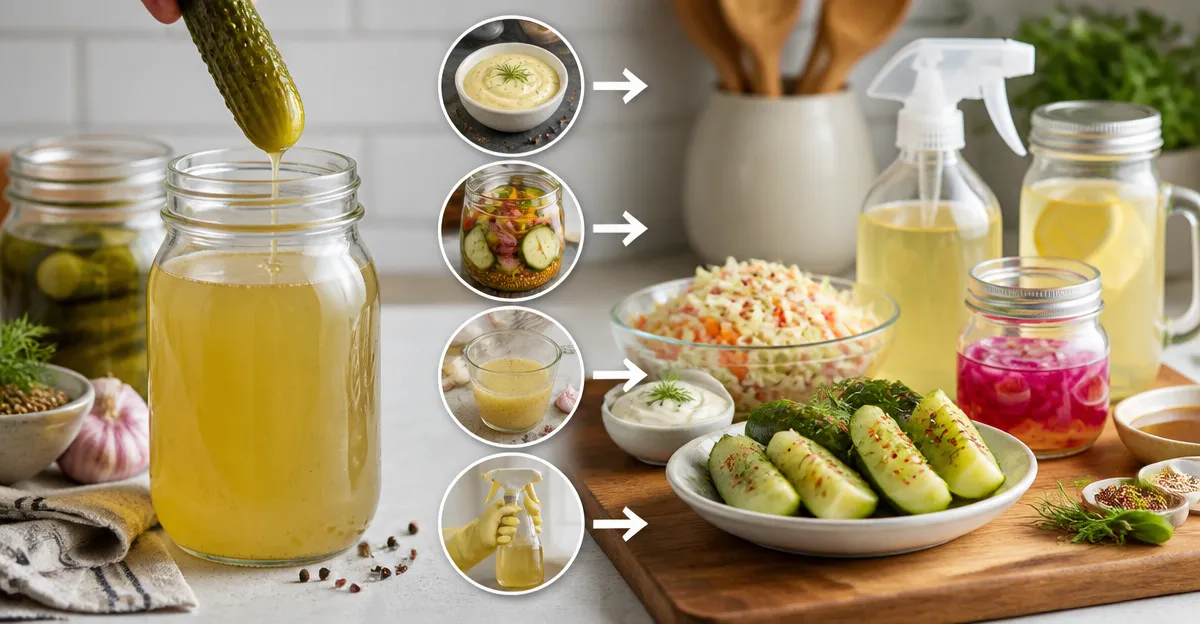
How to Upcycle Pickle Brine: 15 Creative Recipes, Cleaning Hacks & DIY Uses for Kitchen Equipment
Introduction
Pickle brine is often discarded, yet it contains vinegar, salt, spices, and probiotic cultures that can add flavor and functionality to many household tasks. This guide will teach the reader how to transform that salty, tangy liquid into fifteen distinct recipes, cleaning solutions, and do‑it‑yourself projects. By the end of the article, one will understand the nutritional benefits of the brine, how to store it safely, and which tools make the process efficient. The information is presented in a professional tone, with clear steps and product recommendations that enhance success without being mandatory.
What You’ll Need
- Freshly harvested pickle brine (from dill, garlic, or spicy pickles).
- Glass storage containers with airtight lids – see product recommendations below.
- Basic kitchen equipment: a fine mesh strainer, a funnel, measuring spoons, and a small saucepan.
- Optional flavor enhancers: honey, mustard seeds, fresh herbs, and citrus zest.
Step-by-Step Instructions
Step 1: Collect and Filter the Brine
Begin by transferring the brine from the original pickle jar into a clean container. Use a fine mesh strainer to remove garlic cloves, dill fronds, and peppercorns that could cloud the liquid. Pour the filtered brine through a funnel into a glass jar for storage. For this task, the ComSaf Mason Jars are ideal because their 32 oz wide mouth allows easy pouring and cleaning. Each jar is BPA‑free, dishwasher safe, and rated 4.6/5 stars by 1,397 reviewers, priced at $11.69. The wide opening reduces spillage when straining, and the airtight lids preserve the brine’s flavor for up to three months.
Step 2: Choose an Upcycling Path
The brine can be directed toward culinary, cleaning, or decorative uses. Decide which category aligns with current needs; one may even combine multiple paths over time. Culinary applications include dressings, marinades, and fermented drinks. Cleaning uses exploit the acidity for surface sanitization. Decorative projects involve using the jars as rustic containers for herbs or candles.
Step 3: Culinary Recipe – Pickle‑Infused Vinaigrette
Combine 3 tablespoons of brine with 2 tablespoons olive oil, 1 teaspoon honey, and a pinch of black pepper. Whisk until emulsified, then drizzle over mixed greens. The brine’s vinegar base provides tang, while the salt balances the oil. Store any leftover vinaigrette in a sealed Encheng Mason Jars. These 32 oz jars feature a clamp lid with rubber gasket that creates a reliable airtight seal, rated 4.5/5 stars by 14,437 reviewers, and cost $21.99. Their thick glass resists breakage and the transparent body lets you see the dressing without opening the jar.
Step 4: Culinary Recipe – Spicy Pickle Brine Marinade for Chicken
Mix ½ cup brine with ¼ cup soy sauce, 2 cloves minced garlic, and 1 teaspoon smoked paprika. Submerge chicken breasts for at least 30 minutes, then grill. The brine tenderizes the meat while imparting a subtle dill flavor. Store the prepared marinade in a Paksh Mason Jars. Each 32 oz jar is lead‑free, has a leak‑proof metal lid, and is praised by 4.6/5 stars from 3,423 reviewers, priced at $12.99. The wide mouth simplifies the addition of garlic and spices without a funnel.
Step 5: Culinary Recipe – Pickle Brine Bloody Mary Mix
Blend ¼ cup brine with ½ cup tomato juice, 1 tablespoon Worcestershire sauce, a dash of hot sauce, and a squeeze of lemon. Serve over ice with a celery stalk. The brine adds complexity that commercial mixes lack. Keep the mixture in a SEWANTA Mason Jars. These 16 oz jars are designed for canning, feature embossed measurement markings, and hold a 4.8/5 star rating from 7,481 reviewers, priced at $19.49. Their smaller size is perfect for single‑serve cocktails, and the heat‑tempered glass tolerates occasional reheating.
Step 6: Culinary Recipe – Pickle Brine Pickled Red Onions
Slice a red onion thinly and pack into a Ball Mason Jars. Cover with brine, add a sprig of thyme, and refrigerate for 24 hours. The result is a tangy topping for tacos or burgers. Ball jars are a trusted brand with a 4.7/5 rating from 11,779 reviewers, priced at $14.99. Their regular mouth design fits comfortably in most refrigerator doors, and the BPA‑free glass ensures no leaching of chemicals.
Step 7: Cleaning Hack – Stainless‑Steel Sink De‑Scaler
Pour 1 cup brine onto a damp sponge and scrub the sink surface. The acidity dissolves mineral buildup without harsh chemicals. Rinse with warm water and dry. Store the brine for future cleaning cycles in a ComSaf Mason Jars so the liquid remains sealed between uses.
Step 8: Cleaning Hack – Microwave Cleaner
Fill a microwave‑safe bowl with ½ cup brine, heat on high for three minutes, then let sit for five minutes. The steam loosens splatter, and the brine neutralizes odors. Wipe the interior with a cloth. Preserve the brine in an Encheng Mason Jars for repeated use.
Step 9: Cleaning Hack – Cutting‑Board Disinfectant
Spray brine onto a wooden cutting board, let sit for two minutes, then wipe clean. The solution kills surface bacteria while the salt prevents warping. Keep a small jar of brine on the countertop in a Paksh Mason Jars for quick access.
Step 10: DIY Project – Herb‑Infused Brine Spray
Mix equal parts brine and water in a spray bottle, add a few sprigs of rosemary, and use to mist salad greens before serving. The spray adds flavor and extends freshness. Store the base mixture in a SEWANTA Mason Jars to keep it airtight.
Step 11: DIY Project – Rustic Candle Holders
Fill a ComSaf Mason Jars with a small tealight, then surround the base with a thin layer of brine that has been mixed with a few drops of essential oil. The brine adds a subtle scent and prevents the candle from tipping. The wide mouth simplifies candle insertion.
Step 12: DIY Project – Fermented Drink Base
Combine 1 cup brine with 2 cups sparkling water, a splash of fruit juice, and a pinch of sea salt. Serve as a probiotic refresher. Store the base in a Encheng Mason Jars to keep carbonation intact.
Step 13: DIY Project – Garden Seedling Starter
Fill a Paksh Mason Jars with a mixture of brine and a tablespoon of compost. Plant herb seeds and cover with a light cloth. The salty environment encourages strong root development while the transparent jar allows monitoring of growth.
Step 14: DIY Project – Decorative Pickle‑Brine Terrarium
Layer small pebbles, activated charcoal, and a few succulent cuttings inside a SEWANTA Mason Jars. Add a thin layer of brine to maintain humidity. The jar’s measurement markings help achieve the correct water‑to‑soil ratio.
Step 15: DIY Project – Brine‑Based Glue for Paper Crafts
Mix 2 parts brine with 1 part flour, stir until smooth, and heat gently until thickened. Use the mixture to adhere paper decorations. Store any excess in a Ball Mason Jars, where the airtight seal prevents drying.
Tips & Pro Tips
- Label each jar with the date of collection; the brine remains safe for three months when refrigerated.
- When using brine for cooking, taste first to gauge salt level; adjust with water if necessary.
- For cleaning, always test a small area to ensure the brine does not etch delicate surfaces.
- Combine brine with fresh herbs to create aromatic cleaning solutions that leave a pleasant scent.
- Use the wide‑mouth jars for easy removal of solid ingredients, reducing the need for additional tools.
Troubleshooting
Problem: Brine becomes cloudy after storage.
Solution: Filter again through a coffee filter or cheesecloth before reuse. Cloudiness does not affect safety but may affect appearance.
Problem: Lid does not seal tightly.
Solution: Ensure the rim is clean and dry before closing. If the seal still fails, replace the lid; most mason‑jar brands sell replacement lids separately.
Conclusion
This guide has demonstrated fifteen practical ways to upcycle pickle brine, turning a waste product into culinary delights, effective cleaners, and creative décor. By following the outlined steps and employing reliable glass containers, the reader can extend the value of every pickle batch while reducing environmental impact. Experiment with the recipes, adapt them to personal taste, and enjoy the satisfaction of a zero‑waste kitchen.
Products Mentioned in This Guide
Frequently Asked Questions
What nutritional or functional benefits does pickle brine offer when upcycled?
Pickle brine provides vinegar acidity, salt, spices, and probiotic cultures that enhance flavor and support gut health.
How should I store leftover pickle brine for future use?
Keep it in a clean glass container with an airtight lid in the refrigerator, and use within 2‑3 weeks.
What basic kitchen equipment do I need to repurpose pickle brine?
A fine‑mesh strainer, funnel, measuring spoons, and a small saucepan are sufficient.
Can pickle brine be used as a cleaning solution around the house?
Yes, its acidity makes it effective for cutting grease, deodorizing surfaces, and removing mineral buildup.
What are some quick recipes I can make with pickle brine?
Try brine‑marinated chicken, tangy vinaigrette, quick pickled veggies, salty popcorn seasoning, or a probiotic smoothie boost.